

City Walls Of Istanbul – Constantinople’s Impregnable Walls
These ancient stones have witnessed empires rise and fall.
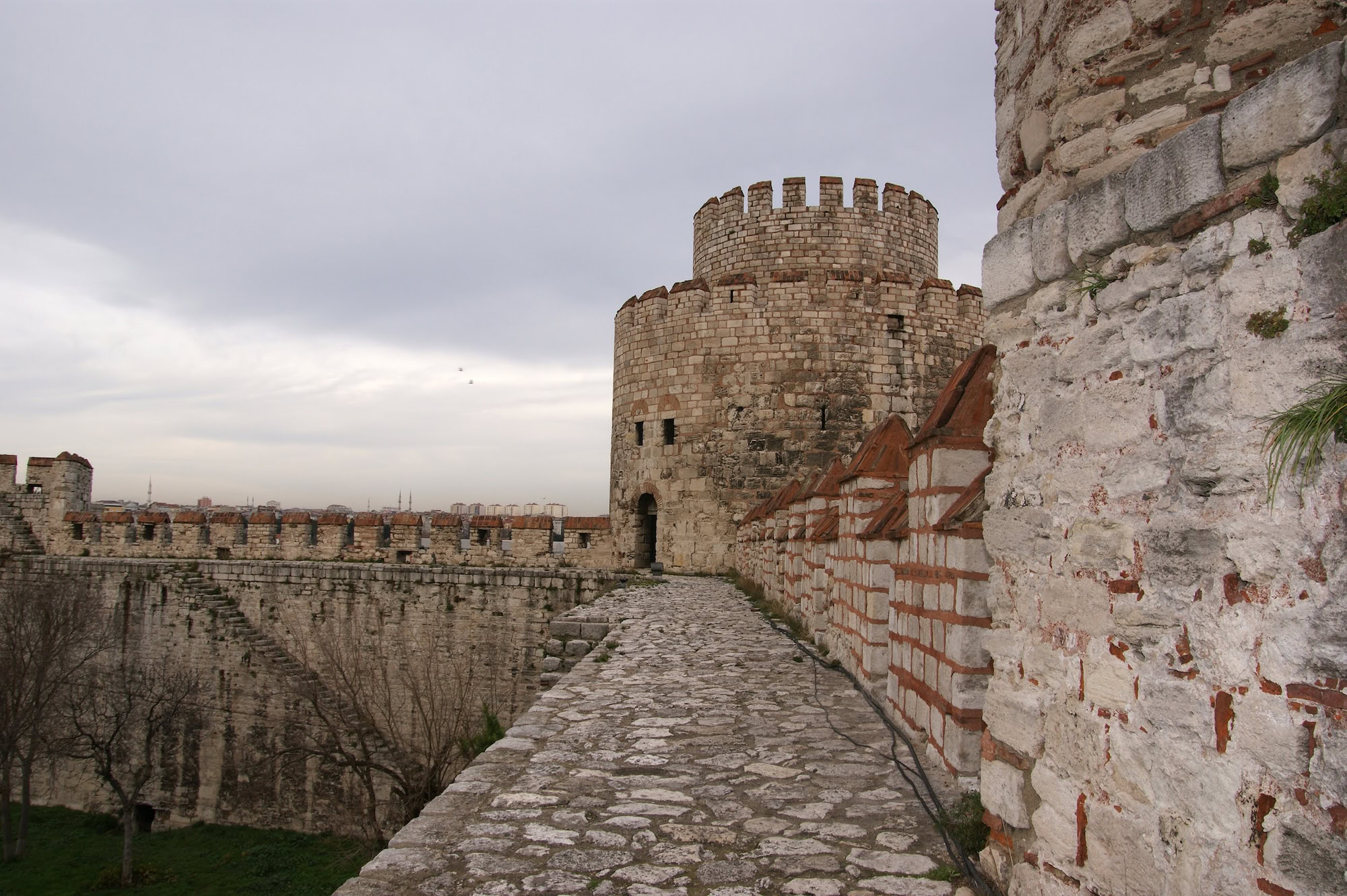
The Theodosian Walls stretch across Istanbul like a massive stone spine, telling stories that span from the Byzantine Empire to the Ottoman conquest. Built in the early 5th century CE, these defensive fortifications protected Constantinople for over a thousand years, earning their place on the UNESCO World Heritage List in 1985.
The City Walls of Istanbul can be included in our Luxury Egypt & Turkey Tours, where Istanbul’s historic landmarks are combined with its cultural highlights and Egypt’s ancient wonders for a deeply immersive travel experience.
Today, the 5.7 km-long walls offer visitors a unique opportunity to walk through history and explore one of the world’s most impressive ancient defense systems.
Whether you’re planning a self-guided visit or looking to understand the deeper significance of this remarkable structure, the walls provide a powerful connection to the city’s past.
Table of Contents
The Story Behind Constantinople’s Great Defense
Emperor Theodosius II commissioned these walls in 413 CE when he was just 12 years old. The project took eight years to complete under the supervision of Anthemius, the Praetorian Prefect. What makes this achievement remarkable isn’t just the construction speed, but the strategic vision behind it.
Why These Walls Were Built
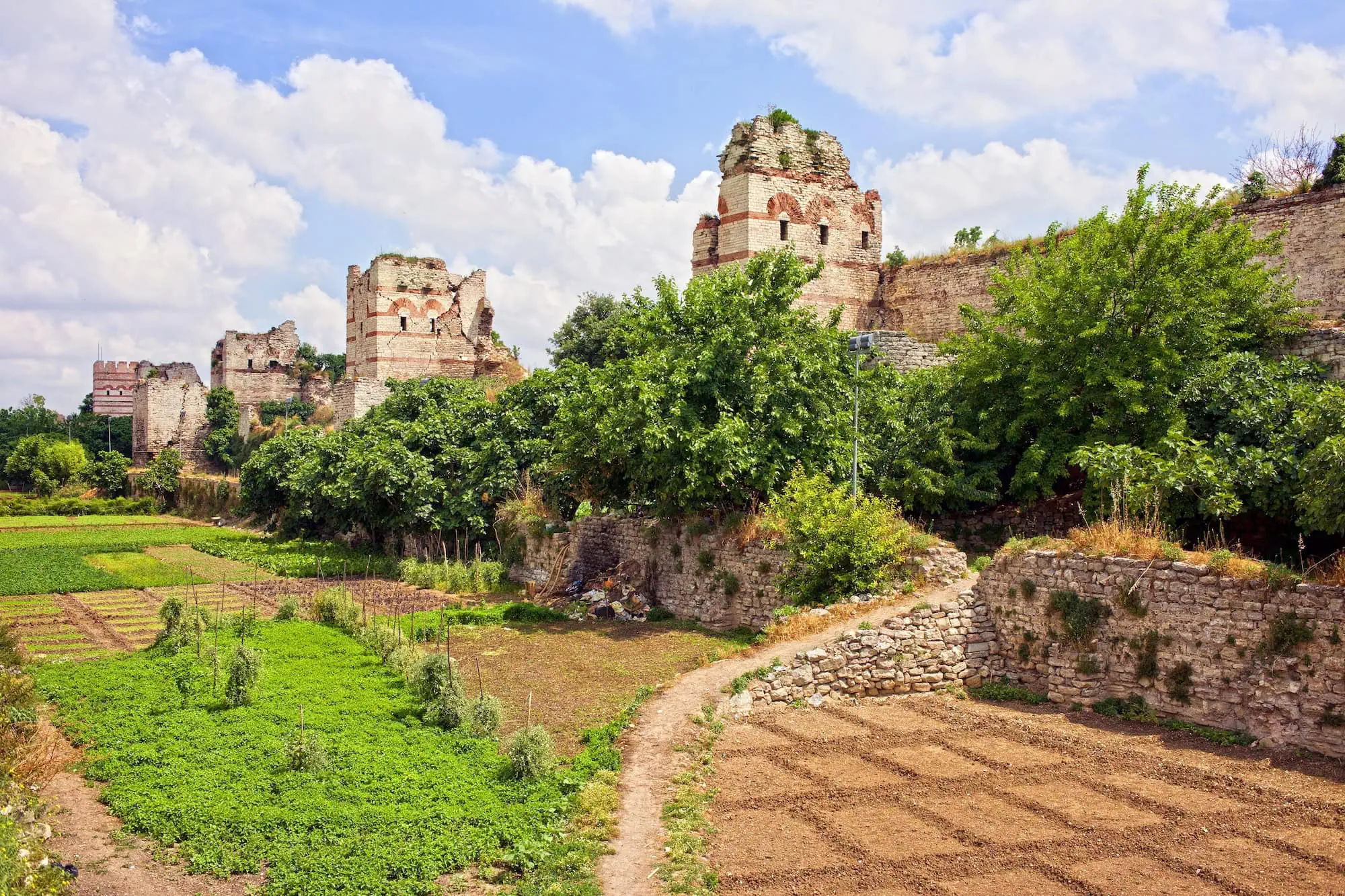
Constantinople faced constant threats from barbarian invasions. Attila the Hun and his forces had devastated much of Europe, and the city needed protection that could withstand prolonged sieges. The existing walls built by Constantine the Great were no longer sufficient for the growing capital.
The Engineering Marvel
The Theodosian Walls featured a triple-line defense system. An outer wall stood 2 meters (6.5 feet) high, followed by a main wall reaching 12 meters (40 feet), and finally an inner wall of 5 meters (16 feet). Between these barriers, attackers would find themselves trapped in killing zones called periboloi.
Construction Phases and Materials
Byzantine builders used alternating layers of limestone blocks and brick courses. This technique, called opus mixtum, provided both strength and flexibility during earthquakes. The walls included 96 towers spaced at regular intervals, each designed for specific defensive functions.
The Golden Gate Complex
At the southern end, the Golden Gate served as the ceremonial entrance for imperial triumphs. This massive structure combined military defense with political symbolism, featuring marble columns and bronze doors that proclaimed Constantinople’s power to the world.
Walking the Walls Today
Start your exploration at the Mevlanakapı (Rhegium Gate) section, where restoration work has revealed the walls’ original grandeur. The morning light illuminates the ancient stones perfectly, making this the ideal time for photography.
The wall runs through several distinct neighborhoods, each offering different perspectives on Byzantine architecture. Near the Topkapı area, you’ll find the best-preserved towers and gates. Local vendors often set up small stalls here, creating an authentic Istanbul atmosphere that blends ancient history with modern city life.
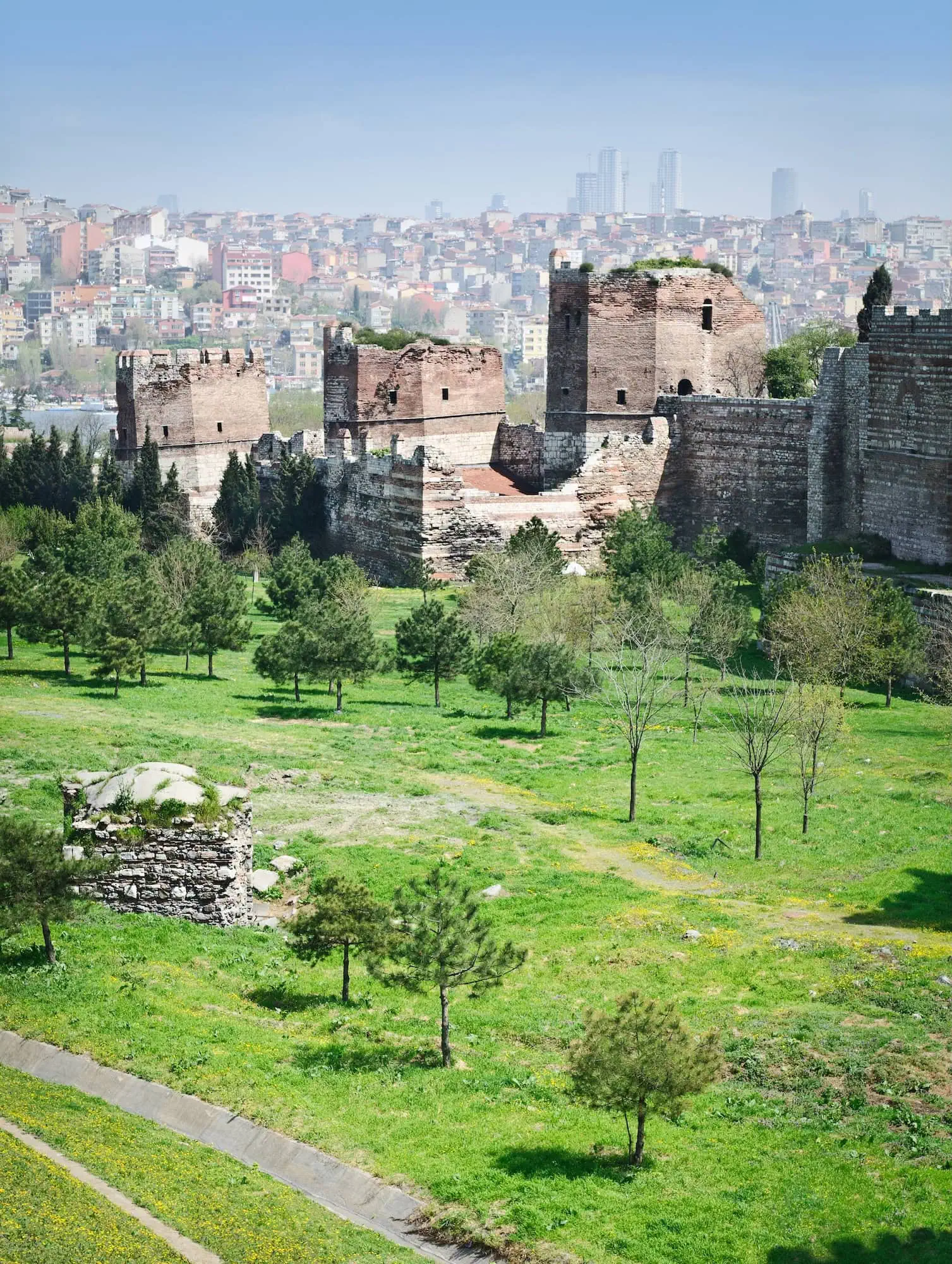
From the Belgrade Gate northward, the walls become more ruinous but equally fascinating. Earthquake damage and Ottoman modifications tell their own stories about how Istanbul adapted over centuries. Don’t miss the inscriptions carved into various towers – some dating back to the original construction period.
The Blachernae section at the northern end presents a different architectural style. These walls were added later to protect the imperial palace complex, featuring thicker foundations and more sophisticated defensive features.
Military Architecture and Defensive Features
Each tower served specific strategic purposes during siege warfare. Corner towers provided crossfire opportunities, while gate towers controlled access points through multiple defensive layers.
The walls incorporated sophisticated water management systems. Cisterns built into the foundations supplied defenders during long sieges, while drainage channels prevented undermining attempts by attackers.
Byzantine engineers designed the fortification to channel attacking forces into predetermined killing zones. The curved sections near major gates forced invaders to expose their flanks while climbing steep approaches under constant arrow fire.
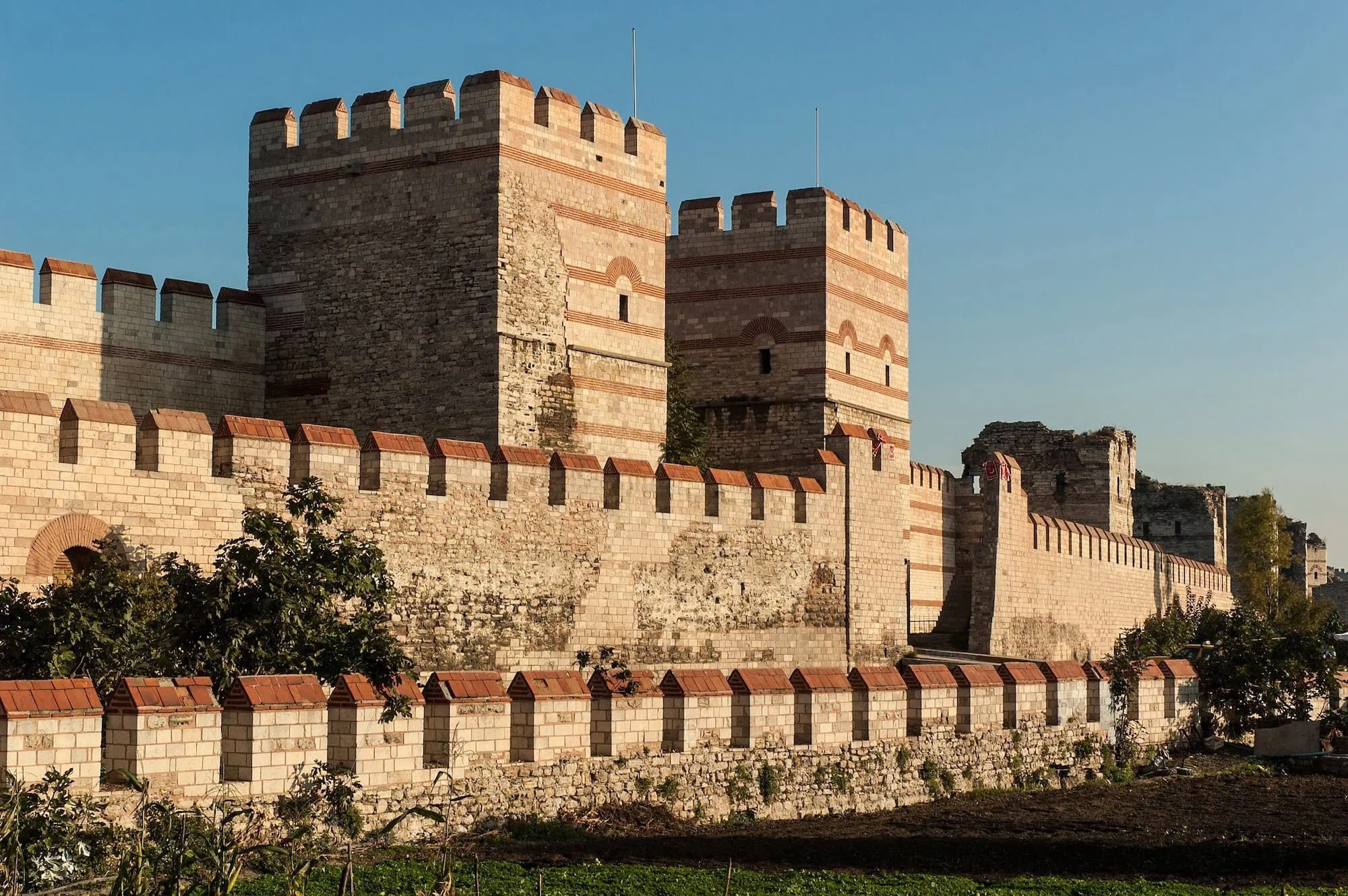
Medieval siege engines struggled against these defenses. The walls successfully repelled Arab sieges in the 7th and 8th centuries, Bulgarian attacks in the 9th century, and countless other military campaigns until the final Ottoman conquest in 1453.
Surviving Ottoman Conquest and Modern Challenges
Mehmed II’s cannons finally breached these legendary defenses on May 29, 1453. The Ottoman siege lasted 53 days, with the walls holding firm until new gunpowder technology overwhelmed the ancient fortifications.
After the conquest, Ottoman rulers modified sections for their own defensive needs. They added new gates, reinforced damaged areas, and integrated the walls into Istanbul’s expanding urban fabric.
Restoration Efforts and UNESCO Recognition
Modern conservation work began in the 1980s. UNESCO’s World Heritage designation brought international attention and funding, though restoration remains an ongoing challenge.
Current Condition and Access
Today, approximately 1.5 km (0.9 miles) of walls remain well-preserved and accessible to visitors. Other sections suffer from urban encroachment, earthquake damage, and centuries of neglect.
Photography and Documentation
The walls provide excellent subjects for architectural photography. Early morning and late afternoon offer the best lighting conditions, with fewer crowds and optimal shadow contrast.
Safety Considerations for Visitors
Some wall sections pass through residential neighborhoods where local knowledge helps ensure respectful exploration. Sturdy walking shoes are essential, as the terrain includes uneven stones and steep inclines.
Planning Your Visit
We recommend allocating 3-4 hours for a complete wall exploration. The experience combines historical education with moderate physical activity, suitable for most fitness levels.
Transportation Options
Metro Line M1A stops at Topkapı-Ulubatlı, providing easy access to the central wall sections. From here, you can walk north or south along the fortifications. Public buses also serve multiple wall access points throughout the day.
Best Times to Visit
Weekday mornings offer quieter exploration opportunities. Spring and autumn provide ideal weather conditions, while summer visits require sun protection and adequate water supplies.
Guided Tour Benefits
Professional guides can identify specific historical features that casual visitors might overlook. They also provide context about Byzantine military tactics and architectural innovations that make the walls truly remarkable.
Combining with Other Attractions
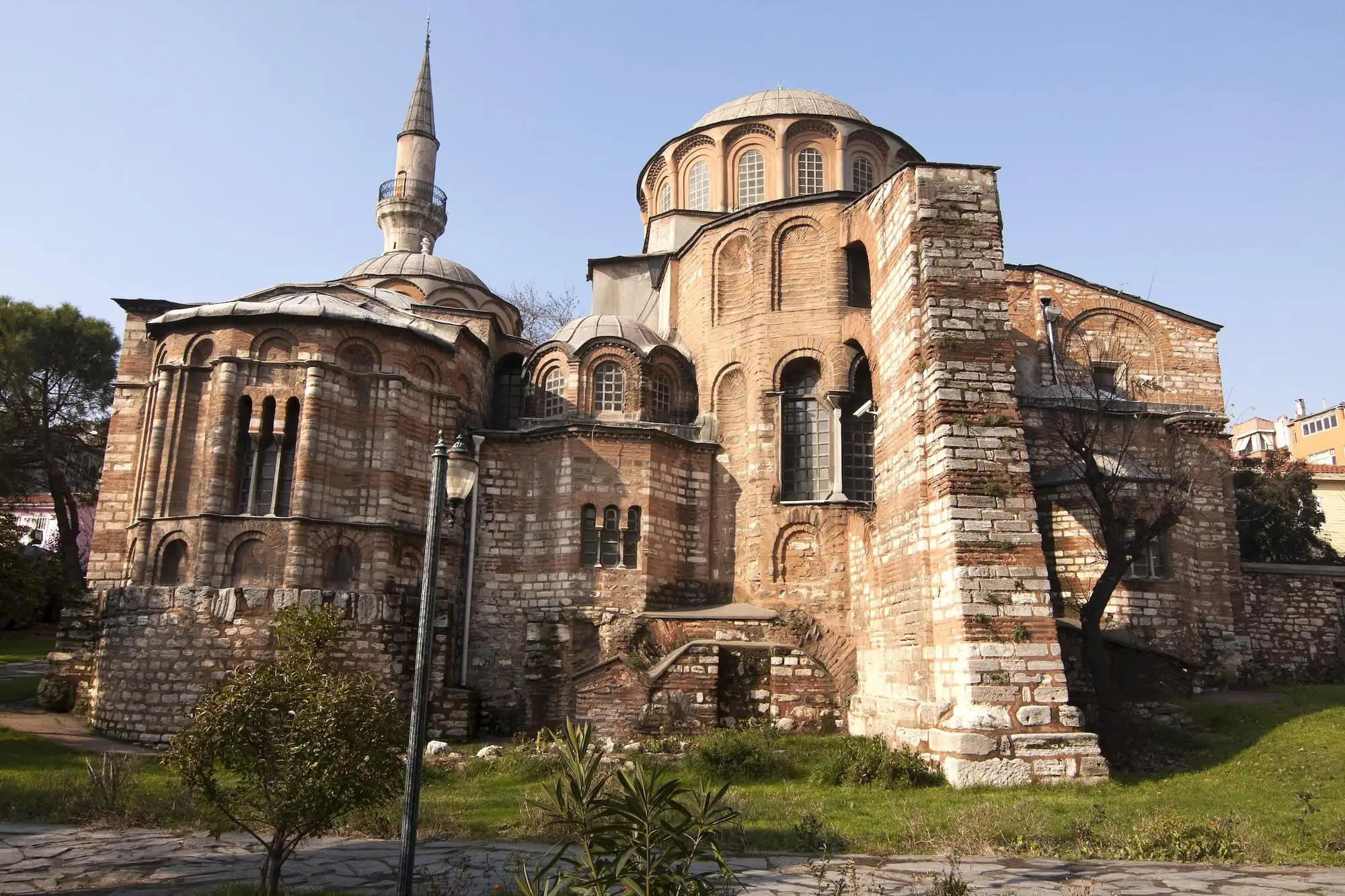
The Kariye Museum (Chora Church) sits near the northern wall sections, offering Byzantine art that complements your fortification exploration. Many visitors also include the nearby Golden Horn area in their itinerary.
Local Neighborhood Exploration
The wall passes through authentic Istanbul neighborhoods rarely visited by tourists. These areas showcase traditional Turkish daily life and often feature small restaurants serving local specialties.
Archaeological Discoveries and Historical Significance
Recent excavations have revealed construction techniques that influenced fortress design across medieval Europe. Archaeologists continue discovering artifacts that illuminate daily life within the Byzantine capital.
Imperial inscriptions found on various towers provide direct evidence of repair campaigns and defensive upgrades. These stone records help historians understand how the walls evolved over their thousand-year active period.
The fortifications represent one of Late Antiquity’s most sophisticated defensive systems. Their success in protecting Constantinople influenced castle and city wall designs from England to the Middle East.
Byzantine military manuals describe tactical uses for each wall section, creating a comprehensive picture of medieval siege warfare. This documentation makes the Istanbul walls uniquely valuable for military historians.
Frequently Asked Questions
A complete walk takes 4-6 hours depending on your pace and stops for photography or rest.
Most sections involve uneven terrain and steps, making them challenging for mobility-impaired visitors.
Start at Mevlanakapı where restoration work showcases the walls’ original appearance most clearly.
Some preserved sections allow careful climbing, but many areas are restricted for safety and conservation reasons.
The walls themselves are free to explore, though some adjacent museums and attractions charge admission.
Comfortable walking shoes, water, sun protection, and a camera are essential items for your visit.
Limited facilities exist near major gates, so plan accordingly for longer explorations.
The fortifications integrate with the broader Byzantine and Ottoman historical landscape throughout the old city.
The Theodosian land walls protected the western approach, while separate sea walls defended the Golden Horn and Marmara Sea sides.
Yes, many elevated points throughout the city offer views of various wall sections, especially from the Golden Horn area.
Professional guides offer tours in English, Turkish, and other major languages through various tour companies.
General photography is permitted, though some restored sections may have specific guidelines for drone usage.
Design Your Custom Tour
Explore Egypt and Turkey your way by selecting only the attractions you want to visit