

Old Silk Market in Bursa – A Good Day Out For Weary Travelers
Step into a world where silk threads still whisper tales of ancient caravans.
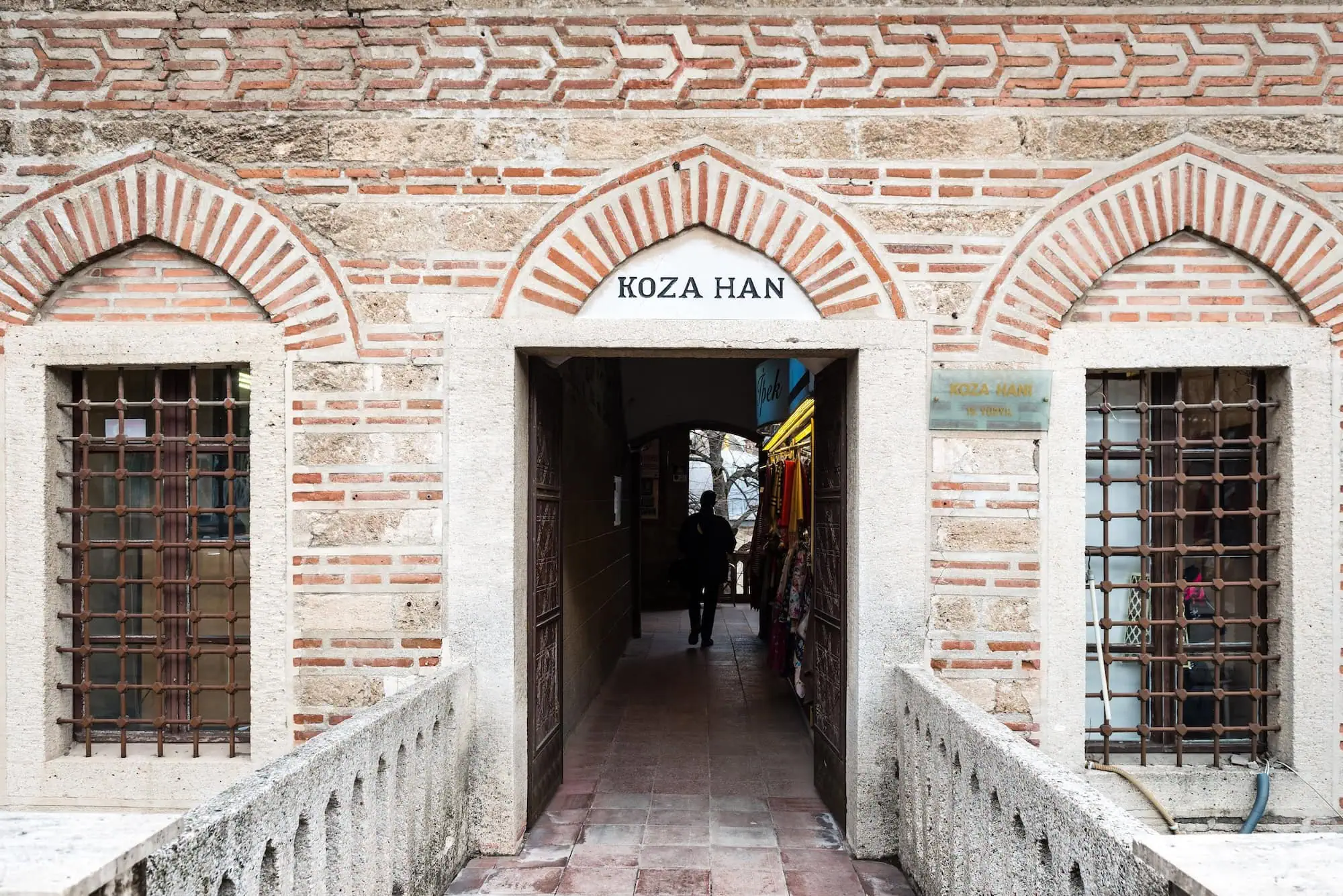
The Old Silk Market in Bursa, known locally as Koza Han, offers one of the most authentic glimpses into the Ottoman Empire’s rich trading history. Built in 1491 by Sultan Bayezid II, this architectural gem once stood at the center of global silk commerce when Bursa was the silk capital of the world.
Old Silk Market can be included in our Combined Egypt and Turkey Tours, where Turkey’s historic trade routes and cultural landmarks are combined with Egypt’s ancient wonders for a diverse and immersive journey.
Today, visitors experience a unique blend of preserved heritage and modern shopping, where traditional silk craftsmanship continues alongside contemporary boutiques. The market’s 95 rooms surround a peaceful courtyard, creating an atmosphere that reflects the vibrant commercial life of the 15th century.
Unlike many historic sites, Koza Han retains its original purpose while evolving with time—making it both culturally authentic and enjoyable to explore.
Table of Contents
Historical Significance of Bursa’s Silk Trading Empire
The transformation of Bursa into the Ottoman Empire’s first capital brought unprecedented prosperity through silk production and trade. As the western terminus of the ancient Silk Road, the city connected Eastern goods with European markets, creating immense wealth for the empire.
Ottoman Architecture and Design
Sultan Bayezid II’s vision for Koza Han reflected the empire’s commitment to both commerce and beauty. The structure’s 95 rooms were strategically designed around a central courtyard, allowing merchants to conduct business while their goods remained secure. Thick stone walls provided protection from both weather and theft, while the open courtyard design facilitated the natural ventilation essential for silk storage.
The architectural details reveal sophisticated understanding of commercial needs. Each room featured specific dimensions suitable for different types of merchandise, from raw silk cocoons to finished textiles.
The Silk Road Connection
Bursa’s position made it the crucial link between Asian silk producers and European consumers. Caravans arriving from China, Persia, and Central Asia would unload their precious cargo in the city’s numerous caravanserais before goods continued westward to Venice, Genoa, and other Mediterranean ports.
This strategic location generated enormous revenues for the Ottoman treasury. Historical records show that silk taxes alone funded major imperial projects, including the construction of mosques and public buildings throughout the empire.
Economic Transformation Through Centuries
The decline of overland silk routes during the 16th and 17th centuries forced Bursa to reinvent itself. Local silk production expanded to compensate for reduced transit trade, establishing workshops and manufacturing facilities that continued operating well into the 20th century.
Modern Shopping Experience at Koza Han
Today’s visitors encounter a carefully balanced blend of historical preservation and contemporary commercial activity. The market no longer functions as a silk exchange, but its transformation into a tourist destination has been thoughtfully managed to maintain authentic character.
We observe that many travelers appreciate the market’s intimate scale compared to Istanbul’s Grand Bazaar. The smaller space creates opportunities for genuine interactions between shoppers and vendors, while the historic setting enhances the overall experience. Modern amenities have been discretely integrated without compromising the building’s architectural integrity.
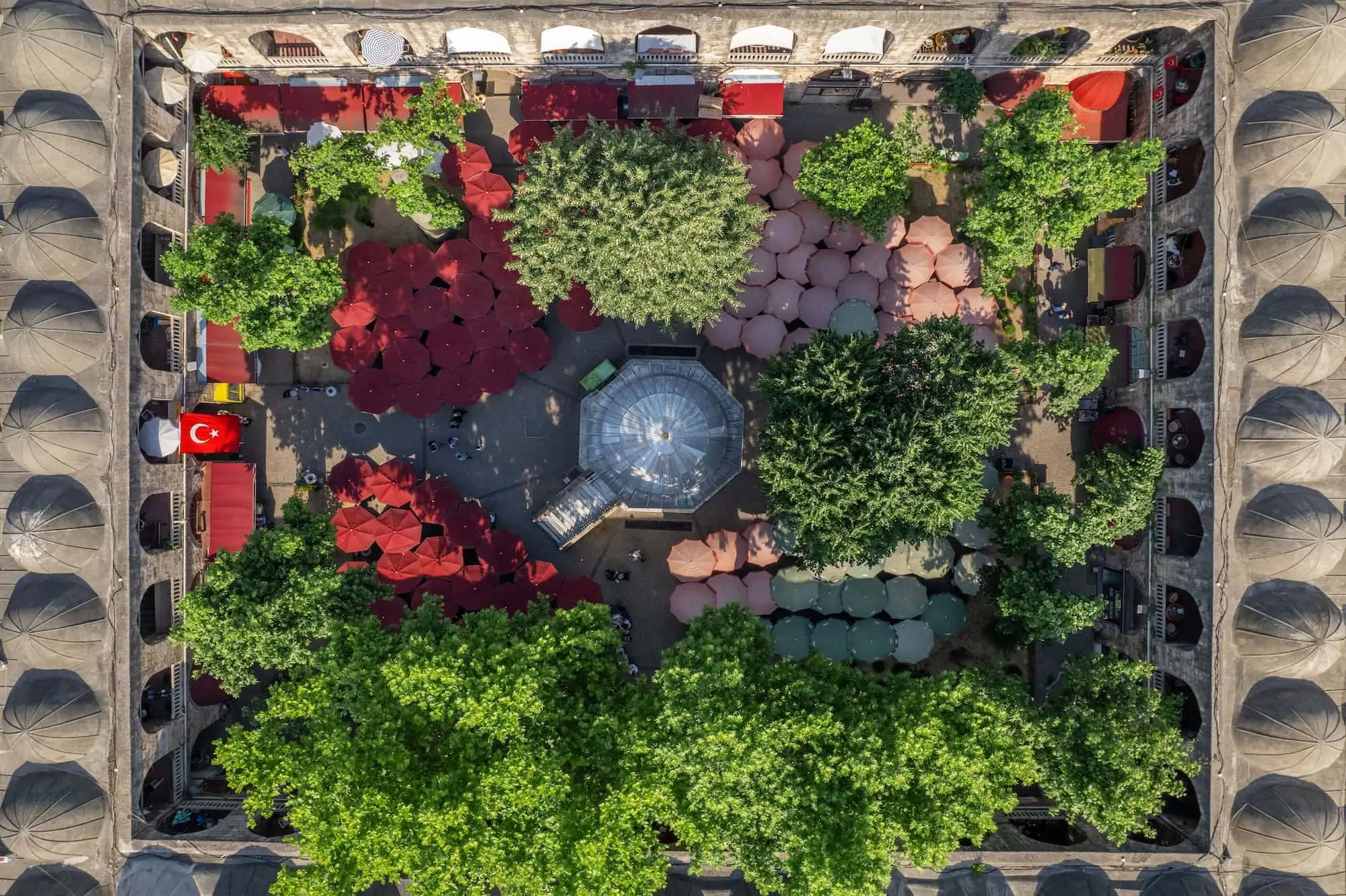
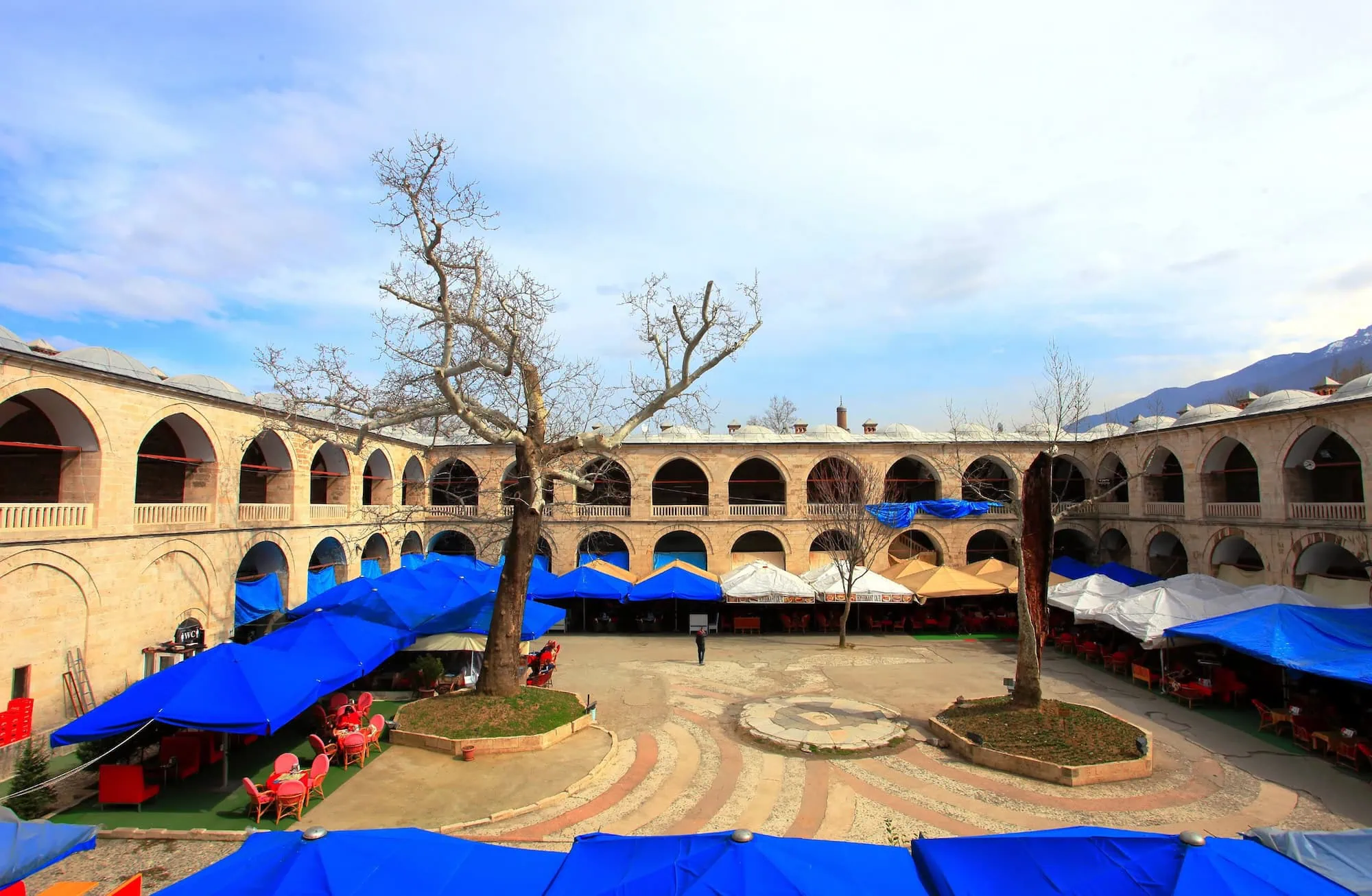
The central courtyard now houses a lovely tea garden where visitors can rest between shopping sessions. This addition serves both practical and cultural functions, allowing travelers to experience traditional Turkish hospitality while contemplating their purchases.
Product Quality and Authenticity
Not all silk sold in the market originates from Bursa’s local production facilities. Many vendors import silk products from other Turkish regions or international sources, reflecting the globalized nature of modern textile trade. Discerning shoppers learn to distinguish between handwoven local products and machine-produced alternatives through careful examination of weaving patterns and fiber quality.
Pure silk items command premium prices, but synthetic blends offer more affordable options for budget-conscious travelers. Experienced vendors typically explain the differences honestly, particularly when dealing with repeat customers or those demonstrating serious interest in purchasing.
Negotiation Culture and Pricing
Traditional haggling remains an expected part of the shopping experience. Initial prices often reflect this cultural expectation, with vendors prepared for negotiation processes that can reduce costs by 20-40 percent. However, the negotiation should feel respectful rather than aggressive.
Visitor Experience and Practical Information
The market operates year-round with consistent hours, though individual shops may vary their schedules during religious holidays or tourist seasons. Peak visiting times occur during spring and autumn when weather conditions make exploring the courtyard most pleasant.
Navigation and Layout
The compact design makes orientation simple even for first-time visitors. The main entrance leads directly into the central courtyard, with numbered rooms creating a logical browsing pattern. Most shops display their merchandise both inside their assigned rooms and in courtyard-facing areas.
Signage appears in Turkish, English, and Arabic, reflecting the diverse international clientele. Many shopkeepers speak multiple languages, particularly those dealing frequently with tourist customers.
Transportation and Access
Public transportation connects the market with Bursa’s main tourist areas and hotels. City buses provide regular service, while taxi rides offer convenient direct access for those carrying purchases or traveling in groups.
Parking facilities exist nearby, though spaces fill quickly during peak tourist seasons. We recommend using public transport when possible, as the surrounding historic district rewards exploration on foot.
Cultural Context and Etiquette
Understanding basic Turkish customs enhances the visit significantly. Greeting shopkeepers with “Merhaba” (hello) and “Teşekkürler” (thank you) demonstrates respect for local culture. Many vendors offer tea during extended conversations, which represents traditional hospitality rather than sales pressure.
Photography is generally welcome in the courtyard and exterior areas, though asking permission before photographing specific shops or merchandise shows courtesy.
Product Categories and Shopping Guide
Traditional Silk Products
Handwoven scarves represent the market’s most authentic offerings. These items showcase traditional dyeing methods using natural materials that create unique color variations impossible to replicate with synthetic dyes. Prices reflect the labor-intensive production process, with simple designs starting around moderate levels and elaborate patterns commanding premium rates.
Silk shawls and larger wraps demonstrate the full range of local craftsmanship. The finest examples feature intricate patterns inspired by Ottoman court textiles, requiring weeks of skilled work to complete.
Contemporary Adaptations
Modern designers have created contemporary interpretations of classical silk products. These items blend traditional materials and techniques with current fashion trends, appealing to shoppers seeking authentic materials in contemporary styles.
Accessories such as ties, pocket squares, and jewelry complement the traditional textile offerings. Many of these products incorporate silk elements while using other materials for practical functionality.
Cashmere and Wool Alternatives
Beyond silk, the market offers high-quality cashmere and wool products. These items often provide better value for money while maintaining the luxury feel that attracts discerning shoppers. Turkish wool products particularly demonstrate excellent craftsmanship and durability.
Beyond Shopping: Cultural Immersion
The market functions as more than a retail destination. Its atmosphere provides insights into Turkish commercial culture and social interactions that extend far beyond simple buying and selling.
Regular visitors often develop relationships with specific vendors, creating ongoing connections that enhance future visits. These relationships demonstrate the personal nature of Turkish business culture, where trust and mutual respect form the foundation of successful transactions.
Tea Culture Integration
The courtyard tea garden serves as a social hub where visitors observe local customs and interact with residents beyond commercial contexts. The ritual of sharing tea creates opportunities for cultural exchange that many travelers find more valuable than their purchases.
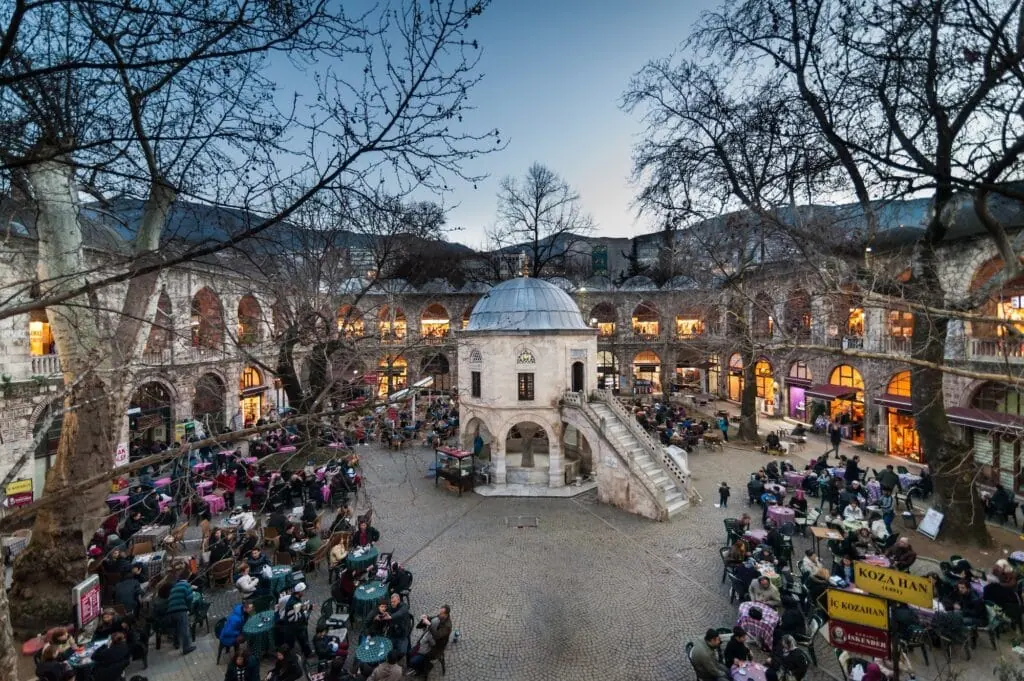
Local residents frequently use the space for casual meetings, providing authentic glimpses into contemporary Turkish social life. This mixing of tourist and local activities maintains the market’s role as a living part of Bursa’s community rather than merely a preserved historical site.
Seasonal Variations
Different seasons bring distinct character to the market experience. Spring visits coincide with renewed silk production activities, while autumn offers comfortable weather for extended exploration. Winter provides cozy indoor browsing opportunities, though the tea garden becomes less appealing during cold months.
Summer can feel warm in the enclosed courtyard, but early morning or late afternoon visits avoid the hottest periods while providing excellent lighting for examining textile details.
Frequently Asked Questions
Most shops open around 9:00 am (09:00) and close by 7:00 pm (19:00), though some may extend hours during peak tourist seasons.
Experienced shoppers typically achieve 20-40 percent reductions through respectful negotiation, depending on the item and vendor.
While some products are locally produced, many items come from other Turkish regions or international sources. Ask vendors about specific origins.
Pure silk feels smoother and has natural luster, while blends incorporate synthetic fibers that reduce cost but affect texture and durability.
Absolutely. The historic han welcomes visitors interested in its Ottoman architecture and cultural significance, regardless of shopping intentions.
Many established vendors accept credit cards, though cash often provides better negotiating leverage and some smaller shops prefer cash transactions.
Allow 2-3 hours to explore properly, including time for tea in the courtyard and leisurely examination of merchandise.
Photography is generally welcome in public areas, though asking permission before photographing specific shops shows cultural sensitivity.
The market sits within Bursa’s historic district, close to the Grand Mosque, Green Tomb, and other significant Ottoman monuments.
Most established shops have staff who speak basic English, while some vendors are fluent in multiple languages including Arabic and German.
Weekday mornings and early afternoons typically offer the most peaceful shopping experience with better vendor availability.
Public restrooms are available in the surrounding area, and the tea garden facility serves visitors during operating hours.

Design Your Custom Tour
Explore Egypt and Turkey your way by selecting only the attractions you want to visit