

Temple of Apollo in Didyma – An Ancient Greek Sanctuary of Apollo
Ancient Greece’s most ambitious temple project stands in modern Turkey’s landscape, where whispered prophecies once influenced the course of empires.
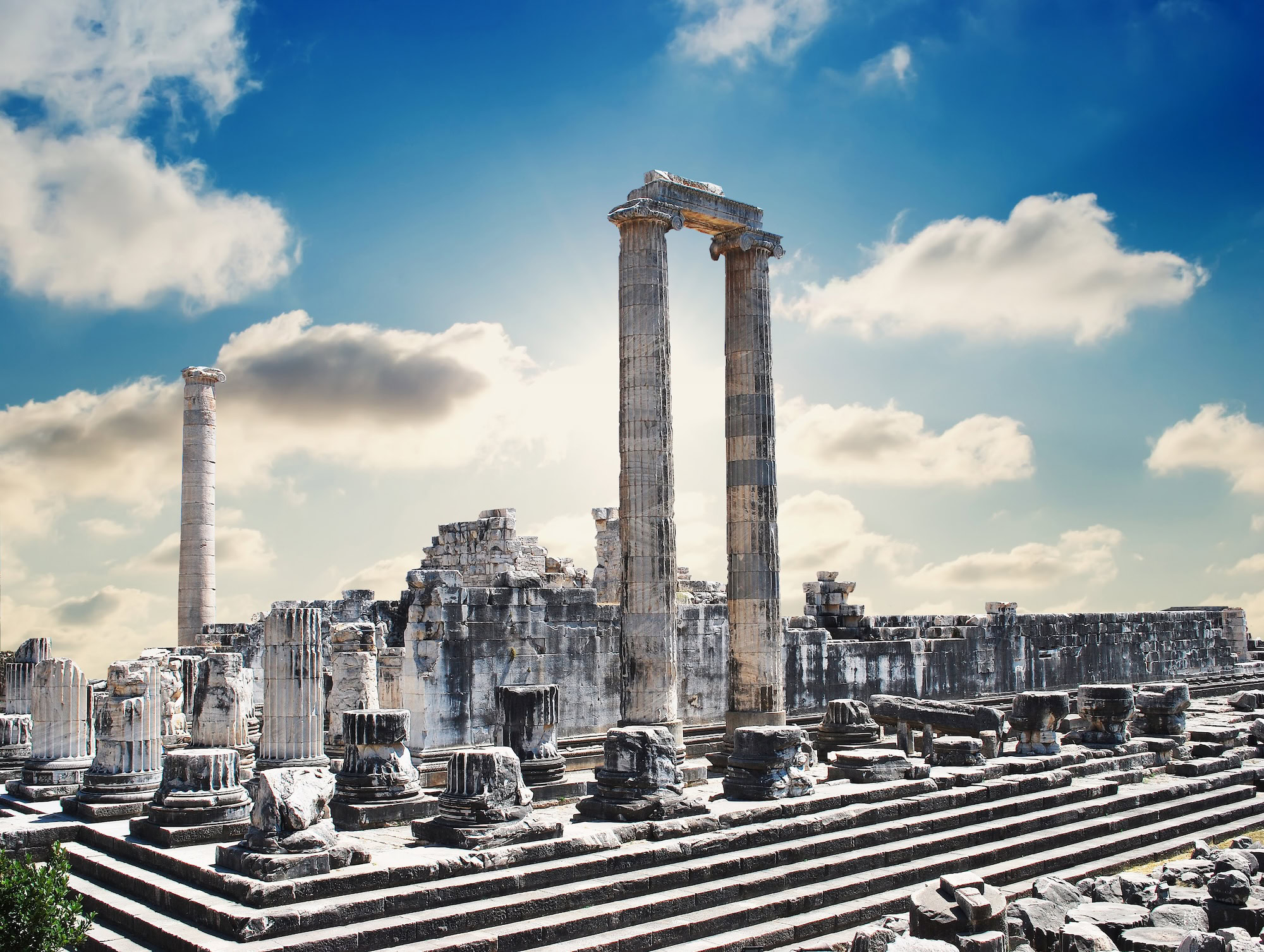
For over a thousand years, pilgrims followed the Sacred Way from Miletus to consult Apollo’s oracle at Didyma. This was far more than a traditional temple—it ranked as the fourth largest structure in the Greek world, combining religious significance with bold architectural vision.
The Temple of Apollo can be included in our Egypt and Turkey tours, where Turkey’s ancient archaeological sites are explored alongside its cultural landmarks and Egypt’s timeless historical treasures.
Destroyed by Persian forces, revived under Alexander the Great, and later supported by Roman emperors, the temple remains a powerful symbol of both ambition and incompletion. Its towering columns still rise toward the sky, capturing the scale of a project that was never fully realized.
Today, these ruins offer a unique blend of history, mythology, and engineering—making Didyma one of the most compelling archaeological sites in the region.
Table of Contents
Sacred Oracle and Religious Significance
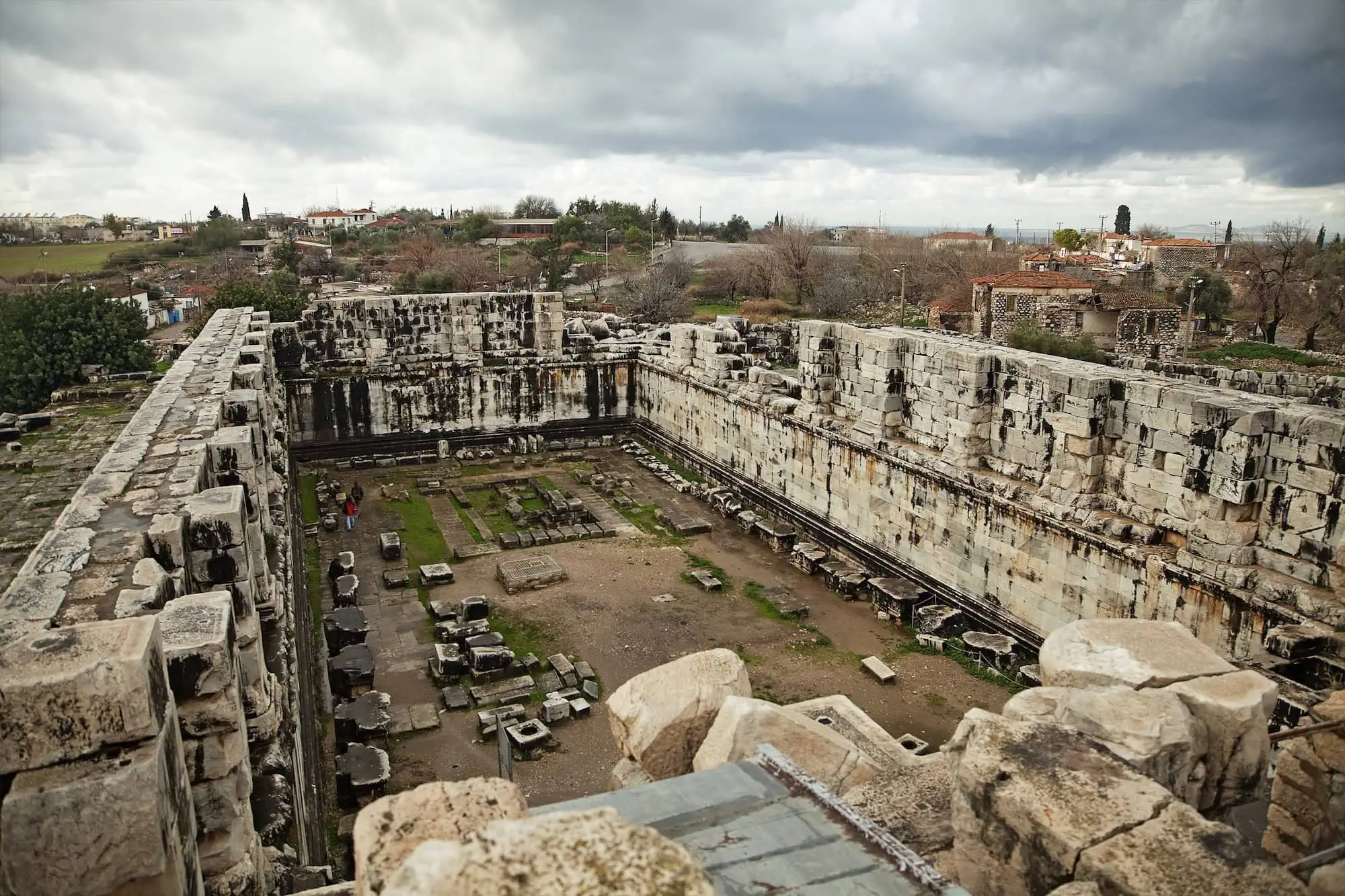
The oracle at Didyma operated differently from Delphi’s famous Pythia. Here, the priestess positioned herself above the sacred spring within the temple’s inner sanctum, drawing divine inspiration from Apollo Didymeus. The Branchidae family, descendants of the legendary Branchos—Apollo’s beloved—managed the sanctuary’s religious functions for centuries.
These hereditary priests oversaw complex rituals where prophecies were composed into verse and delivered as written oracles from the chresmographeion.
Political Power Through Divine Consultation
Roman emperors regularly sought guidance from Didyma’s oracle, transforming religious consultation into political strategy. Diocletian’s infamous consultation in 303 CE triggered the Great Persecution of Christians across the empire. Earlier, Julius Caesar and Hadrian had also turned to the oracle during crucial decision points in their reigns.
Prophetic Processes and Priestly Administration
The oracle’s methods remain partially mysterious to modern historians. Unlike other oracular sites, Didyma’s prophecies required elaborate written composition, suggesting a more literary approach to divine communication. The sanctuary’s natural spring played a central role, with the priestess drawing inspiration from its sacred waters while positioned in the temple’s unique hollow design.
Religious Transformation Through the Ages
Christianity eventually transformed the pagan temple into a Byzantine basilica during the 5th-6th centuries CE. A small three-aisled church was constructed deep within the adyton, preserving the site’s sacred function while adapting to new religious practices. This architectural succession demonstrates how religious sites maintain spiritual significance across cultural transitions.
Architectural Marvel and Construction Innovation
The Temple of Apollo represented Hellenistic architecture’s most ambitious undertaking. Measuring over 5,500 square meters, this dipteros Ionic temple was designed with 122 columns, each towering over 19 meters (64 feet) high—the tallest planned for any Greek temple.
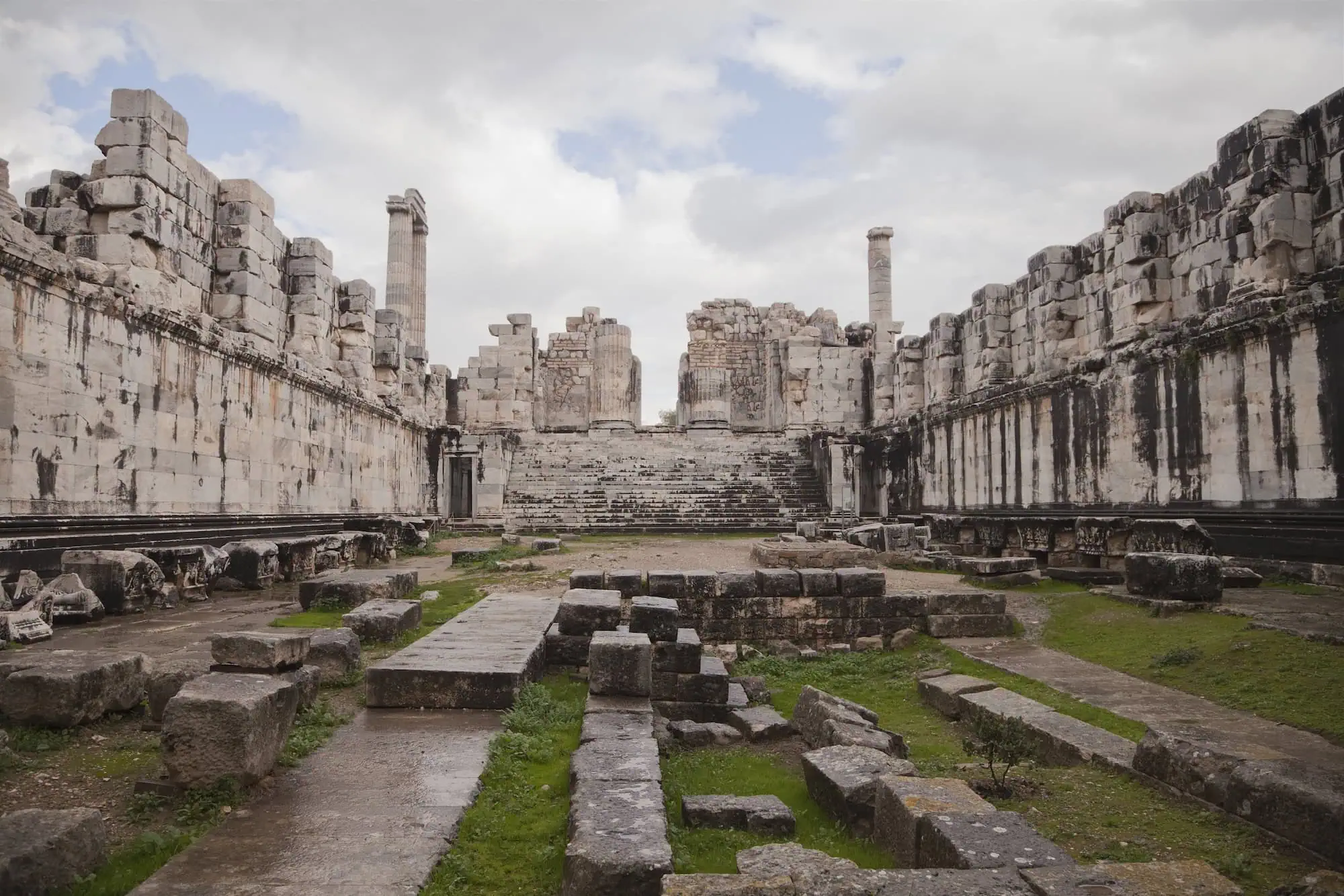
The architects Paeonius and Daphnis created an ingenious solution around 300 BCE: a hollow temple design that preserved the natural spring while maintaining traditional temple aesthetics. This structural innovation allowed the sacred waters to flow freely within the adyton while supporting the massive peristyle above.
Construction drawings scratched into marble surfaces, discovered in 1979, reveal the sophisticated planning methods ancient builders employed.
Engineering Challenges and Economic Realities
Each column cost approximately 40,000 drachmas—equivalent to 172 kilograms of silver and representing 20,000 working days of skilled labor. These astronomical costs explain why the temple remained unfinished despite centuries of construction efforts. The project’s scope exceeded even wealthy Miletus’s economic capabilities, requiring ongoing patronage from Hellenistic kings and later Roman emperors.
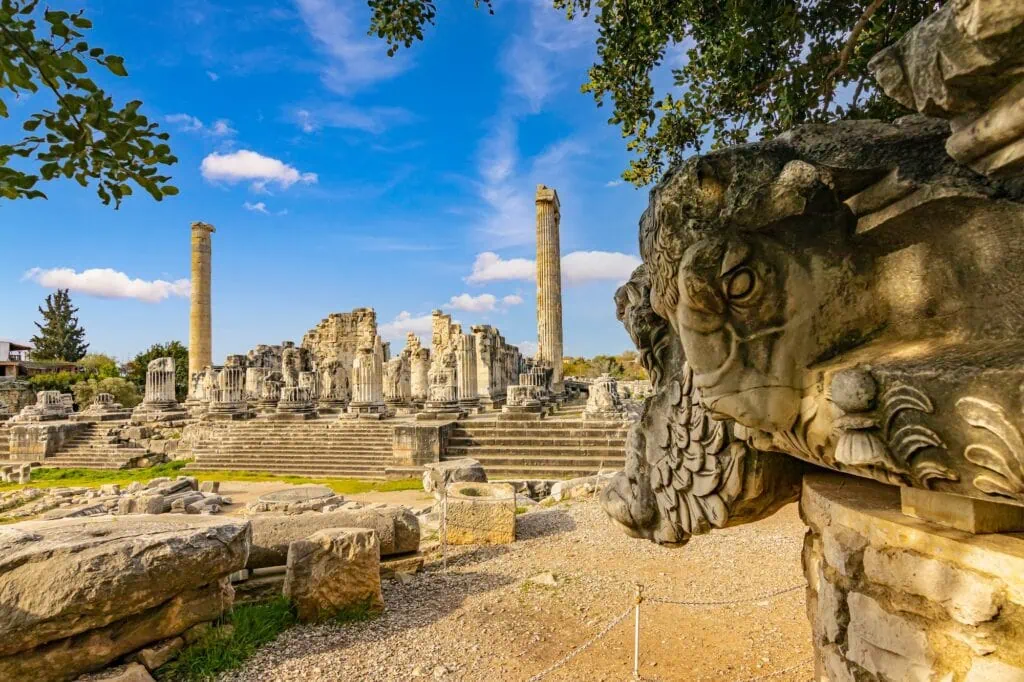
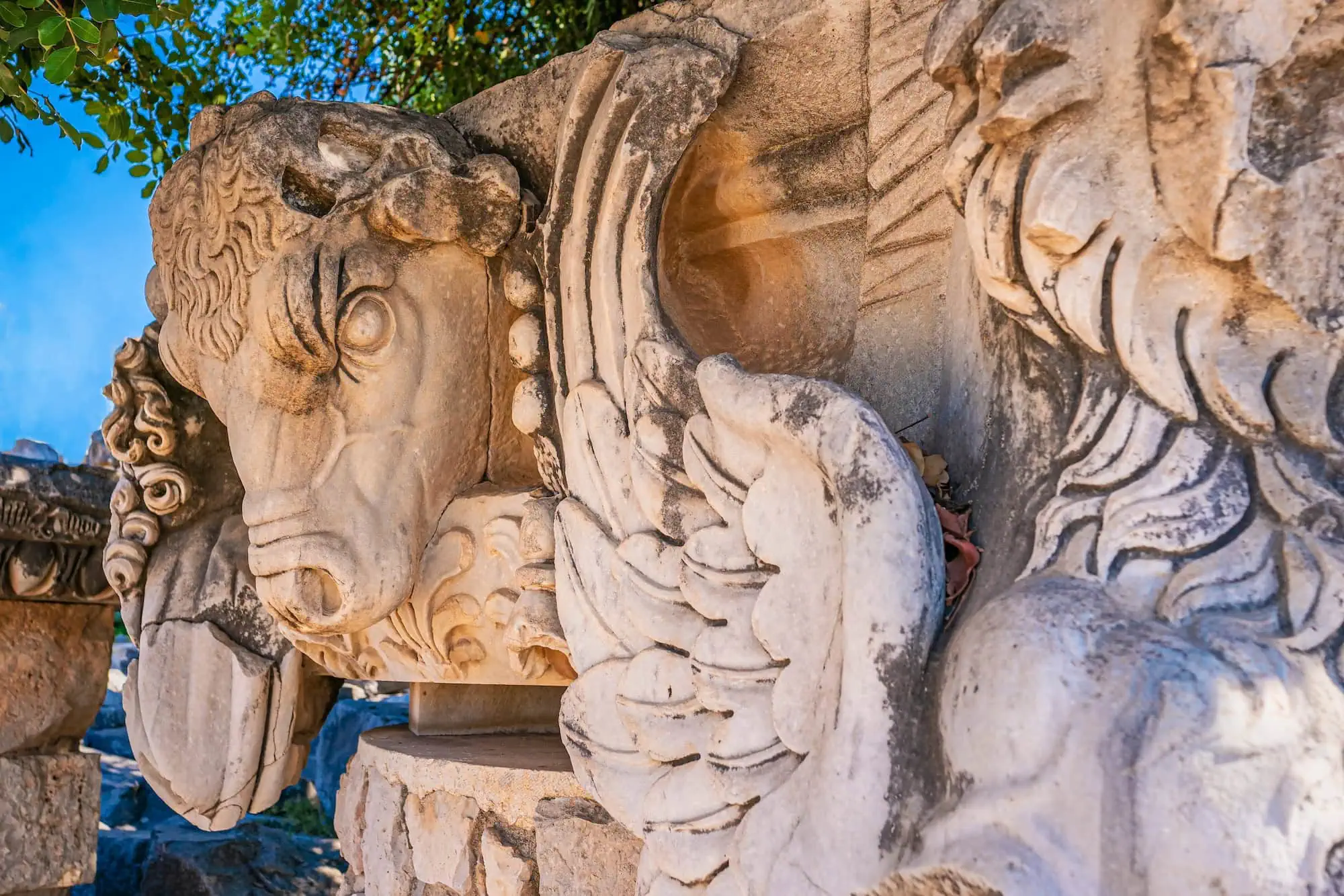
Archaeological evidence suggests that only the eastern facade approached completion, with intricate sculptural decoration including the famous Medusa heads and hippocampus carvings at column bases. The western sections remained largely unfinished when construction effectively ceased.
Historical Destruction and Remarkable Revival
Persian forces under Darius destroyed the original archaic temple in 494 BCE, carrying away the bronze cult statue of Apollo to Ecbatana. This devastating attack marked the end of the sanctuary’s first golden age and scattered the Branchidae priesthood across the Persian Empire.
Alexander the Great’s arrival in 334 BCE triggered the oracle’s resurrection. The spring, silent for over 150 years, reportedly began flowing again as Alexander approached Didyma. The Macedonian king initiated the temple’s reconstruction, beginning the Hellenistic building project whose ruins we see today.
Roman Imperial Investment
Successive Roman emperors continued supporting Didyma’s reconstruction. Trajan improved road connections between the sanctuary and Miletus, while Caligula reportedly intended to complete the sumptuous temple project entirely at imperial expense. Julian the Apostate made final attempts at pagan revival, conducting repairs and encouraging traditional worship practices.
The 1493 earthquake dealt the temple its final blow, reducing most of the structure to rubble and leaving only three columns standing. This natural disaster completed what centuries of human conflict and changing religious practices had begun.
Archaeological Discoveries and Modern Research
German archaeologists have led Didyma’s systematic excavation since 1905, with intensive work continuing through 1937 uncovering nearly the entire temple complex.
Charles Newton’s earlier expeditions in 1858 had already identified key sculptural elements, but German methodical approaches revealed the temple’s true architectural sophistication. The discovery of construction drawings etched into marble surfaces provided unprecedented insights into ancient building techniques and mathematical planning methods.
Research Methodology and Documentation Challenges
Early 20th-century archaeological practices at Didyma reflected their era’s priorities. German archaeologists hastily removed Byzantine church remains with minimal documentation, focusing exclusively on Hellenistic restoration. This approach, while recovering spectacular ancient architecture, eliminated valuable evidence of the site’s Christian transformation period.
Modern Conservation Efforts
Contemporary archaeological work emphasizes comprehensive documentation and careful preservation of multiple historical layers. The site now balances scholarly research with sustainable tourism, allowing visitors to appreciate both ancient achievements and ongoing conservation challenges.
Visiting Didyma Today: Tourism and Cultural Impact
The modern town of Didim has evolved from a small fishing village into a popular summer destination since the 1980s. D-Marin Didim now provides yacht facilities, while international visitors discover the temple’s magnificent remains just northwest of the contemporary resort area.
Experiencing Ancient Architecture
First-time visitors consistently report being overwhelmed by the temple’s massive scale. Three surviving columns create dramatic visual impact against the Turkish countryside, while scattered architectural elements throughout the site demonstrate the original structure’s intended grandeur. The famous Medusa sculptures remain among antiquity’s most photographed artistic works.
Sacred Way and Regional Context
The ancient Sacred Way connecting Didyma to Miletus spanned approximately 16 kilometers (10 miles), with processional routes marked by lion sculptures and offering stations. Modern visitors can trace portions of this pilgrimage path, understanding how religious journeys connected urban centers with sacred landscapes in the ancient Mediterranean world.
Frequently Asked Questions
Construction began around 300 BCE under architects Paeonius and Daphnis, but was never completed.
At over 5,500 square meters, it was the fourth largest temple in the ancient Greek world.
Persian forces destroyed the original archaic temple in 494 BCE, carrying away the bronze cult statue.
Didyma’s priestess delivered written prophecies composed in verse, unlike Delphi’s spoken utterances.
The natural spring remains visible within the temple’s inner sanctum, though less active than in antiquity.
A major earthquake in 1493 CE collapsed most remaining columns and reduced the structure to ruins.
The Branchidae were the hereditary priestly family who managed the sanctuary’s religious functions for centuries.
Each column cost approximately 40,000 drachmas, equivalent to 172 kilograms of silver and 20,000 days of skilled labor.
The temple’s hollow design preserved the natural sacred spring while supporting traditional Greek temple architecture above.
A Byzantine basilica was built within the temple during the 5th-6th centuries CE, transforming the sanctuary.
Julius Caesar, Hadrian, and Diocletian all sought divine guidance from Apollo’s oracle.
The site is located northwest of modern Didim in Turkey’s Aydın Province, accessible by car or tour bus.
Design Your Custom Tour
Explore Egypt and Turkey your way by selecting only the attractions you want to visit