

The Grand Mosque in Bursa – Another Spectacular Ottoman Mosque
The Grand Mosque of Bursa stands as one of Turkey’s most magnificent architectural achievements.
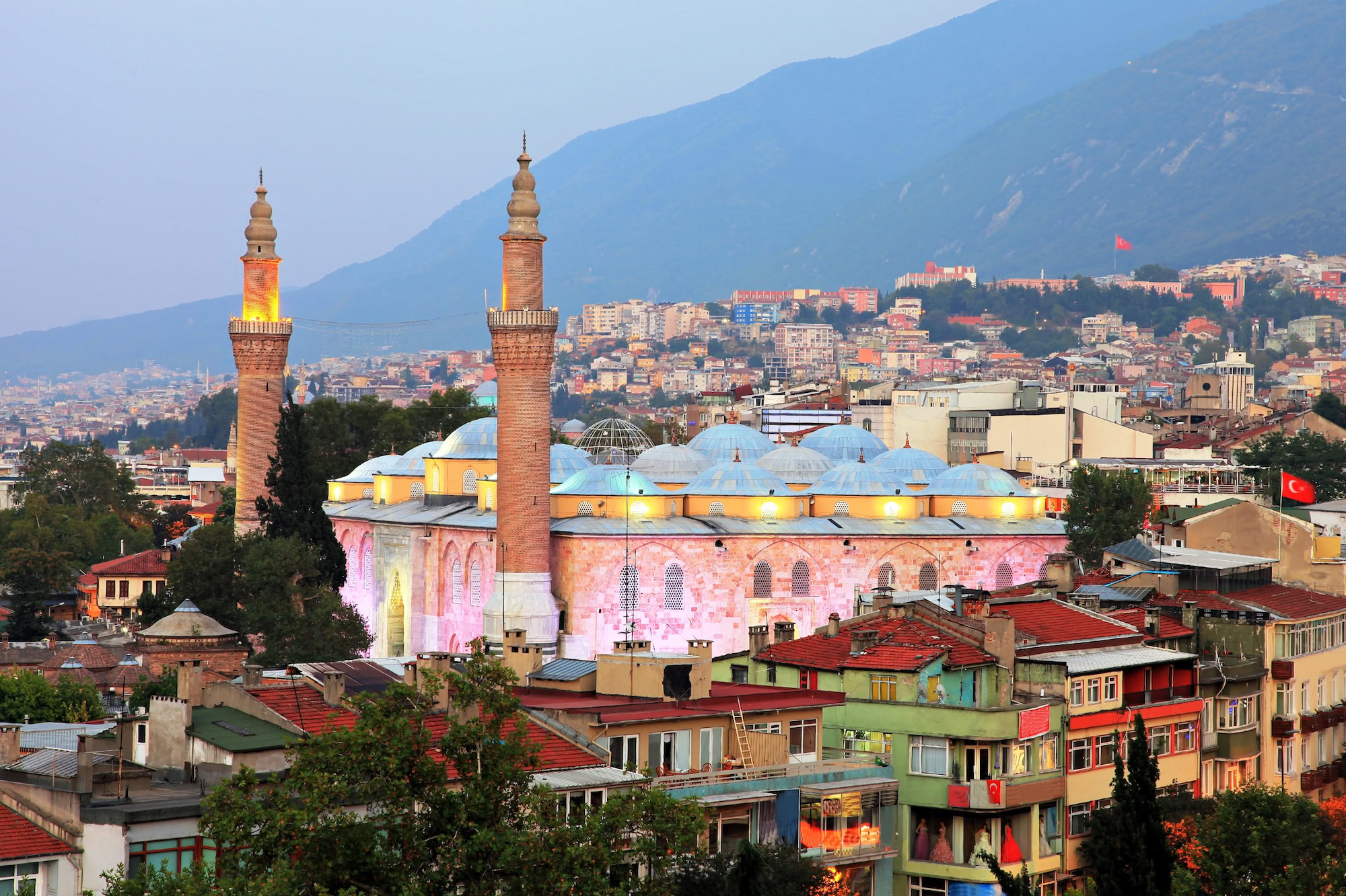
This extraordinary 14th-century structure represents far more than just a place of worship—it is a lasting symbol of the early Ottoman Empire’s artistic vision and religious devotion. Built between 1396 and 1399 under the patronage of Sultan Bayezid I, the mosque reflects a unique blend of Seljuk traditions and emerging Ottoman architectural style.
The Grand Mosque in Bursa can be included in our Combined Egypt and Turkey Tours, where Turkey’s historic and cultural landmarks are combined with Egypt’s ancient wonders for a rich and immersive travel experience.
Its 20 domes, remarkable calligraphy, and intricately crafted wooden pulpit continue to impress visitors from around the world. Located in the heart of Bursa’s old city, the mosque remains both an active place of worship and a cultural landmark that has preserved its grandeur through centuries.
Whether you’re drawn by its architecture, history, or spiritual atmosphere, this site offers a meaningful insight into Turkey’s Islamic heritage.
Table of Contents
Historical Foundation and Royal Commission
Sultan Bayezid I commissioned this architectural masterpiece to commemorate his decisive victory at the Battle of Nicopolis in 1396. The timing wasn’t coincidental – the early Ottoman Empire needed symbols of its growing power and religious authority.
The Legend Behind Construction
Local folklore tells the fascinating story of an elderly woman who refused to sell her small house for the mosque’s construction. Rather than force her removal, Sultan Bayezid I reportedly had architects redesign the entire structure around her property.
This tale reflects the ruler’s respect for his subjects, though historical records suggest the mosque’s unusual layout actually stems from adapting Seljuk architectural principles to Ottoman needs.
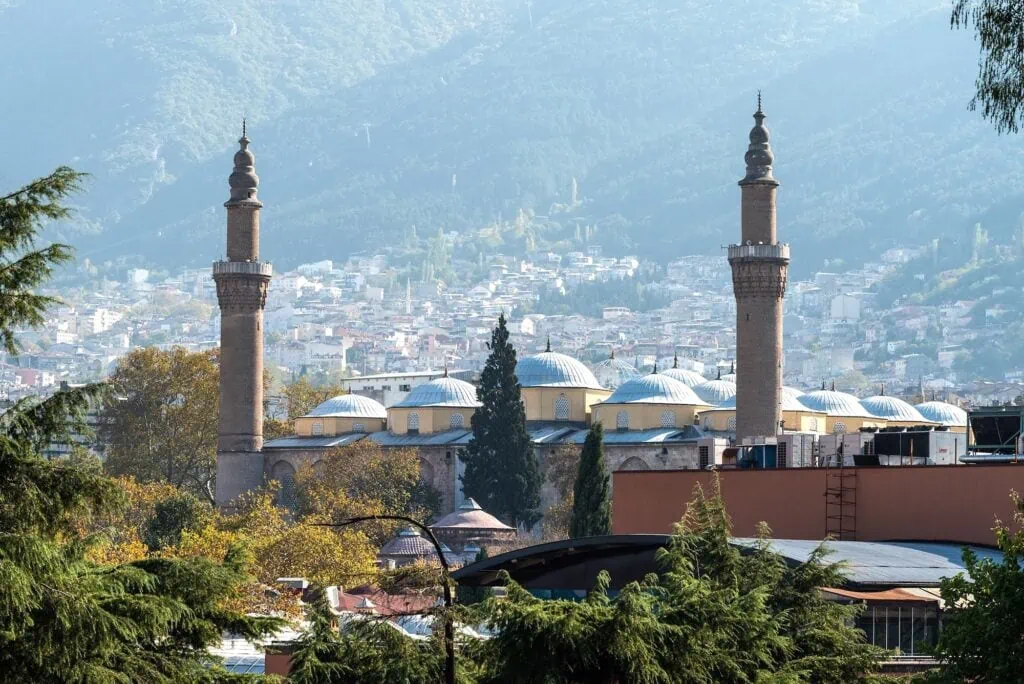
Building Timeline and Challenges
Construction began in 1396 under master architect Ali Neccar’s supervision. The project took three years to complete, an remarkably short timeframe for such an ambitious undertaking.
Workers faced significant challenges adapting the traditional hypostyle mosque design to Bursa’s terrain and climate. The 1855 earthquake damaged portions of the structure, but careful restoration preserved its original character while strengthening key structural elements.
Political and Religious Context
The mosque’s construction occurred during a pivotal moment in Ottoman history. Bayezid I sought to establish Bursa as a worthy capital for his expanding empire, competing with established Islamic centers like Damascus and Cairo.
Religious scholars from across the Islamic world came to study and teach here, making the mosque an important center of Islamic learning alongside its role as the sultan’s primary place of worship.
Architectural Marvel of Twenty Domes
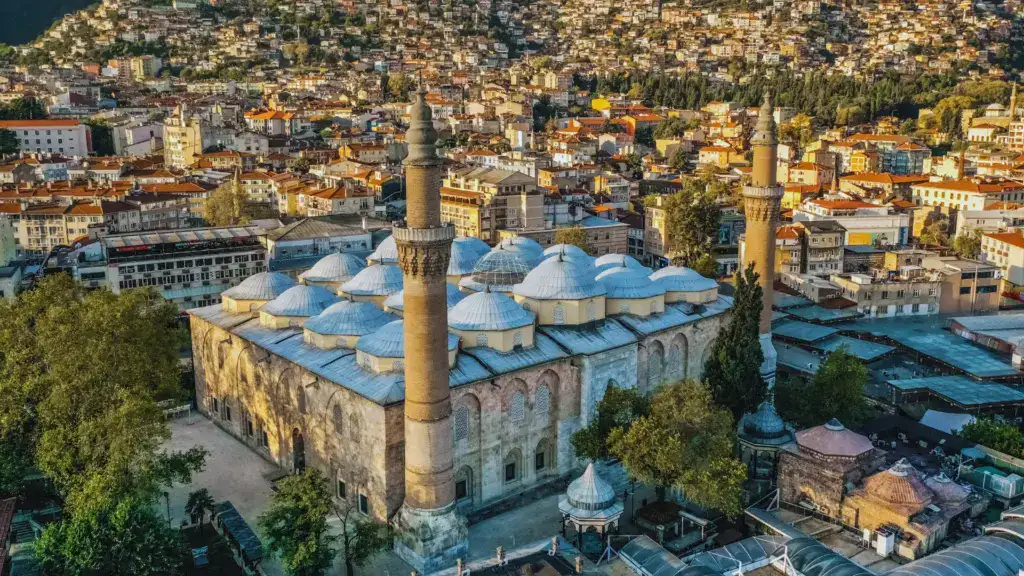
The mosque’s most striking feature remains its revolutionary dome arrangement – twenty identical domes organized in four perfect rows of five.
This design broke dramatically from traditional mosque architecture. Instead of a single large central dome, Ali Neccar created an interior space that feels both intimate and grand.
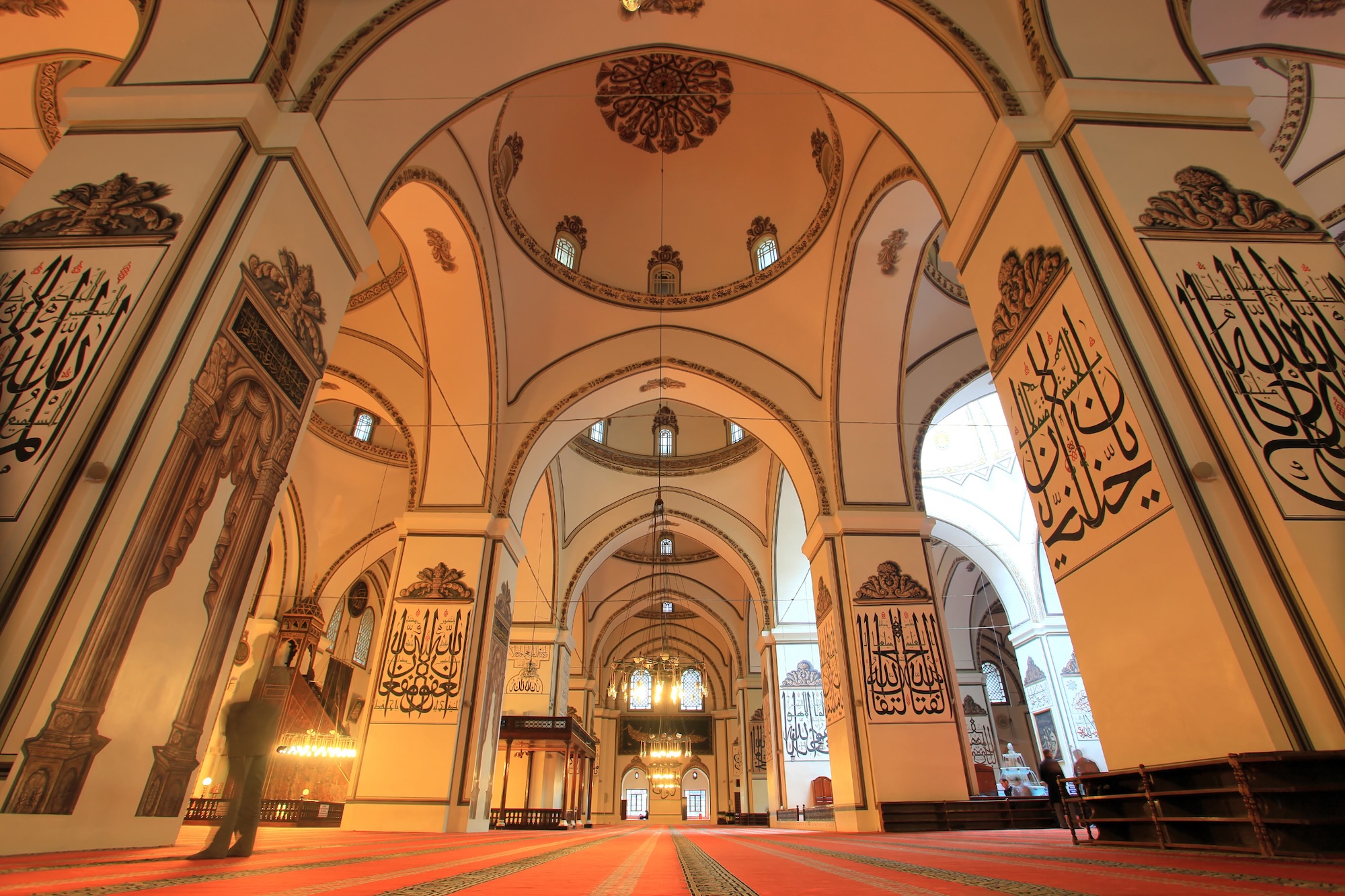
Twelve massive columns support the entire dome structure, creating natural divisions within the prayer hall without walls or barriers. Each dome measures precisely the same diameter, demonstrating the mathematical precision that characterized early Ottoman architecture.
The genius lies in how this design distributes weight evenly while creating excellent acoustics for prayer and religious instruction.
Structural Engineering Innovation
The twelve supporting columns represent a masterpiece of medieval engineering. Each column bears enormous weight while allowing natural light to filter throughout the interior space.
The spacing between columns creates smaller, more intimate areas for individual prayer while maintaining sight lines to the mihrab for congregational worship. This design influenced mosque construction throughout the Ottoman Empire for generations.
The building’s rectangular footprint measures 55 by 69 meters, making it one of the largest mosques in Bursa. Yet the interior never feels overwhelming due to the clever dome arrangement that breaks the vast space into human-scaled sections.
Interior Treasures and Sacred Spaces
Step inside and you’ll discover why this mosque captivates both worshippers and visitors. The interior design prioritizes contemplation and spiritual reflection over ostentatious display.
Natural light filters through carefully positioned windows beneath each dome, creating an ever-changing pattern of illumination throughout the day. The horizontally spacious layout feels peaceful rather than overwhelming.
Subdued lighting encourages introspection while the repeating dome pattern above creates a sense of rhythm and harmony. The prayer hall’s design accommodates both large congregational gatherings and individual meditation.
The famous şadırvan fountain sits at the mosque’s center under an open skylight. Worshippers perform ritual ablutions here before prayer, with natural light streaming down to illuminate the marble basin. This architectural feature serves both practical and symbolic purposes – the flowing water represents purification while the open sky connects earthbound worshippers to divine infinity.
The Masterpiece Minbar
The wooden pulpit, known locally as the “Masterpiece,” showcases extraordinary craftsmanship that defies belief. Master woodworkers constructed this elaborate structure without using a single nail or metal fastening.
Instead, they employed the traditional kundekari technique – precise geometric joinery that locks wooden pieces together through mathematical precision alone.
Intricate geometric patterns cover every surface of the minbar, including detailed representations of the solar system with planets positioned according to their actual distances from the sun. These astronomical details demonstrate the advanced scientific knowledge available to 14th-century Islamic artisans.
The walnut wood has darkened beautifully over six centuries, enhancing the pattern’s visual impact.
World-Class Calligraphy Museum
The mosque houses one of the Islamic world’s finest collections of monumental calligraphy. 192 separate wall inscriptions cover the interior walls, created by 41 different master calligraphers between 1778 and 1938.
Sacred Text Artistic Expression
These inscriptions include verses from the Quran, sayings of Prophet Muhammad, and the 99 beautiful names of Allah rendered in various Arabic calligraphic styles. Each piece represents hours of painstaking work by master artists who considered their craft both religious devotion and artistic expression.
The calligraphy reached particular prominence during the 19th century when Ottoman sultans patronized leading artists to enhance the mosque’s spiritual atmosphere. Visitors can trace the evolution of Ottoman calligraphic styles across different periods by studying pieces created in various decades.
Educational and Cultural Impact
This collection serves as an informal university for students of Arabic calligraphy and Islamic art. The inscriptions demonstrate different regional styles, historical periods, and individual artistic interpretations of sacred texts.
Modern calligraphers still study these works to understand traditional techniques and aesthetic principles.
Visiting Experience and Practical Information
The Grand Mosque of Bursa welcomes visitors throughout the year, though certain guidelines ensure respectful visits that honor its continuing role as an active place of worship.
The mosque closes to tourists during the five daily prayer times – approximately 5:30 am (05:30), 12:30 pm (12:30), 4:00 pm (16:00), sunset, and 8:00 pm (20:00), though exact times vary seasonally. Check current prayer schedules before visiting to avoid disappointment.
Women must cover their hair and wear clothing that covers shoulders and knees, while men should wear long pants and avoid sleeveless shirts.
Location and Access
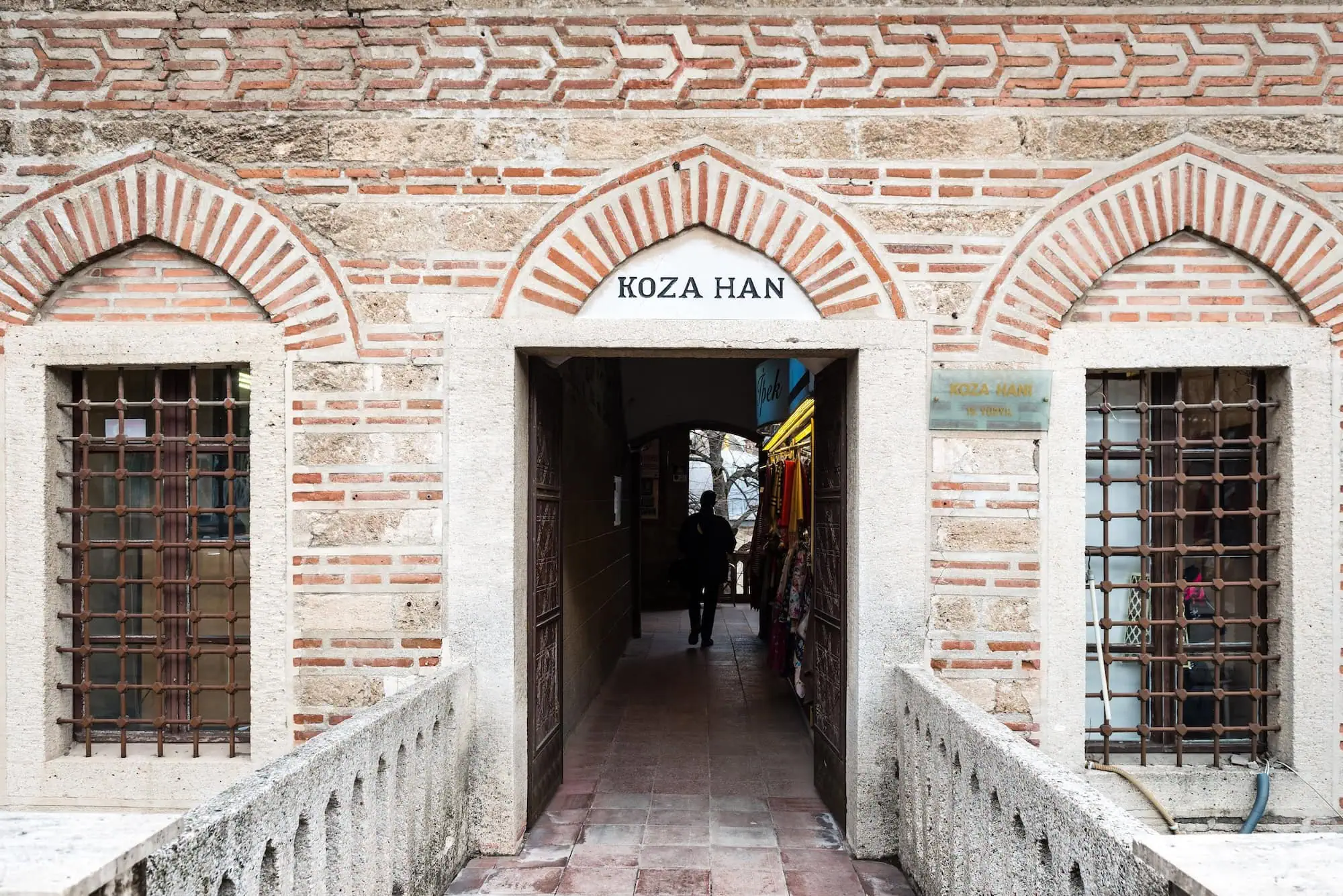
Situated on Ulucami Street in central Bursa, the mosque sits within walking distance of the city’s historic bazaars and other Ottoman-era monuments. The Covered Bazaar, Koza Han silk market, and traditional Turkish baths are all nearby, making it easy to plan a full day exploring Bursa’s historic district.
Nearby Historical Sites
The mosque anchors Bursa’s UNESCO World Heritage district alongside several other significant Ottoman sites. The Green Tomb and Green Mosque showcase later Ottoman architectural developments, while the tombs of Osman and Orhan Gazi – the empire’s first two rulers – lie within easy walking distance.
The historic Tophane district offers panoramic views over the city and surrounding countryside.
Cultural Significance and Legacy
Beyond its architectural achievements, the Grand Mosque represents a crucial moment in Islamic architectural history when the expanding Ottoman Empire began developing its distinctive aesthetic identity.
The building demonstrates how Ottoman architects successfully adapted existing Islamic architectural traditions to create something entirely new. The multiple dome system influenced mosque design throughout the empire and beyond.
Elements of this design appear in later Ottoman masterpieces including the Blue Mosque and Süleymaniye Mosque in Istanbul.
Modern Preservation Efforts
Turkish authorities have invested significantly in preserving this architectural treasure for future generations. Recent restoration work has strengthened the building’s structure while carefully maintaining its historical authenticity.
Climate control systems protect the valuable calligraphy collection, while improved lighting allows visitors to appreciate the interior’s artistic details without damaging sensitive materials.
Why Visit the Grand Mosque?
This remarkable mosque offers something meaningful for every type of traveler. History enthusiasts can trace the early Ottoman Empire’s development through architectural innovation. Art lovers will find world-class calligraphy and woodworking that rivals museum collections anywhere.
Spiritual seekers can experience the contemplative atmosphere that has provided solace for worshippers across six centuries.
The mosque’s active religious life adds authenticity that many historical sites lack. You’re not just viewing a museum – you’re experiencing a living piece of Islamic culture that continues serving its original purpose. The building’s manageable size allows intimate appreciation of details that might be overwhelming in larger mosques.
We recommend visiting during late afternoon when natural light creates the most dramatic interior illumination. Allow at least 45 minutes to fully appreciate the architectural details, calligraphy collection, and peaceful atmosphere. Consider combining your visit with exploration of nearby historical sites to understand Bursa’s complete role in Ottoman history.
Frequently Asked Questions
The mosque is open daily except during the five prayer times, roughly from sunrise to sunset with breaks for worship.
No, admission is completely free for all visitors.
Allow 45-60 minutes to properly appreciate the architecture, calligraphy, and peaceful atmosphere.
Women must cover their hair and wear long sleeves and pants; men should wear long pants and avoid sleeveless shirts.
Photography is generally permitted during non-prayer times, but avoid using flash and be respectful of worshippers.
The main prayer hall has level access, though some areas may be challenging for wheelchair users.
The 20-dome system supported by 12 columns creates an interior unlike any other mosque in the world.
Private local guides can be arranged through tour operators, though the mosque doesn’t offer official guided tours.
The Covered Bazaar, Green Mosque, Koza Han, and Ottoman founder tombs are all within walking distance.
Late afternoon provides the most dramatic natural lighting through the dome windows and skylight.
Design Your Custom Tour
Explore Egypt and Turkey your way by selecting only the attractions you want to visit