

Mosque of Suleiman the Magnificent – Not To Be Missed
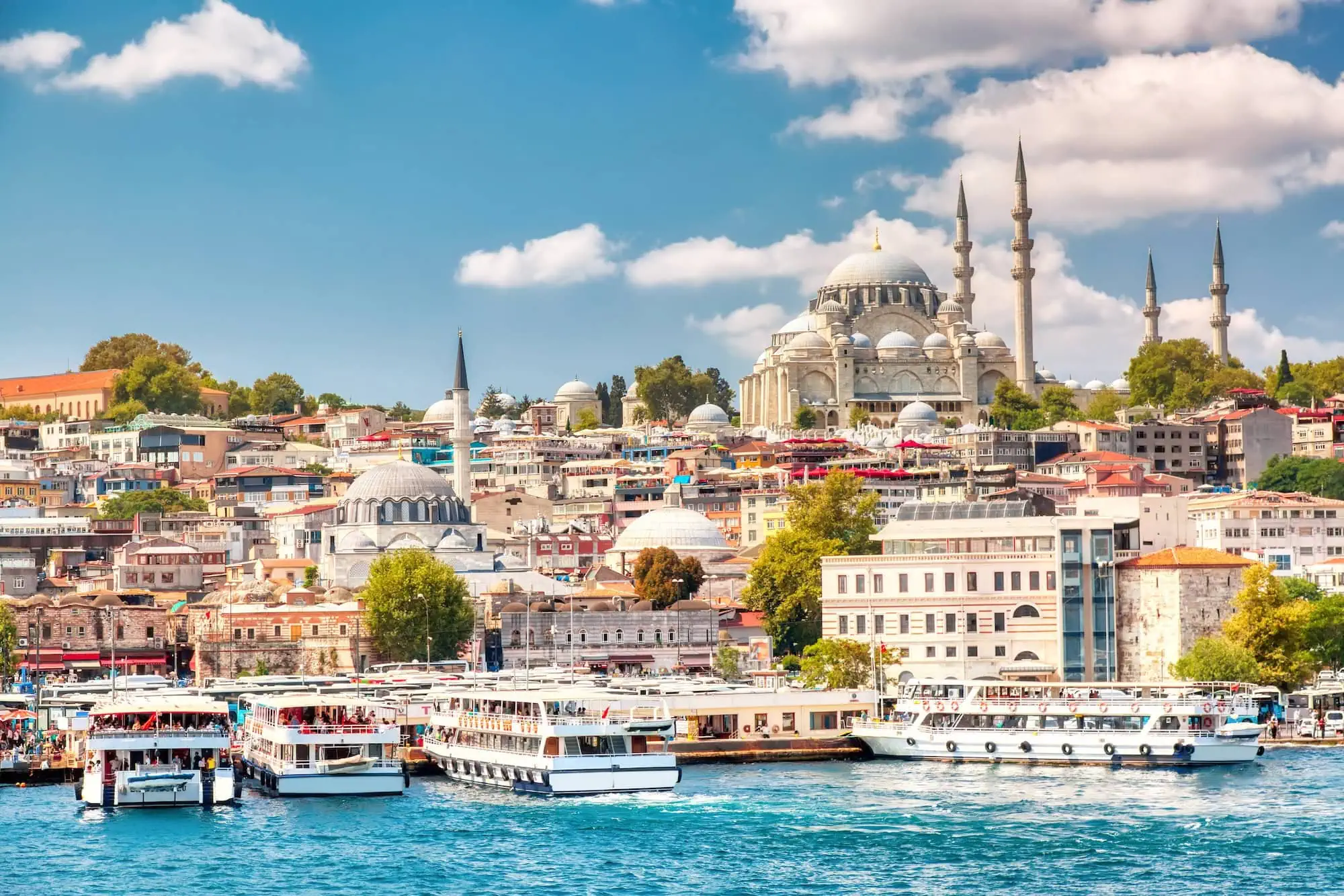
Standing majestically on Istanbul’s Third Hill, this architectural masterpiece dominates the skyline with timeless elegance.
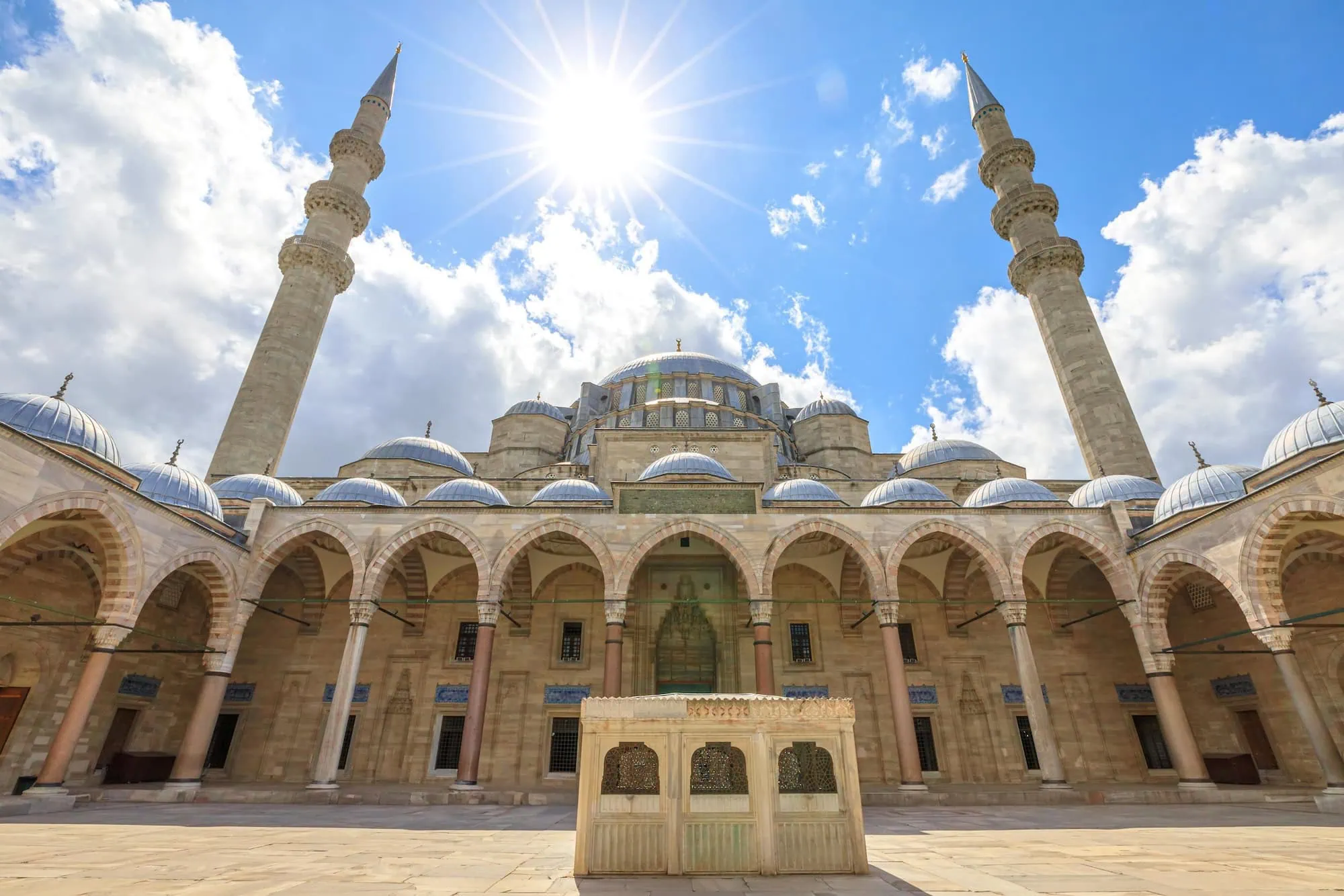
The Süleymaniye Mosque represents the height of Ottoman imperial architecture, commissioned by Suleiman the Magnificent between 1550 and 1557. Designed by the renowned architect Mimar Sinan, the complex reflects the engineering brilliance and artistic refinement of the Ottoman Empire at its peak.
The Süleymaniye Mosque can be included in our Luxury Egypt & Turkey Tours, where Istanbul’s architectural landmarks are combined with Egypt’s ancient monuments for a rich and immersive cultural journey.
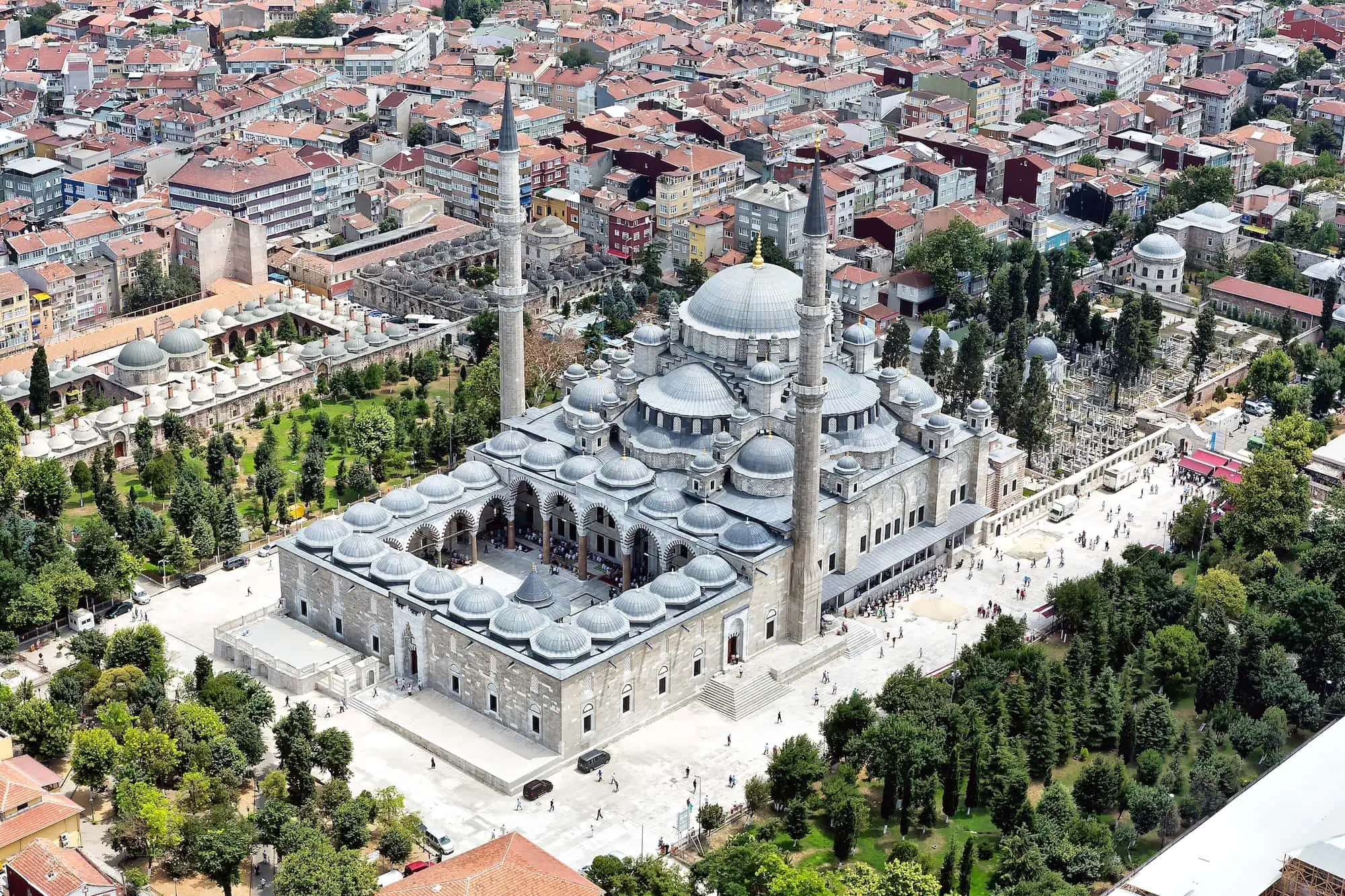
More than a mosque, this site functions as a complete social complex, historically including schools, a hospital, public kitchens, and the mausoleums of Suleiman and his wife Roxelana. Today, visitors experience the same sense of awe that has defined this landmark for centuries.
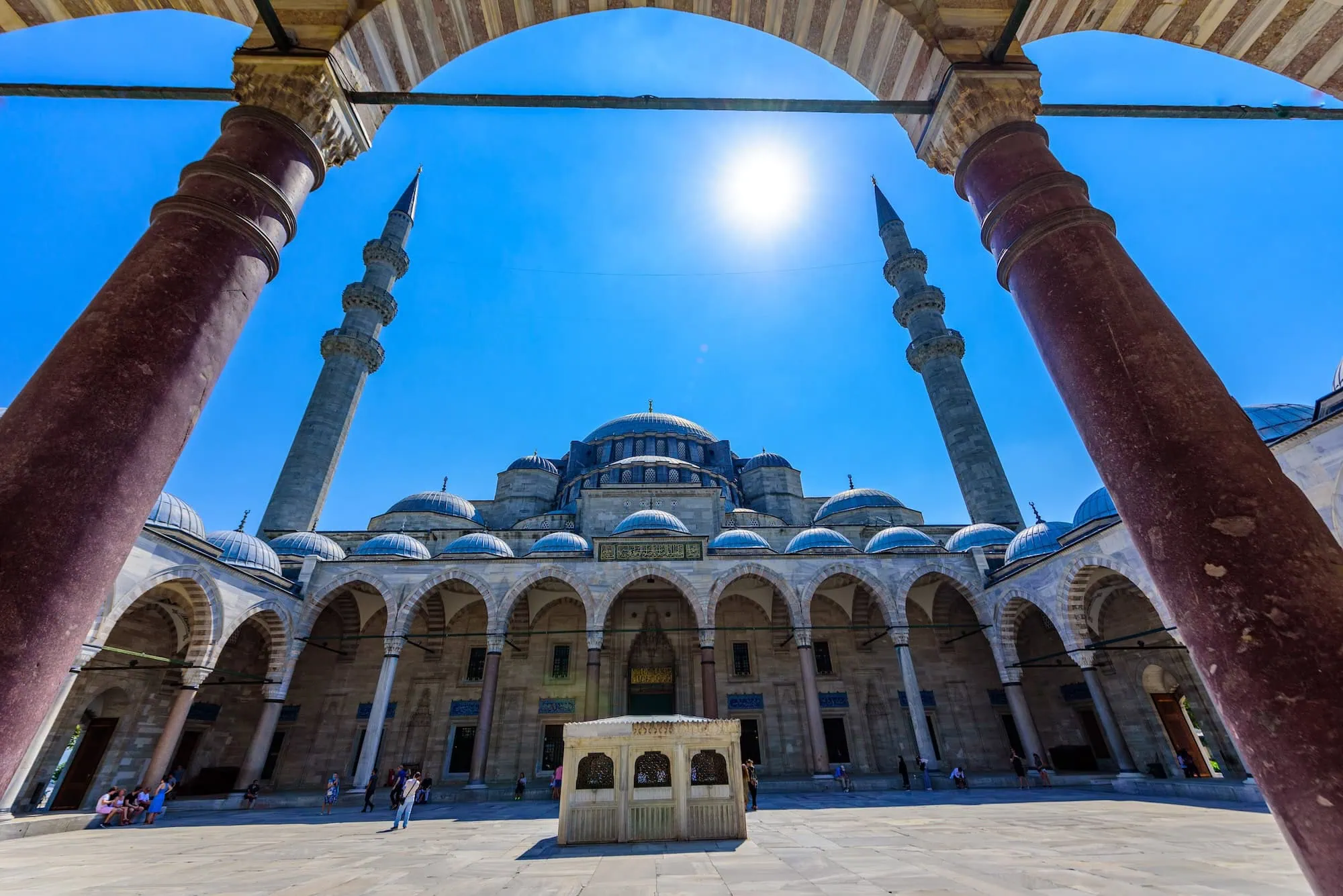
With its four minarets and vast central dome, the mosque offers an interior space that rivals Hagia Sophia in both scale and beauty—making it an essential stop in Istanbul.
Table of Contents
Architectural Brilliance of Sinan’s Masterwork
The mosque’s design reflects Sinan’s mastery of structural engineering and aesthetic principles. Standing at 53 meters (174 feet) in height, the central dome spans 26.5 meters (87 feet) in diameter, supported by a complex system of semi-domes and buttresses that distribute weight seamlessly throughout the structure.
Engineering Innovation
Four massive piers anchor the entire building, allowing the interior space to remain remarkably open and unobstructed. Sinan incorporated lessons learned from earlier Ottoman mosques, particularly addressing structural weaknesses that had plagued other domed buildings. The architect’s use of lightweight materials in the upper portions reduces stress on the supporting elements.
The acoustic design demonstrates remarkable sophistication. Empty ceramic vessels embedded in the walls and dome enhance sound quality, ensuring that prayers and recitations reach every corner of the prayer hall with crystal clarity.
Decorative Elements
Intricate Iznik tiles adorn the mihrab and surrounding areas, featuring traditional Ottoman floral motifs in blues, whites, and turquoise. These ceramic masterpieces represent some of the finest examples of 16th-century Turkish tilework. Calligraphic inscriptions from master calligrapher Hasan Karahisari flow across the interior walls, displaying Quranic verses and religious invocations in elegant Ottoman script.
Stained glass windows filter natural light throughout the day, creating an ever-changing interplay of colors across the prayer carpets and marble surfaces.
Structural Harmony
The four minarets vary in height and detail, reflecting different aspects of Suleiman’s identity. Two taller minarets feature three balconies each, while the shorter pair has two balconies, symbolically representing Suleiman’s position as the fourth Ottoman sultan and the tenth ruler of the House of Osman.
Historical Context and Imperial Ambition
Suleiman’s commissioning of this mosque stemmed from both personal devotion and political calculation. The project began in 1550, during a period when the Ottoman Empire controlled territories stretching from Vienna to Yemen, encompassing much of southeastern Europe, western Asia, and North Africa.
The mosque’s location deliberately overlooks the Golden Horn and Bosphorus, positioning it as a visual counterpoint to the Byzantine Hagia Sophia. This placement made a clear statement about Ottoman confidence and permanence in Constantinople. Construction required seven years and employed thousands of craftsmen, engineers, and laborers from across the empire.
Suleiman personally supervised many aspects of the project, insisting on the highest quality materials and workmanship. Marble came from quarries across the Mediterranean, while precious metals and gems were sourced from Ottoman territories in Africa and Asia.
The Complete Mosque Complex Experience
Religious and Educational Functions
The Süleymaniye operates as a kulliye, a multi-purpose Islamic complex serving the community’s spiritual, educational, and social needs. Four madrasas (religious schools) occupy the corners of the complex, providing Islamic education at different levels. The medical school, one of the most advanced of its time, trained physicians using both traditional Islamic medicine and contemporary European knowledge.
Social Services
Public kitchens fed hundreds of people daily, from students and religious officials to travelers and the city’s poor. The complex included a caravanserai for visiting merchants, public baths, and workshops for various crafts. This comprehensive approach to community service exemplified the Ottoman concept of imperial responsibility.
Burial Grounds and Tombs
Behind the mosque lies the cemetery containing Suleiman’s elaborate tomb, designed by Sinan as a separate domed structure. The sultan’s sarcophagus sits beneath a dome decorated with thousands of precious stones and gold leaf. Nearby, Roxelana’s tomb houses the remains of the influential Haseki Sultan, whose political acumen significantly shaped Ottoman court life.
The cemetery also contains graves of other Ottoman dignitaries, religious scholars, and architects who contributed to the empire’s golden age.
Visiting the Süleymaniye Today
Modern visitors can explore this UNESCO World Heritage site throughout most of the day, though prayer times require respectful silence and appropriate behavior. The mosque opens daily at 6:00 am (06:00) and closes after evening prayers, typically around 10:00 pm (22:00), with slight variations based on seasonal prayer schedules.
Entry remains free for all visitors, regardless of religious background. However, modest dress requirements apply – both men and women should cover arms and legs, while women must cover their hair with a provided headscarf. Shoes must be removed before entering the prayer hall, and photography is permitted in most areas except during active prayer sessions.
The complex sits approximately 1.5 kilometers (0.9 miles) from the Grand Bazaar, making it easily accessible during broader Istanbul sightseeing. Public transportation includes buses and the ferry system connecting various districts across the Bosphorus. Walking from Eminönü ferry terminal takes roughly 15 minutes through historic neighborhoods lined with Ottoman-era buildings.
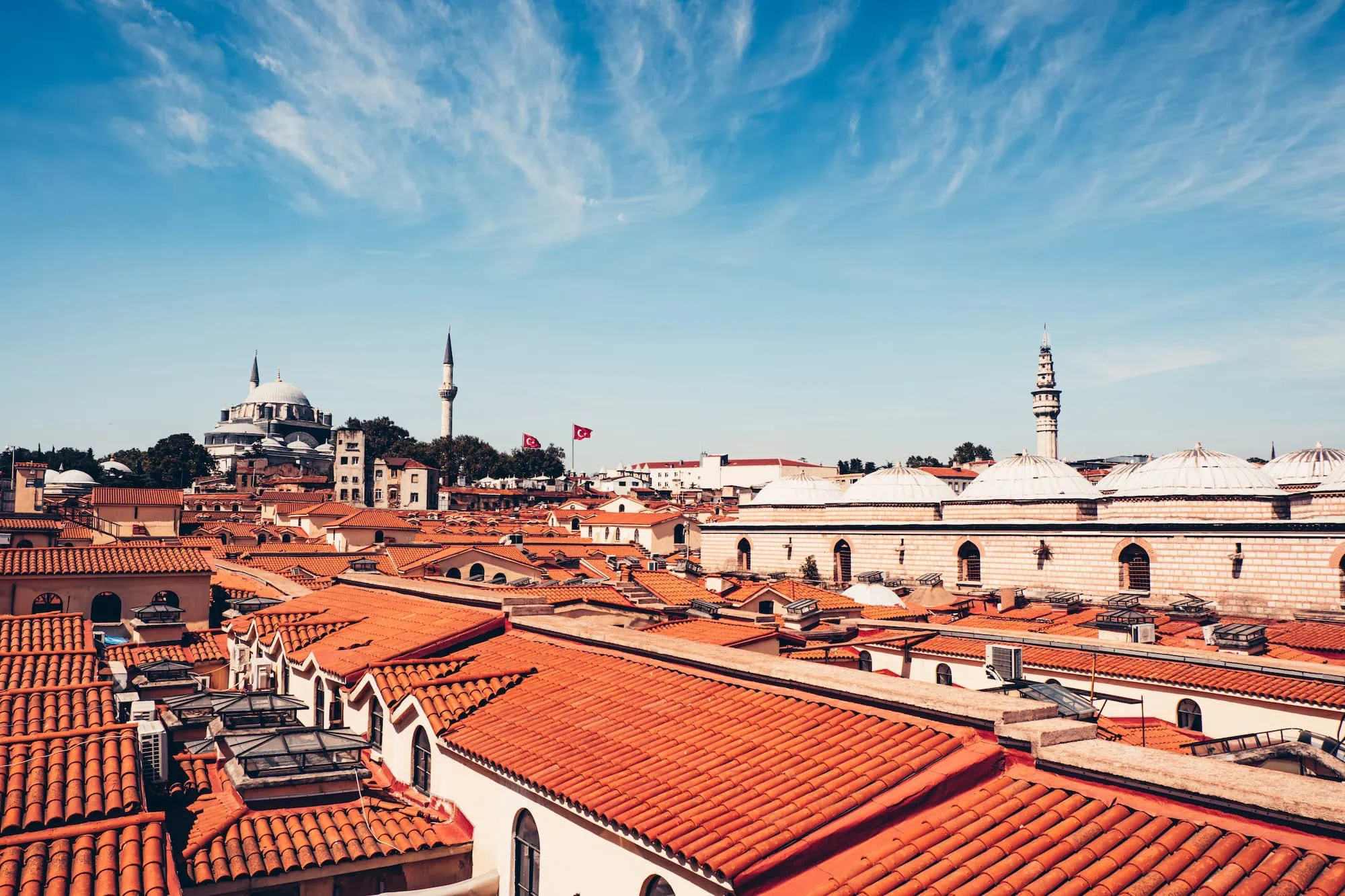
We recommend visiting during mid-morning or late afternoon when natural light creates the most dramatic interior atmosphere. Early morning visits offer peaceful contemplation with fewer crowds, while sunset timing provides stunning views across Istanbul’s historic peninsula from the mosque’s elevated position.
Restoration and Preservation Efforts
Recent restoration projects have focused on maintaining the structural integrity of Sinan’s original design while addressing centuries of wear from earthquakes, weather, and millions of visitors. Turkish government agencies work with international preservation experts to ensure that restoration techniques honor historical accuracy.
The most significant restoration occurred between 2007 and 2010, addressing water damage, structural settling, and deterioration of decorative elements. Modern conservation methods preserve the original Iznik tiles while protecting them from further environmental damage. Climate control systems maintain optimal conditions for the building’s materials without disrupting the mosque’s traditional appearance.
Ongoing maintenance includes regular inspection of the dome structure, minaret stability, and foundation systems. Archaeological excavations around the complex continue to reveal details about Ottoman construction techniques and the daily life of the kulliye’s original community.
Cultural Impact and Legacy
The Süleymaniye Mosque established architectural principles that influenced Islamic building design across the Ottoman Empire and beyond. Sinan’s engineering innovations, particularly his dome construction techniques, were studied and replicated in mosques throughout Turkey, the Balkans, and the Middle East.
The complex’s integration of religious, educational, and social functions became a model for later Ottoman urban planning. This holistic approach to community development influenced city design principles that extended far beyond the Islamic world, affecting European concepts of civic responsibility and public architecture.
Modern architects and urban planners study the Süleymaniye’s sustainable design elements, including its natural ventilation systems, use of local materials, and integration with the surrounding topography. The complex demonstrates how monumental architecture can serve practical community needs while creating spaces for spiritual contemplation and cultural expression.
Frequently Asked Questions
Mid-morning (10:00 am) and late afternoon (4:00 pm) offer optimal lighting and moderate crowds for the most enjoyable experience.
Most visitors spend 45-60 minutes exploring the mosque interior, courtyard, and surrounding cemetery, though architecture enthusiasts often stay longer.
No, entry to the Süleymaniye Mosque is completely free for all visitors, reflecting Islamic traditions of hospitality and openness.
Modest clothing covering arms and legs is required; women must cover their hair with headscarves provided at the entrance.
Photography is generally permitted except during prayer times; flash photography and tripods are typically not allowed inside the prayer hall.
While both feature massive domes and Byzantine influences, the Süleymaniye represents purely Islamic design principles with superior acoustic engineering and structural stability.
The main prayer hall is accessible, though the elevated location and historical architecture may present challenges; entrance ramps provide basic accessibility.
The Grand Bazaar, Spice Bazaar, and Galata Bridge are within walking distance, making the mosque part of a comprehensive historic Istanbul experience.
While no formal tours operate inside the mosque, knowledgeable guides often wait outside to offer historical context and architectural explanations for a small fee.
Construction began in 1550 under Suleiman the Magnificent’s orders and completed in 1557, requiring seven years of intensive work by thousands of craftsmen.
Mimar Sinan, the Ottoman Empire’s greatest architect, designed the complex using innovative engineering techniques that have withstood earthquakes and centuries of use.
Yes, both tombs are open to visitors and feature elaborate decorative work, though separate modest dress requirements apply for these sacred spaces.

Design Your Custom Tour
Explore Egypt and Turkey your way by selecting only the attractions you want to visit