

House of Photography in Marrakech
Photography tells stories that words cannot capture.
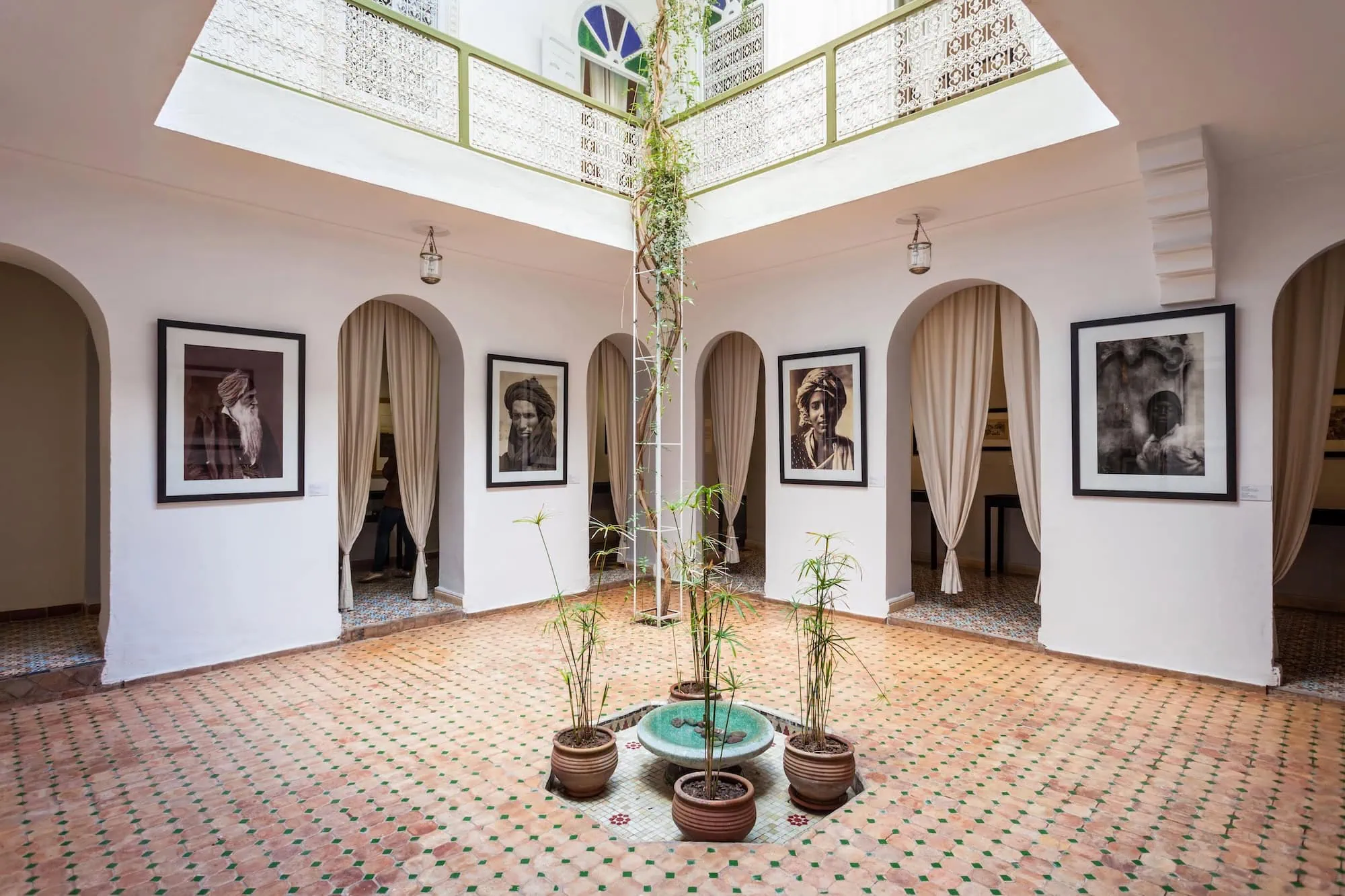
For over a century, photographers documented Morocco’s transformation from a traditional kingdom to a modern nation. The House of Photography in Marrakech preserves this visual history through an exceptional collection dating from 1870 to 1960, offering a rare and intimate perspective on the country’s cultural evolution.
The House of Photography can be included in our Combined Egypt and Morocco tours, where Morocco’s cultural institutions are combined with its historic cities and Egypt’s ancient wonders for a rich and immersive travel experience.
The museum features glass plates, early prints, and archival material that capture daily life, landscapes, and traditions during a defining period in Moroccan history.
Housed in a restored 19th-century funduq in the medina, the experience is enhanced by a rooftop café that offers panoramic views of the Atlas Mountains—making it both a cultural and atmospheric highlight of Marrakech.
A Living Archive of Morocco’s Photographic Heritage
The permanent collection forms the heart of this remarkable institution. Over 8,000 photographs document Morocco between 1870 and 1950, capturing everything from daily life in Berber villages to the grandeur of imperial cities. These aren’t merely old photographs – they represent the earliest visual documentation of Morocco’s people, places, and customs.
Professional photographers and amateur enthusiasts contributed to this archive. Felix, a photographer who spent decades in Marrakech, documented the city’s transformation through intimate portraits and street scenes. Daniel Chicault’s masterpiece film “Paysages et visages du Haut Atlas” reveals the stunning landscapes and dignified faces of High Atlas communities. George Washington Wilson’s technical innovations in glass plate photography enabled unprecedented clarity in these historical images.
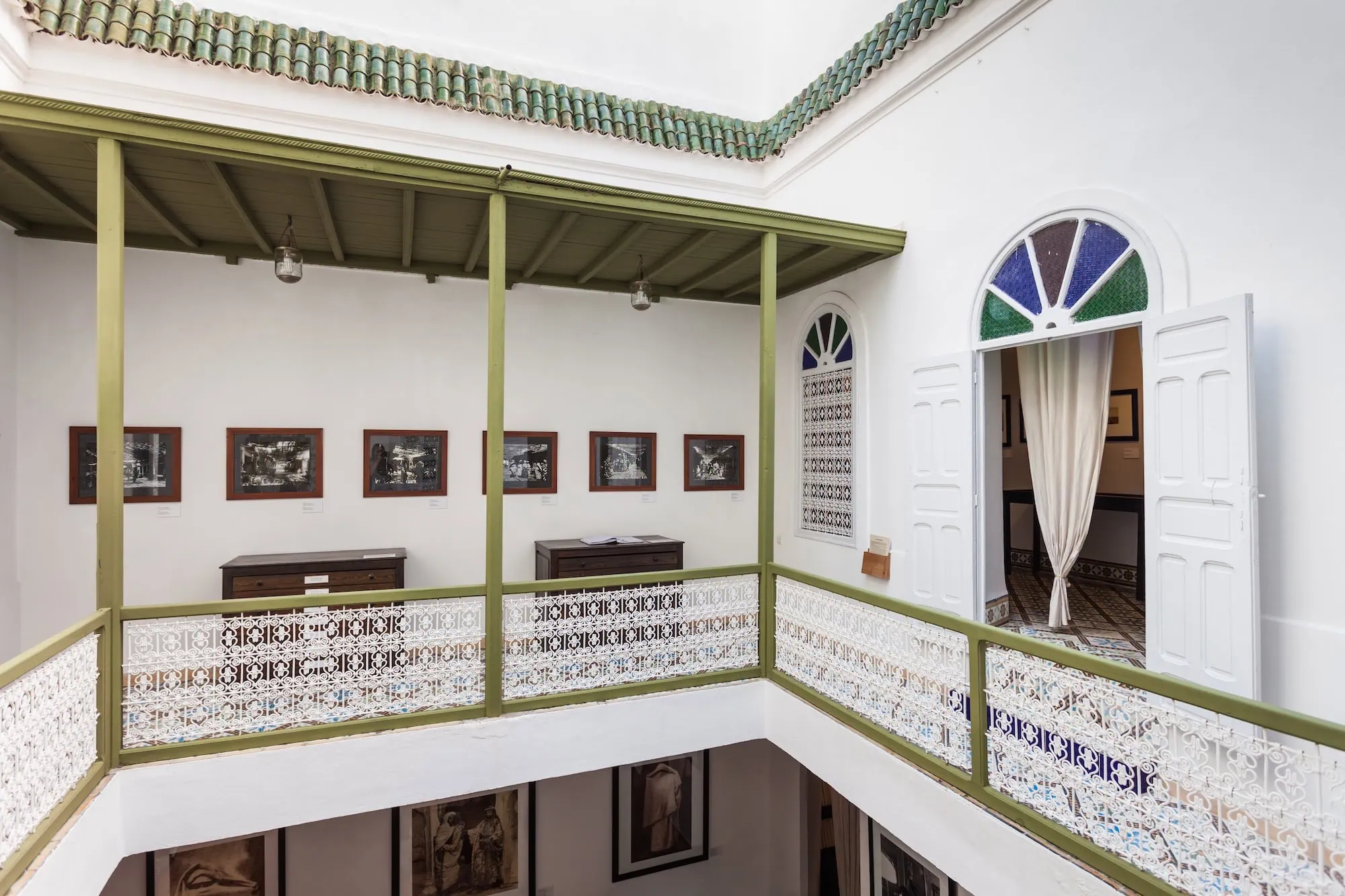
The Technical Marvel of Early Photography
Glass plates and albumen prints dominate the collection, representing cutting-edge technology of their era. Each photograph required careful preparation, precise timing, and artistic vision. The albumen process produced exceptionally detailed images that remain sharp and clear more than 150 years later.
These technical achievements become even more significant considering Morocco’s Islamic artistic traditions. Religious restrictions on figurative representation made photography a unique exception, allowing visual documentation that would otherwise be impossible within traditional Islamic art forms.
Cultural Documentation Beyond Tourism
The archive extends far beyond typical travel photography. Ethnographic studies capture Berber culture in unprecedented detail, showing traditional clothing, agricultural practices, and social customs. Portraits of Berber Jews reveal the religious diversity that characterized Morocco during this period.
Wedding ceremonies, market scenes, and religious festivals appear throughout the collection. Each image provides anthropological insights into Morocco’s complex social fabric during a time of significant political and cultural change.
Exploring Current Exhibitions and Special Programs
Rotating exhibitions refresh the museum experience every six months. Recent themes have included “Morocco at the Dawn of Modernity,” examining the country’s transition from traditional society to modern nation-state.
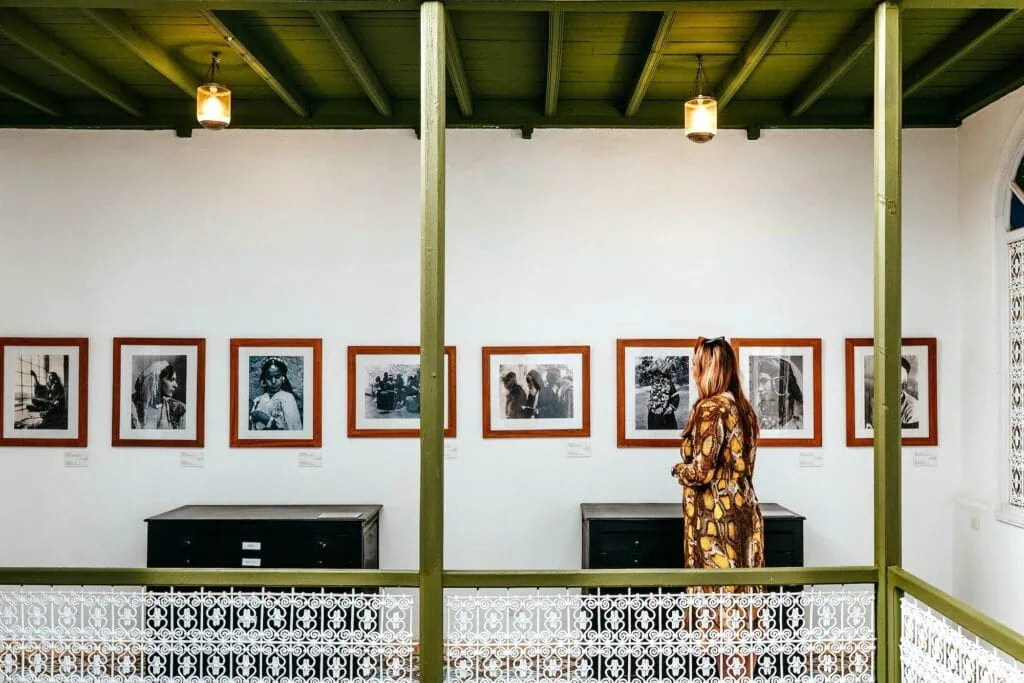
The current black and white exhibition demonstrates photography’s artistic evolution beyond mere documentation. Master photographers transformed everyday scenes into compelling visual narratives through careful composition, dramatic lighting, and intimate perspectives. These works bridge the gap between historical record and artistic expression.
Educational Partnerships and Research Opportunities
The research center serves teachers, students, and scholars interested in Moroccan visual culture. Primary source materials support academic research into colonial period photography, ethnographic studies, and early tourism documentation. University partnerships facilitate ongoing research into Morocco’s photographic heritage.
Educational programs introduce young Moroccans to their visual history. School groups participate in interactive workshops that connect historical photographs to contemporary Moroccan life, creating meaningful connections between past and present.
Experience the Museum’s Unique Architecture and Atmosphere
This renovated funduq exemplifies traditional Moroccan architecture adapted for contemporary use. The original structure served traveling merchants crossing the Sahara trade routes, providing secure accommodation and storage for valuable goods. Today’s visitors experience the same sense of discovery that characterized historical travelers.
The building’s restoration preserved authentic architectural details while incorporating modern museum standards. Original wooden beams, decorative tilework, and carved plaster create an atmospheric setting that enhances the historical photographs. Natural lighting filters through traditional windows, creating ideal viewing conditions for delicate historical prints.
The Legendary Rooftop Café
Beyond the museum’s cultural offerings, the rooftop terrace provides one of Marrakech’s most spectacular views. The entire Atlas Mountain range stretches across the horizon, creating a dramatic backdrop for refreshments and reflection. This panoramic vista helps visitors understand the geographical context of many historical photographs in the collection.
The café operates throughout museum hours, serving traditional Moroccan tea alongside light refreshments. Many visitors combine their museum experience with a relaxing break overlooking the medina’s bustling rooftops and distant peaks.
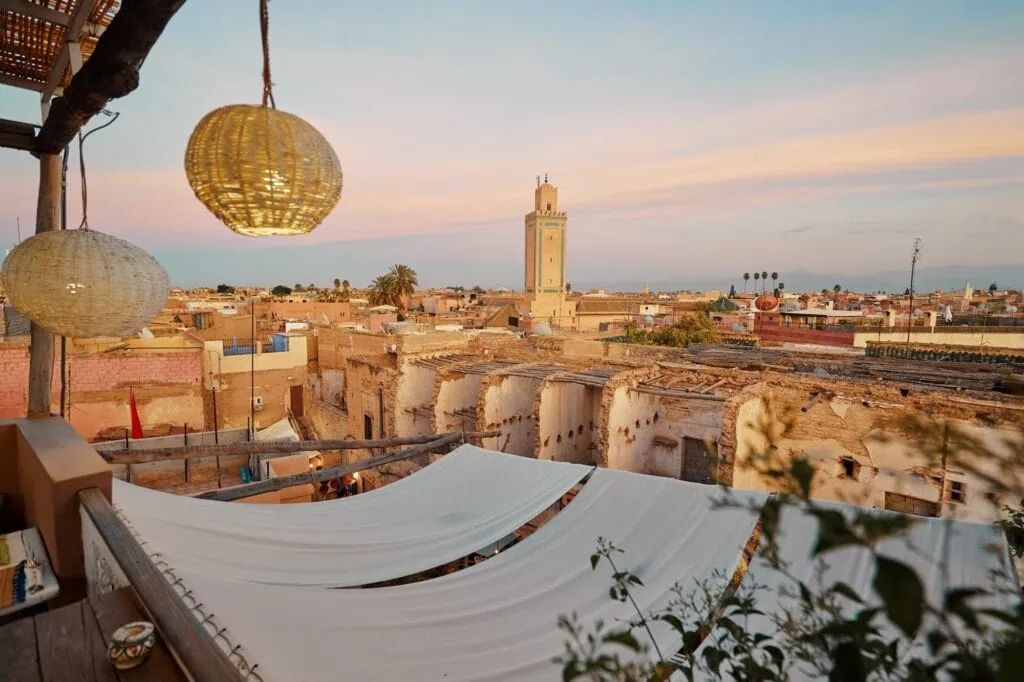
Morning visits offer particularly clear mountain views, while sunset creates magical lighting across the Atlas range. The combination of historical discovery and natural beauty makes this rooftop café a highlight of many Marrakech itineraries.
Planning Your Visit to House of Photography
The museum opens daily from 9:30 AM (09:30) to 7:00 PM (19:00), providing ample opportunity for thorough exploration. Most visitors spend 1-2 hours examining the permanent collection and current exhibitions, though photography enthusiasts often stay longer to study technical details and historical contexts.
Admission and Practical Information
Adult admission costs 50 MAD, while children under 15 enter free. Combined tickets with nearby attractions provide additional value for visitors exploring multiple cultural sites. The museum accepts both cash and card payments for admission and café purchases.
Located near the famous Ben Youssef Madrasa, the museum fits naturally into walking tours of the northern medina. Street signage in Arabic, French, and English helps visitors navigate the narrow alleyways leading to the entrance.
Photography Policies and Guidelines
Ironically, this photography museum restricts photography within exhibition spaces to protect delicate historical materials. Visitors may photograph in common areas and the rooftop café, but flash photography remains prohibited throughout the building.
The museum shop offers high-quality reproductions of significant photographs from the collection. These prints allow visitors to take home authentic pieces of Morocco’s visual heritage while supporting the museum’s conservation efforts.
Group Visits and Special Services
Private group tours accommodate educational institutions and cultural organizations. Professional guides provide specialized commentary linking historical photographs to contemporary Moroccan culture and politics. Advanced booking ensures availability for groups of 10 or more visitors.
Photography workshops occasionally take place in partnership with local artists and international cultural organizations. These programs combine historical appreciation with practical photography instruction, using the museum’s collection as inspiration for contemporary work.
Understanding Morocco’s Photographic Legacy
Photography arrived in Morocco during the late 19th century through European travelers, diplomatic missions, and early tourists. Initial subjects focused on architectural monuments and exotic scenes that appealed to European audiences, but the medium gradually evolved to document authentic Moroccan life.
Professional studios established in major cities enabled portrait photography for wealthy Moroccan families. These formal portraits provide rare glimpses into elite Moroccan society during the colonial period, showing traditional dress, jewelry, and domestic settings.
The collection reveals changing attitudes toward photography within Moroccan society. Early resistance gave way to acceptance and eventual enthusiasm as photography became associated with modernity and progress.
Technical Innovation and Artistic Development
Moroccan photographers emerged alongside their European counterparts, developing distinctive approaches to composition and subject matter. Local photographers understood cultural sensitivities and gained access to subjects that remained closed to foreign visitors.
The evolution from glass plates to paper prints democratized photography, enabling wider participation in visual documentation. Technical improvements in cameras and film processing made photography more accessible to amateur enthusiasts and travelers.
Color photography experiments appear in the collection’s latest acquisitions, showing Morocco’s transition into the modern photographic era. These early color images provide striking contrasts to the predominantly black and white historical collection.
Cultural Impact and Historical Significance
These photographs document Morocco’s encounter with European influence during the colonial period. Images reveal infrastructure development, architectural changes, and evolving social customs as traditional Morocco adapted to modern influences.
Rural photography captures agricultural practices, traditional crafts, and seasonal celebrations that remained unchanged for centuries. Urban photography shows the dramatic transformation of cities like Marrakech, Fez, and Casablanca during periods of rapid modernization.
The collection provides invaluable primary source material for understanding Morocco’s cultural resilience during periods of significant external pressure. Traditional customs persisted alongside modern innovations, creating the complex cultural synthesis that characterizes contemporary Morocco.
Supporting Morocco’s Visual Heritage
The museum operates through a combination of admission fees, private donations, and cultural partnerships. Major benefactors including Hamid Mergani and Patrick Manac’h contributed significant collections that form the foundation of the current archive.
Conservation efforts require ongoing funding to preserve fragile glass plates, albumen prints, and paper documents. Climate control, proper storage, and professional restoration ensure these irreplaceable artifacts remain available for future generations.
Research Publications and Digital Archives
Academic partnerships support scholarly research into Morocco’s photographic heritage. Published research based on the collection contributes to international understanding of North African visual culture and colonial period documentation.
Digital preservation initiatives create high-resolution copies of significant photographs, enabling global access while protecting original materials. Online exhibitions reach international audiences interested in Moroccan history and photography.
The museum’s boutique offers books, postcards, and reproductions featuring highlights from the collection. These publications support the museum’s educational mission while providing visitors with tangible connections to Morocco’s visual heritage.
Frequently Asked Questions
Most visitors spend 1-2 hours exploring the exhibitions and enjoying the rooftop café, though photography enthusiasts often stay longer.
Photography is prohibited in exhibition areas to protect historical materials, but visitors can photograph in common areas and the rooftop café.
Combined tickets provide access to both the House of Photography and nearby Music Museum at a discounted rate compared to individual admissions.
Private group tours can be arranged for 10 or more visitors, featuring specialized commentary on the historical photographs and their cultural context.
Morning visits typically offer the clearest Atlas Mountain views from the rooftop café, while sunset creates dramatic lighting effects.
Occasional workshops combine historical appreciation with practical photography instruction, often in partnership with local artists and cultural organizations.
Both cash and card payments are accepted for admission, café purchases, and boutique items.
The historic funduq building has narrow stairs and traditional architecture that may present challenges for visitors with mobility concerns.
New thematic exhibitions are introduced every six months, featuring different aspects of Morocco’s photographic heritage and cultural history.
High-quality reproductions, books, and postcards featuring collection highlights are available in the museum boutique.
The museum is located near Ben Youssef Madrasa and fits naturally into northern medina walking tours exploring traditional architecture and cultural sites.
Standard museum policies apply, with no specific restrictions beyond those typical for cultural institutions protecting valuable historical artifacts.
Design Your Custom Tour
Explore Egypt & Morocco your way by selecting only the attractions you want to visit