

Menara Gardens – A Slice of Paradise in Marrakech
Discover tranquility in the heart of Morocco’s imperial city.
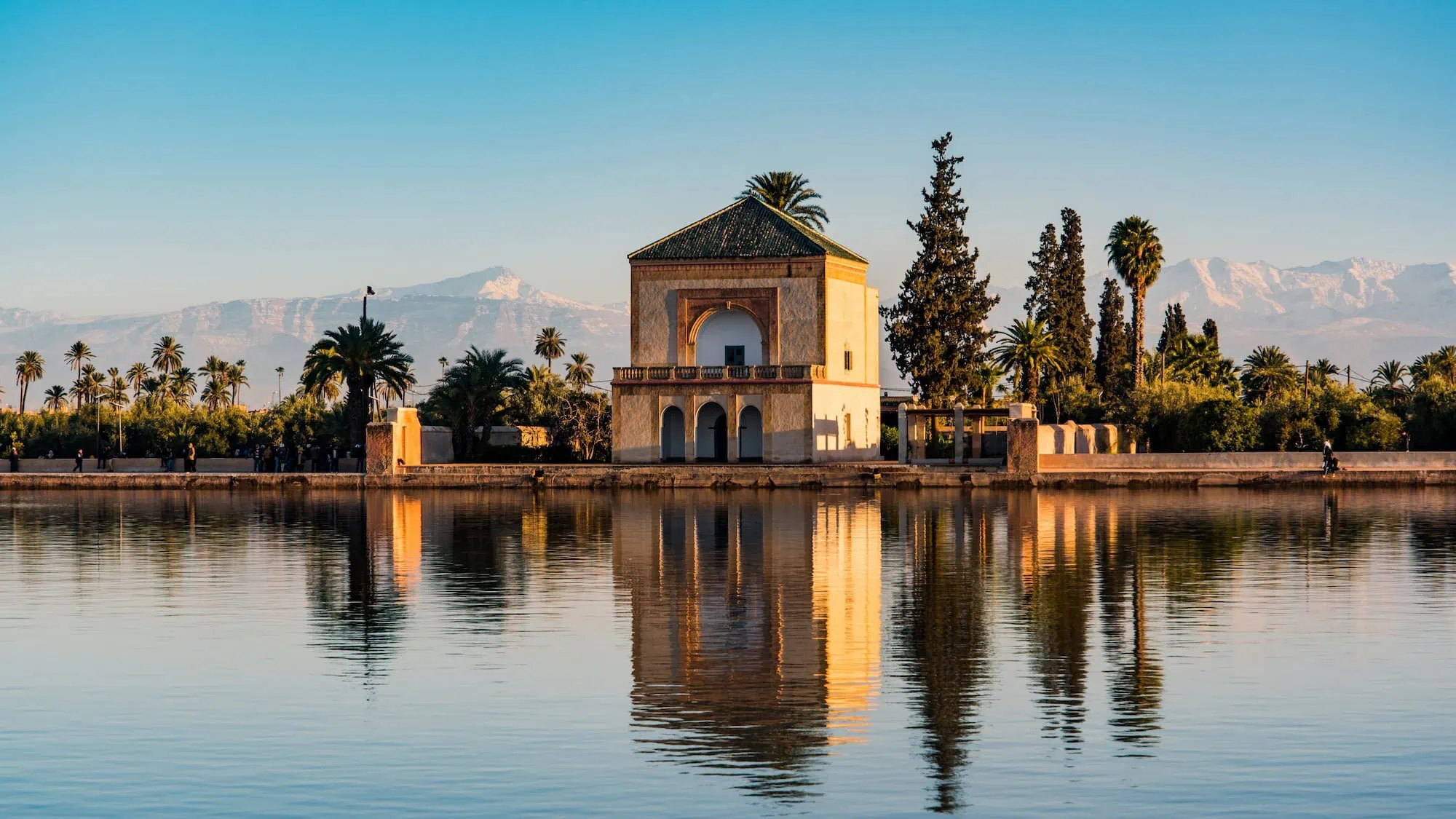
The Menara Gardens represent one of Morocco’s most enduring achievements in landscape design and water management, dating back nearly 900 years to the Almohad dynasty. These expansive olive groves and reflective pools continue to serve their original purpose while offering a peaceful retreat from Marrakech’s vibrant medina.
Menara Gardens can be included in our Egypt and Morocco Tours, where Morocco’s historic cities and cultural landmarks are combined with Egypt’s ancient wonders for a balanced and immersive travel experience.
Beyond their visual appeal, the gardens demonstrate advanced irrigation systems that have supported agriculture for centuries—making them both historically significant and environmentally impressive.
Whether you’re planning a relaxed sunset visit or exploring Marrakech’s key attractions, Menara Gardens offer a calm and scenic contrast to the city’s lively atmosphere.
The Story Behind Marrakech’s Ancient Gardens
The gardens emerged during a transformative period in Moroccan history when Abd al-Mu’min, founder of the Almohad Caliphate, established this agricultural complex in 1157 CE. His vision extended beyond mere cultivation – these grounds served as training facilities for soldiers preparing for Mediterranean campaigns while simultaneously demonstrating advanced water management techniques that would influence North African agriculture for generations.
The original design incorporated both practical and strategic elements. Almohad soldiers practiced swimming and water tactics in the central basin while learning to maintain the sophisticated khettara system that channeled water from the Atlas Mountains through 30 kilometers of underground galleries. This dual-purpose approach reflected the dynasty’s commitment to combining military readiness with technological advancement.
From Military Training to Innovation
Subsequent rulers left their mark on the gardens’ design. The Saadian dynasty restored and expanded the olive groves during their reign, while the Alaouite sultans constructed the iconic pavilion that visitors see today. Muhammad IV commissioned the current two-story structure in 1869, replacing earlier buildings with the distinctive green pyramidal roof that has become synonymous with Menara Gardens.
The UNESCO Recognition Story
In 1985, UNESCO designated Menara Gardens as part of Marrakech’s World Heritage Site status, acknowledging both their historical significance and continued relevance as a model of sustainable agriculture. The recognition emphasized how these gardens represent “an outstanding example of human interaction with the natural environment” that maintains relevance in contemporary discussions about water conservation and urban planning.
Understanding the Gardens’ Unique Design
Spanning over 100 hectares, Menara Gardens function as both a historical monument and active agricultural space where traditional farming methods continue to thrive.
The central water basin measures 200 by 150 meters and holds millions of liters, creating a massive reflecting pool that serves both irrigation and aesthetic purposes. This artificial lake represents one of the most impressive engineering achievements of medieval Morocco, designed to store water during dry seasons while creating the dramatic reflections that make sunset photography so compelling. The khettara system beneath the gardens channels mountain water through underground galleries, demonstrating water management techniques that modern engineers still study and admire.
Surrounding the basin, geometric patterns of olive trees create orderly rows that extend toward the Atlas Mountains. These centuries-old trees continue producing olives using cultivation methods passed down through generations of Moroccan farmers. The systematic planting arrangement maximizes both water distribution and harvest efficiency while creating the visual harmony that characterizes Islamic garden design.
The Iconic Menara Pavilion
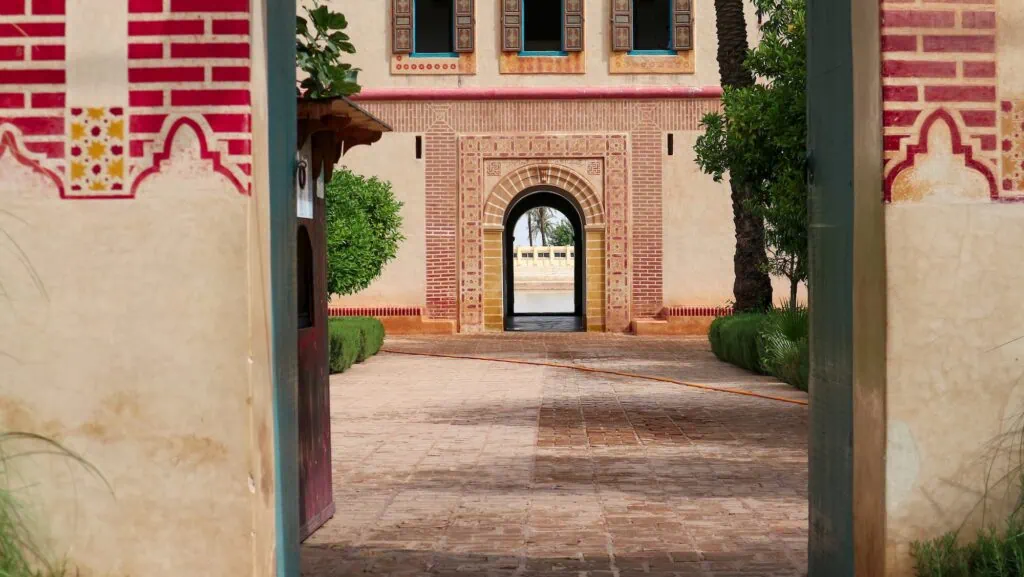
The pavilion serves as the gardens’ architectural centerpiece. Built during the Alaouite period, this elegant structure features traditional Moroccan design elements including muqarna decorations and horseshoe arches. Historical accounts suggest sultans used this building for private meetings and romantic encounters, earning it the nickname “Pleasure Pavilion” among locals.
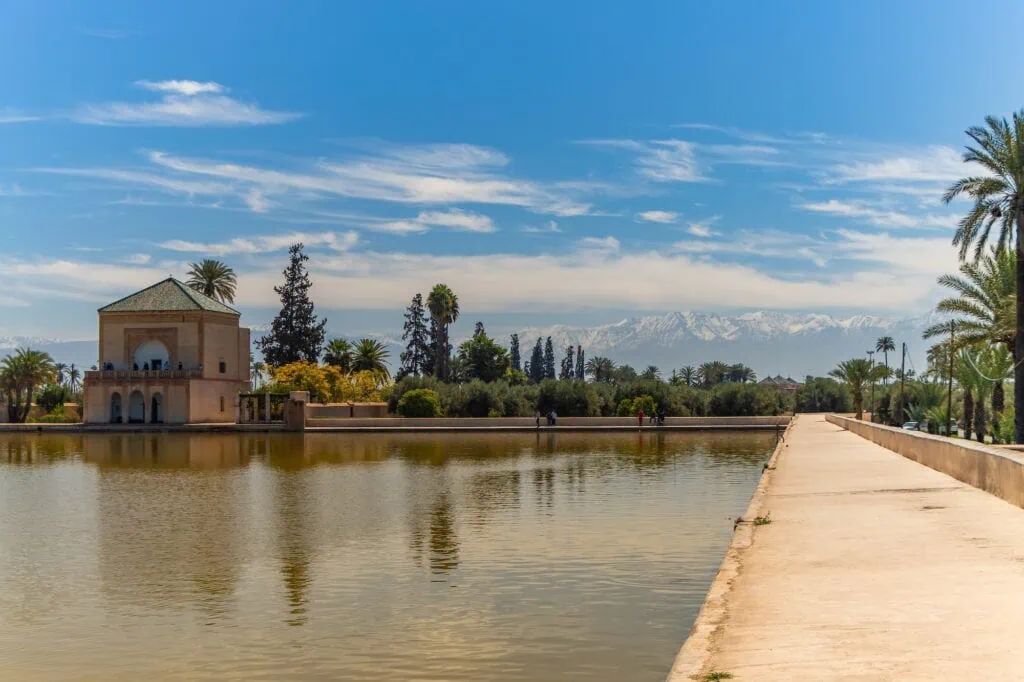
From the pavilion’s upper level, visitors enjoy panoramic views across the olive groves toward the High Atlas peaks. The building’s positioning takes advantage of prevailing breezes while providing shelter during Morocco’s intense summer heat, demonstrating sophisticated understanding of climate-responsive architecture.
When to Visit and What to Expect
Timing significantly influences your Menara Gardens experience, with each season offering distinct advantages for different types of travelers.
Optimal Visiting Hours
The gardens open at 8:00 am (08:00) and remain accessible until 6:00 pm (18:00) daily. Early morning visits offer cooler temperatures and excellent lighting for photography, while fewer crowds allow for peaceful exploration of the olive groves. Late afternoon visits provide the famous golden hour lighting that transforms the reflecting pool into a mirror for sunset colors, though these times attract larger numbers of visitors and tour groups.
Entry to the gardens themselves costs nothing, making them accessible to all travelers. However, accessing the Menara Pavilion requires a 70 dirham fee for adults (approximately $7 USD), with discounted rates available for children. The pavilion fee includes access to both levels of the building and detailed information about its architectural features and historical significance.
What You’ll Discover During Your Visit
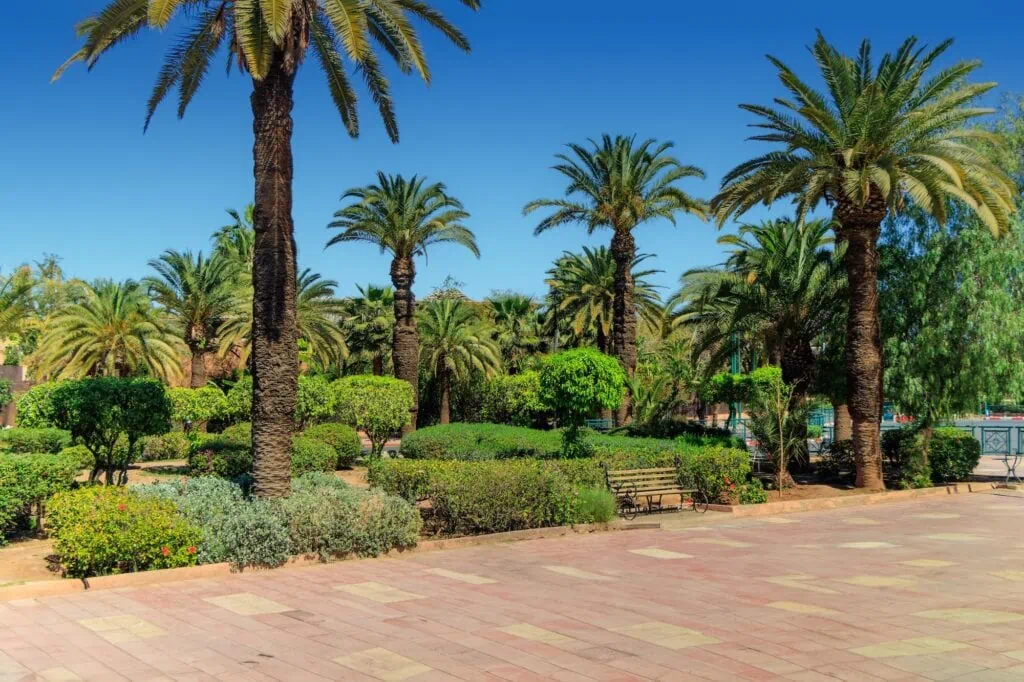
Walking paths wind between olive trees planted in traditional geometric patterns, offering shade and opportunities to observe ongoing agricultural practices. The gardens maintain their productive function, so you might encounter workers tending trees or harvesting olives depending on the season. These authentic agricultural activities provide insight into how historical gardens continue serving their original purpose while accommodating modern tourism.
The central basin creates opportunities for reflection and photography, particularly as mountain light changes throughout the day. Atlas Mountain views form dramatic backgrounds for photographs, especially during clear weather when snow-capped peaks provide striking contrast against the green olive foliage and desert landscape.
Managing Expectations About Current Conditions
Recent visitor feedback indicates maintenance challenges affecting some areas of the gardens. Water quality in certain sections may appear unclear, and infrastructure shows signs of wear that impact the overall experience. Understanding these conditions helps set realistic expectations while still appreciating the historical and cultural significance of this remarkable site.
Despite maintenance concerns, the gardens retain their essential character and continue demonstrating the irrigation techniques that have sustained this landscape for nearly nine centuries. Focus on the historical achievement and natural beauty rather than expecting pristine tourist facility standards.
Transportation and Access Options
Multiple transportation methods connect central Marrakech with Menara Gardens, each offering different advantages depending on your itinerary and preferences.
Direct Transportation Routes
Taxis provide the most straightforward access from the medina or Gueliz districts, typically costing 30-50 dirhams depending on your starting point and negotiation skills. The journey takes approximately 15-20 minutes from central locations, though traffic conditions can extend travel time during peak hours. Request that drivers use the meter or agree on prices before departure to avoid disputes.
Walking from central Marrakech requires 45-60 minutes depending on your pace and route selection. The path leads through residential neighborhoods and offers opportunities to observe daily Moroccan life beyond tourist areas. However, the distance and heat during summer months make walking less practical for many visitors.
Tour Integration and Bicycle Options
Many travelers incorporate Menara Gardens into broader Marrakech sightseeing itineraries that include nearby attractions like the Majorelle Gardens and Koutoubia Mosque. These combination tours often provide transportation, guides, and coordinated timing that maximizes your exploration efficiency.
Bicycle tours have gained popularity as an eco-friendly way to reach the gardens while experiencing Marrakech’s streets and neighborhoods. Several companies offer guided cycling experiences that include Menara Gardens alongside other historical sites, providing cultural context and ensuring safe navigation through the city’s traffic patterns.
Horse-drawn carriage rides offer a traditional transportation experience that connects modern visitors with historical travel methods. While more expensive than other options, carriages provide a unique perspective on the journey between central Marrakech and the gardens, particularly appealing for romantic occasions or special celebrations.
Planning Your Complete Marrakech Garden Experience
Combining Menara with Other Gardens
Marrakech’s garden tradition extends beyond Menara to include several complementary sites that showcase different aspects of Moroccan landscape design. The Majorelle Gardens offer vibrant colors and exotic plant collections that contrast beautifully with Menara’s agricultural focus and olive groves. Agdal Gardens, another UNESCO World Heritage component, demonstrate royal garden design on an even grander scale with their vast orchards and historic pavilions.
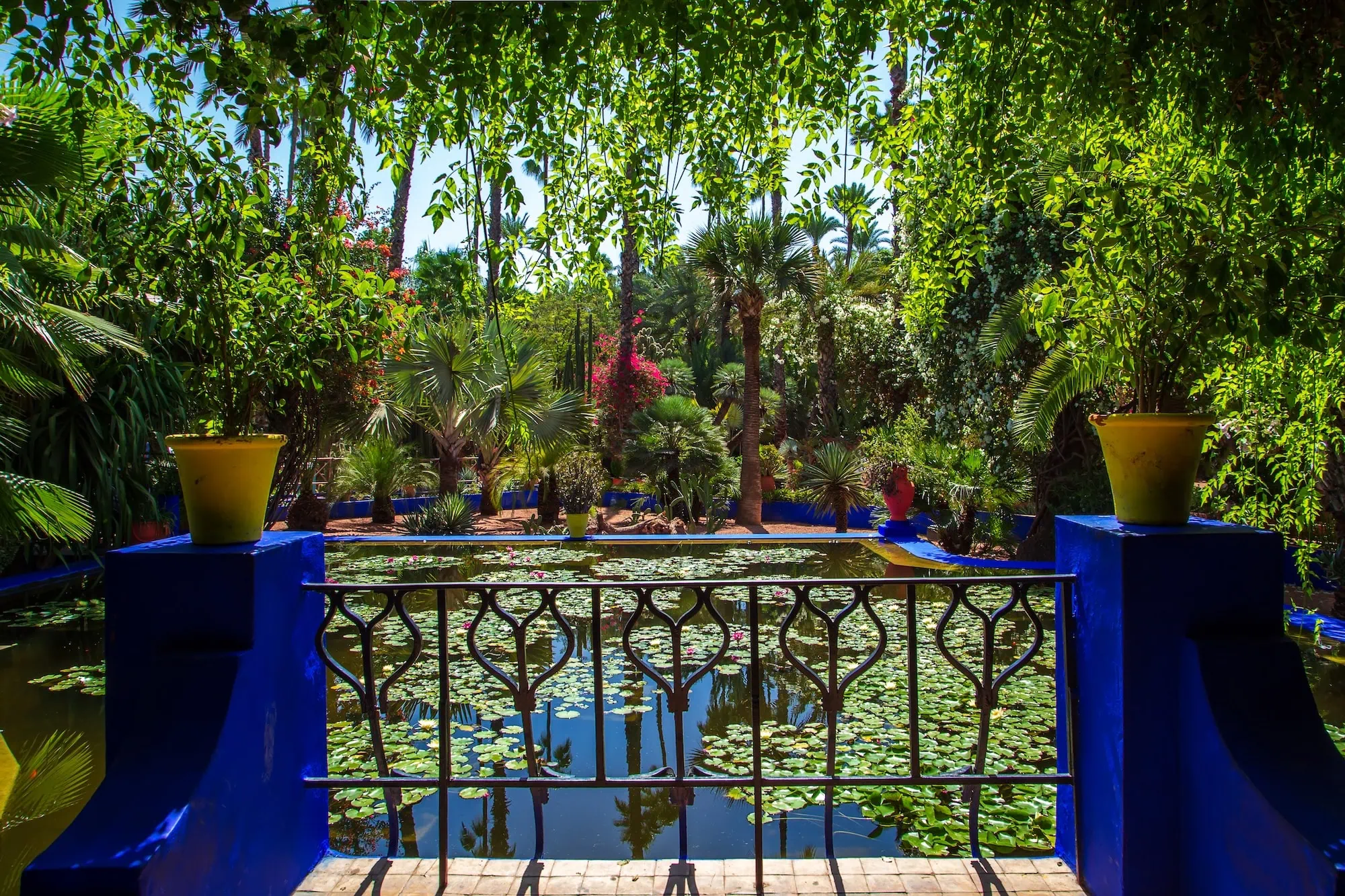
Planning visits to multiple gardens allows comparison of different historical periods and design philosophies while maximizing your understanding of Moroccan horticultural traditions. Consider purchasing combination tickets or joining tours that include several garden sites for comprehensive cultural education and better value.
Seasonal Considerations and Photography Tips
Spring months (March through May) provide ideal conditions with comfortable temperatures, blooming vegetation, and clear mountain views that enhance photography opportunities. Autumn (October through November) offers similar advantages with harvest activities adding authentic cultural elements to your visit.
Summer visits require early morning or late afternoon timing to avoid extreme heat, but reward visitors with dramatic light conditions and fewer international tourists. Winter months occasionally bring snow to the Atlas Mountains, creating spectacular backdrops for garden photography, though temperatures can be surprisingly cool during early morning hours.
Respecting Cultural and Environmental Guidelines
Menara Gardens function as both tourist destination and active agricultural site, requiring visitor awareness of ongoing farming operations and cultural sensitivities. Avoid walking through planted areas or disturbing irrigation channels that support the olive production essential to the gardens’ continued operation.
Photography guidelines encourage respectful documentation of the landscape and architecture while avoiding intrusive images of workers or local families who use the gardens for recreation. The site maintains its role as community space for Marrakech residents, so courteous behavior ensures positive interactions and supports sustainable tourism practices.
Frequently Asked Questions
Allow 1-2 hours for a complete visit including the pavilion, walking through olive groves, and enjoying the reflecting pool area.
Yes, the open spaces and pathways accommodate families, though supervision near the water basin is important for safety.
Absolutely, the gardens are easily navigable independently, though guides provide valuable historical context and cultural insights.
Late afternoon (4:00-6:00 pm) offers golden hour lighting and stunning Atlas Mountain views, though early morning provides fewer crowds.
No dining facilities operate within the gardens, so plan to eat before or after your visit in nearby Marrakech establishments.
Taxis are readily available at the gardens’ entrance for transport to the medina, Majorelle Gardens, or other sites throughout the city.
Yes, parking areas near the entrance accommodate vehicles, though space can be limited during peak visiting hours.
Comfortable walking shoes, sun protection, water, and a camera for capturing the mountain views and historic architecture.
Garden access is free, but entering the Menara Pavilion costs 70 dirhams for adults with reduced rates for children.
No, swimming is not permitted in the basin, which serves irrigation purposes and maintains cultural significance as a reflection pool.
Menara focuses on agricultural heritage and water management history, contrasting with the botanical diversity of Majorelle or royal design of Agdal Gardens.
Clear days provide better Atlas Mountain views for photography, while overcast conditions offer more comfortable temperatures for walking and exploration.
Design Your Custom Tour
Explore Egypt & Morocco your way by selecting only the attractions you want to visit