

Ruins Of Priene – Exploring The Ancient Greek City Of Ionia
Steep marble steps wind up Mount Mycale to one of Turkey’s most remarkable archaeological treasures.
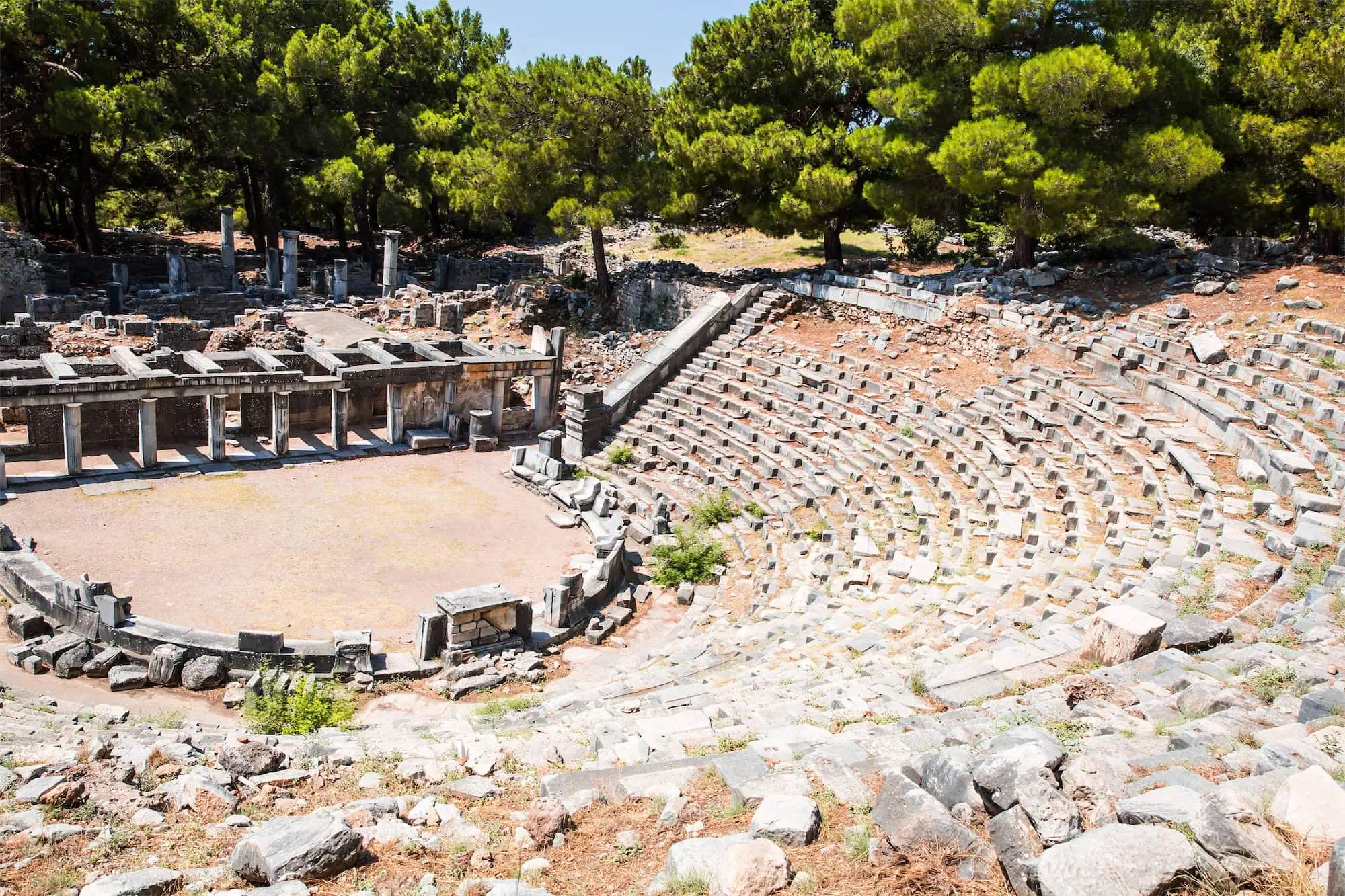
Hidden above the Menderes Valley, the ruins of Priene offer visitors something truly unique—an exceptionally well-preserved example of ancient Greek urban planning that influenced city design for centuries.
Priene can be included in our Egypt and Turkey tours, where Turkey’s lesser-known archaeological sites are combined with its iconic landmarks and Egypt’s ancient wonders for a rich and immersive travel experience.
Unlike more crowded destinations, this hillside city retains a peaceful and authentic atmosphere. Pine trees frame the remains of marble columns, while traces of ancient streets and structures reveal the sophistication of early urban life.
For travelers seeking a deeper and more tranquil historical experience, Priene offers a rare opportunity to explore the past in a truly atmospheric setting.
The site’s exceptional preservation has earned it a place on Turkey’s UNESCO World Heritage tentative list, recognizing its significance as a classical Hellenistic polis. Many travelers visit Priene while exploring the region between Kuşadası and Altınkum, often combining it with nearby Miletos and the Temple of Apollo at Didyma. Its strategic position once made it a key member of the Ionian League, shaping the political and cultural landscape of ancient Anatolia.
Table of Contents
Living Textbook of Ancient Urban Planning
The city’s fame rests primarily on its revolutionary grid system design. Walking through Priene feels like stepping into an urban planning textbook from 2,400 years ago.
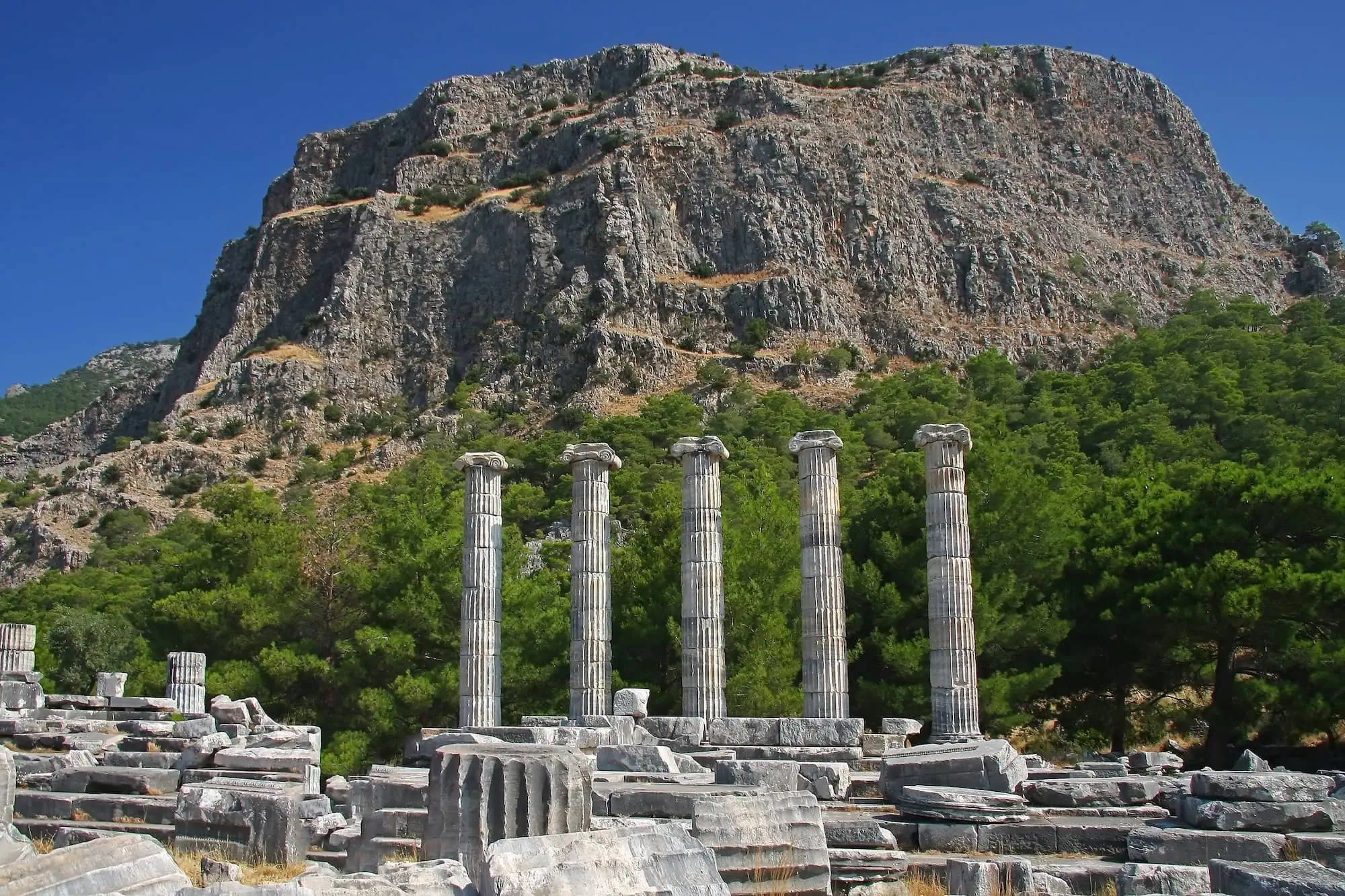
The Hippodamian Grid System
Priene was laid out according to the principles developed by Hippodamus of Miletos, creating the world’s first systematic approach to city planning. The settlement was organized into four distinct districts – political, cultural, commercial, and religious zones – each serving specific functions within the urban framework. Streets intersect at right angles, creating rectangular city blocks that modern planners still study today.
This methodical approach reflected the democratic ideals of ancient Greek society. The grid system embodied the concept of isonomia – political equality among citizens – where no single area of the city dominated others through superior positioning or accessibility.
Alexander’s Architectural Legacy
The most spectacular monument within this planned city is the Temple of Athena Polias, funded personally by Alexander the Great during his conquest of Asia Minor. Designed by Pytheos, the same architect who created the Mausoleum at Halicarnassus (one of the Seven Wonders of the Ancient World), this Ionic temple represents the pinnacle of Hellenistic architectural achievement.
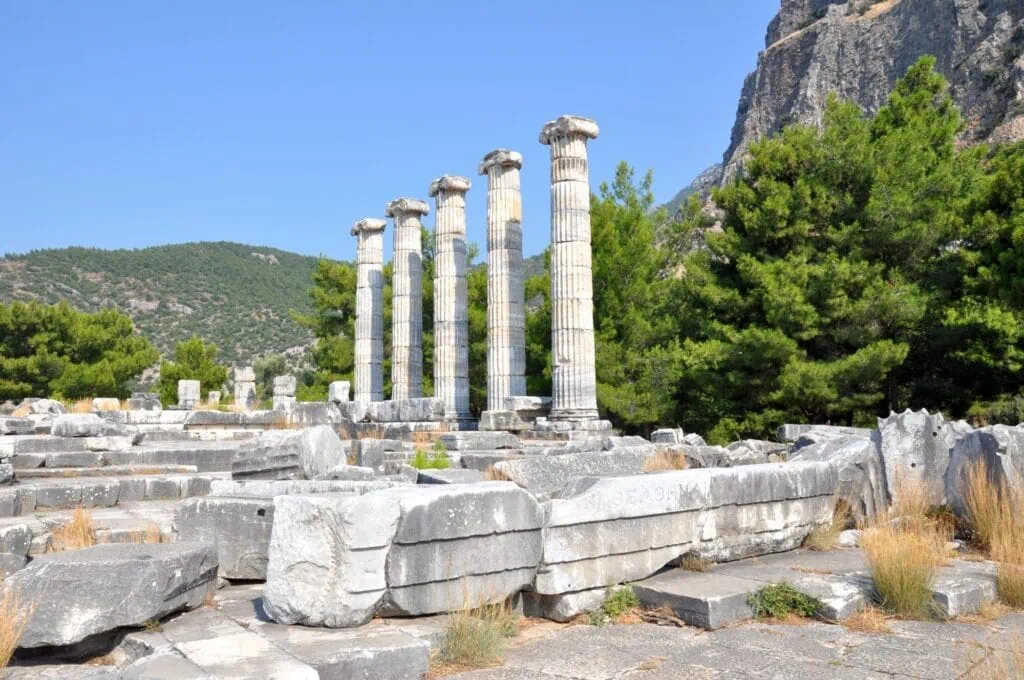
The temple’s marble columns still stand against the mountain backdrop, their refined proportions demonstrating why Pytheos became one of antiquity’s most influential architects. Alexander’s involvement wasn’t merely financial – his support elevated Priene’s status throughout the Greek world, attracting scholars, artists, and philosophers to this intellectual center.
Four Districts of Life
Each district tells its own story of daily life in a classical polis. The agora (marketplace) occupied the commercial zone, where merchants from across the Mediterranean traded goods beneath marble colonnades. The political district housed the bouleuterion (council chamber), one of the best-preserved examples of its kind, where democratic deliberations shaped city policy.
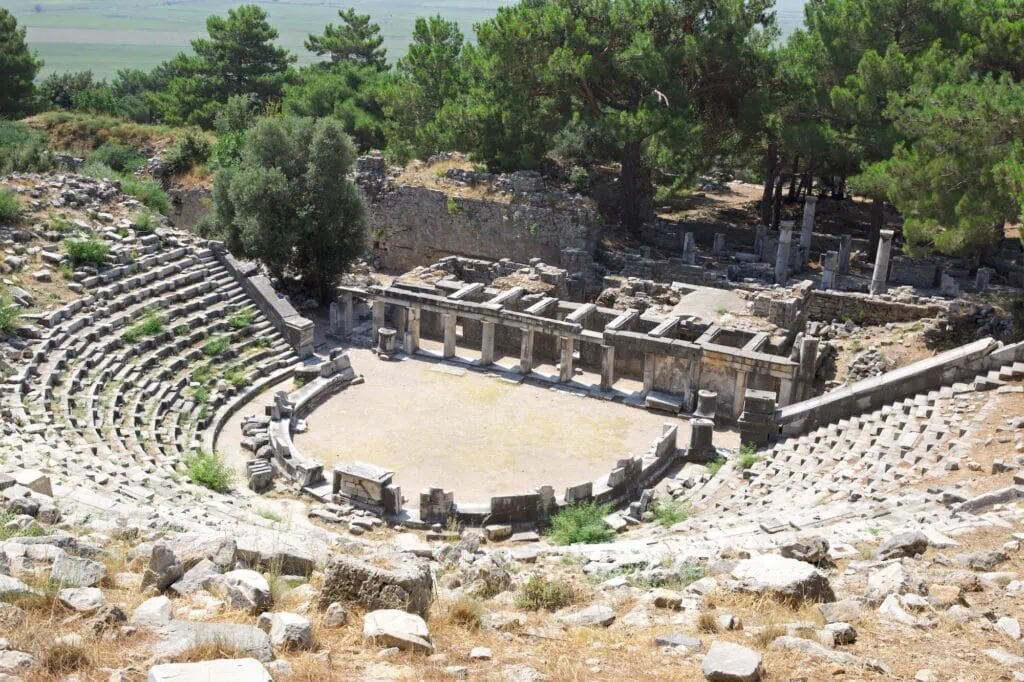
Religious activities centered around multiple sacred spaces, including the impressive theater carved into the mountainside and various temples dedicated to different deities. The residential areas featured private houses with sophisticated drainage systems and interior courtyards that provided cooling relief during Anatolia’s hot summers.
Archaeological Excellence and Historical Significance
German archaeologist Theodor Wiegand began systematic excavations at Priene in 1895, uncovering what scholars consider the most spectacular surviving example of Hellenistic urban architecture in the Mediterranean world. Wiegand’s team revealed not just individual buildings, but an entire urban ecosystem preserved by centuries of sedimentation from the Menderes River.
The river’s changing course gradually left Priene stranded inland, protecting the site from later development that destroyed many other ancient cities. This natural preservation created what archaeologists describe as “Pompeii of Asia Minor” – a complete ancient city frozen in time.
The excavations uncovered remarkable details of daily life: inscribed stones revealing civic decisions, private letters scratched into walls, and even ancient graffiti that provides insight into the personalities of Priene’s residents. One particularly famous inscription records Alexander the Great’s dedication of the Athena temple, providing direct historical evidence of his personal involvement in the city’s development.
What makes Priene especially valuable to archaeologists is its compact size and exceptional preservation state. Unlike sprawling sites that developed over many centuries, Priene represents a relatively short historical period, making it easier to understand how all elements of the urban plan functioned together as an integrated whole.
Notable Residents and Cultural Impact
Priene produced several figures who influenced ancient Greek thought and culture beyond the city’s physical boundaries.
Bias: One of Seven Sages
The most famous resident was Bias, counted among the Seven Sages of ancient Greece during the 6th century BC. His philosophical insights and political wisdom gained recognition throughout the Greek world, bringing intellectual prestige to his home city. Ancient sources credit Bias with numerous witty sayings and practical wisdom that influenced Greek ethical thinking for generations.
Bias served as an ambassador for the Ionian cities, negotiating with foreign powers and helping maintain the delicate balance of power in the eastern Aegean. His reputation for fairness and intelligence made him a sought-after mediator in disputes between different Greek cities.
Center of Ionian Identity
As a member of the Ionian League, Priene played a crucial role in maintaining Greek cultural identity in Asia Minor. The city served as a guardian of the Panionion, the central cult site of the Ionian federation, where representatives from twelve cities gathered for religious festivals and political consultations.
This responsibility made Priene more than just another Greek colony – it became a cultural lighthouse preserving Greek traditions, language, and democratic principles in a region increasingly dominated by Persian and later Roman influences. The city’s commitment to Greek education and philosophy attracted students from across the ancient world.
Archaeological evidence suggests Priene maintained schools and libraries that preserved classical texts and trained new generations of Greek scholars even after the city’s political independence ended.
Experiencing the Ruins Today
Modern visitors face both challenges and rewards when exploring this ancient wonder. The steep climb up Mount Mycale requires good physical condition, but the effort reveals breathtaking panoramic views across the Menderes Valley to the Aegean coastline.
The site maintains a peaceful, almost mystical atmosphere that contrasts sharply with Turkey’s more commercialized archaeological attractions. Pine woods surround the ancient streets, creating natural shade and adding fragrance to the Mediterranean air.
Wild herbs and flowers bloom between marble blocks, giving the ruins a romantic, garden-like quality that photographers and artists find irresistible. Visitors should allow at least three hours to properly explore the major monuments. The theater provides an excellent starting point, offering orientation views across the entire site.
From there, the main street leads past the agora to the Temple of Athena, where afternoon light creates dramatic shadows between the surviving columns.
Planning Your Visit to Priene
Practical Logistics
Priene lies approximately 15 km (9.3 miles) from the coastal town of Söke, accessible by local minibus or taxi. Most visitors arrive as part of organized tours that combine the site with Miletos and Didyma, creating a comprehensive exploration of the ancient Ionian coast.
The site opens daily at 8:00 am (08:00), with extended summer hours until 7:00 pm (19:00) during peak season. Entrance fees are reasonable, typically around 15 Turkish Lira for international visitors. Early morning visits offer the best lighting for photography and avoid afternoon heat that can make the uphill walk challenging.
Physical Requirements and Accessibility
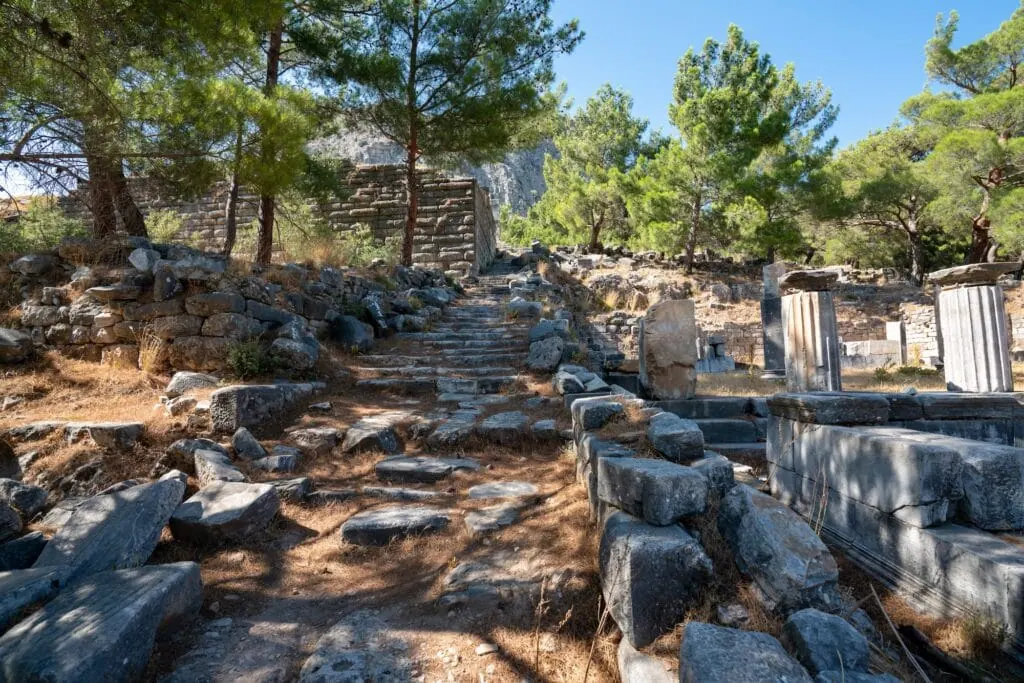
The ancient streets and pathways involve uneven marble steps and steep inclines that can challenge visitors with mobility limitations. Elderly guests or those with walking difficulties should consider the physical demands before attempting the climb. Comfortable walking shoes with good grip are essential, as ancient marble surfaces can become slippery.
Despite accessibility challenges, many visitors report that reaching the upper terraces provides some of their most memorable travel experiences in Turkey. The combination of historical significance, architectural beauty, and natural setting creates an atmosphere unlike any other archaeological site in the region.
Regional Tour Combinations
At Egypt Tours Pluswe offers expertly curated Priene, Miletos, and Didyma (PMD) experiences designed to give you a deeper understanding of the region’s rich historical landscape—without the rush or rigidity of standard group tours. Our itineraries are carefully structured to ensure smooth travel between sites while allowing you the time needed to fully appreciate each location.
Our guided day tours include professional commentary, entrance arrangements, and optional dining experiences in authentic local settings, all selected to enhance your journey.
For a more personalized experience, Egypt Tours Plus provides private tour options with flexible scheduling and dedicated expert guides. Each itinerary is tailored to your interests, pace, and comfort level, ensuring you explore these remarkable ancient cities in a way that is both engaging and effortless—bringing history to life through insightful, high-quality guidance.
Frequently Asked Questions
Allow 2-3 hours to explore the main monuments and enjoy the mountain views comfortably.
The steep, uneven ancient steps make access challenging for visitors with walking difficulties.
Spring (April-May) and autumn (September-October) offer comfortable temperatures and fewer crowds.
Yes, most visitors tour Priene with nearby Miletos and Didyma in organized day trips.
While self-exploration is possible, qualified guides significantly enhance understanding of the complex urban planning.
Priene offers exceptional preservation and fewer crowds than sites like Ephesus, providing a more authentic experience.
Comfortable walking shoes, water, sun protection, and a camera for the spectacular mountain views.
Yes, international visitors pay approximately 15 Turkish Lira, with possible variations during peak season.
Fly to İzmir, then drive or take organized transport 90 minutes south to the site.
It’s the world’s best-preserved example of Hippodamian grid city planning, influencing urban design for millennia.
Basic facilities exist at the entrance, but bringing water and snacks is recommended.
Its remote hillside location and physical access challenges keep visitor numbers lower, preserving its authentic atmosphere.

Design Your Custom Tour
Explore Egypt and Turkey your way by selecting only the attractions you want to visit