

Temple of Qasr Dush – A Fascinating Relic of Roman Strength
Standing guard over ancient caravan routes, one remarkable fortress-temple rises from the sands where few travelers venture.
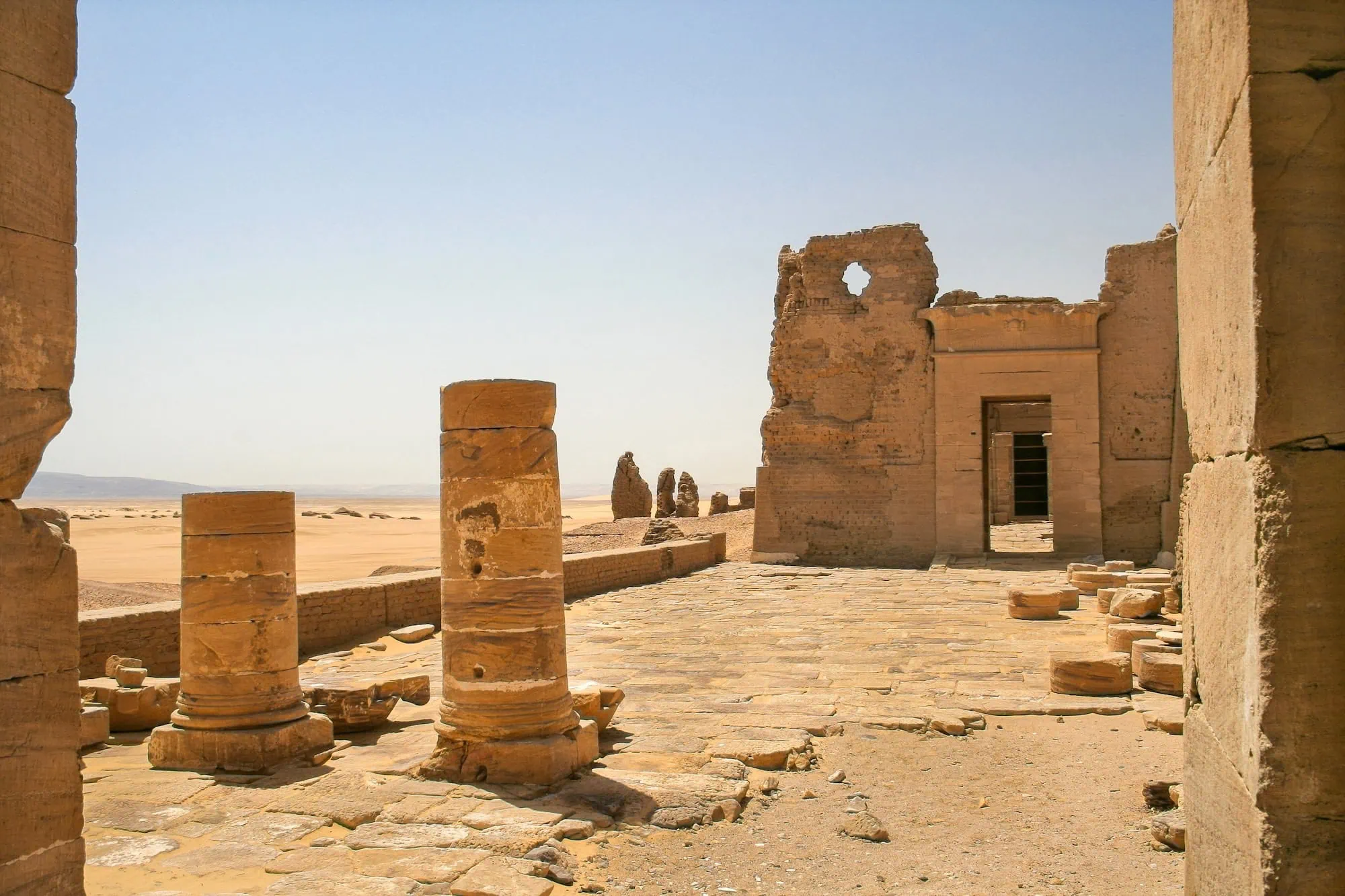
The Temple of Qasr Dush represents something extraordinary in Egypt’s archaeological landscape. Built during the Roman period under emperors Domitian, Trajan, and Hadrian, this sandstone marvel served dual purposes that few ancient structures could claim. While most visitors flock to the Nile Valley’s famous monuments, this remote sanctuary in the Kharga Oasis tells a different story—one of military strategy, religious devotion, and remarkable survival against desert forces.
Here, Roman engineering met Egyptian spirituality in ways that continue to surprise archaeologists and historians alike. We’ve explored this fascinating site extensively during our Western Desert expeditions, and what strikes us most is how perfectly preserved many features remain after nearly two millennia. The temple-fortress complex offers insights into Roman Egypt that you simply cannot find anywhere else in the country.
Table of Contents
The Strategic Heart of Ancient Kysis
The Romans chose this location with military precision. Positioned at the intersection of major desert tracks, the fortress controlled access to Egypt’s vulnerable western approaches. Ancient Kysis, as the settlement was known, became a crucial checkpoint where caravans traveling from Sudan and the western territories had to pass.
Roman Military Architecture in Desert
Archaeological evidence reveals a multi-level defensive complex that descended four or five storeys underground. The fortress design incorporated both Roman military standards and local building techniques adapted for desert conditions. Thick sandstone walls provided protection from both human threats and the relentless Sahara winds that continue to shape the landscape today.
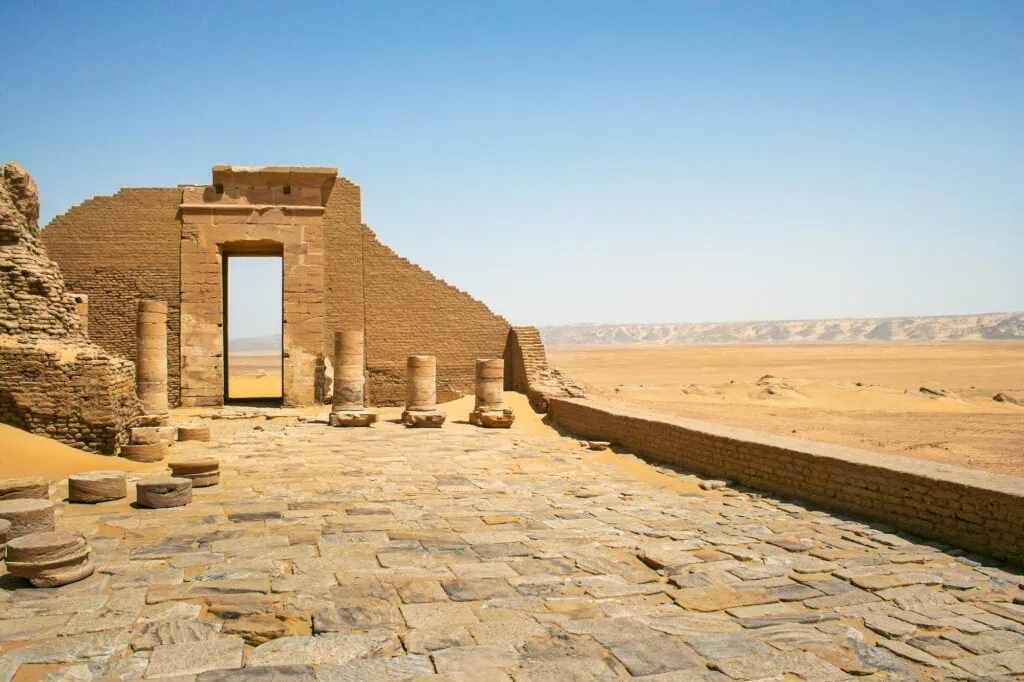
The strategic importance became even more apparent when we consider the timing of construction. Built around 177 AD, the fortress emerged during a period when Rome was consolidating control over Egypt’s desert frontiers.
Underground Levels and Chambers
Excavations by the Institut Français d’Archéologie Orientale since 1976 have revealed the complexity beneath ground level. These subterranean chambers likely served multiple purposes—storage for military supplies, protection during sandstorms, and possibly as secure quarters for high-ranking officials.
What makes these underground levels particularly remarkable is their state of preservation. Desert conditions have protected organic materials and architectural details that would have deteriorated centuries ago in more humid climates.
Temple Dedication and Religious Significance
The sacred heart of Qasr Dush honored both Isis and Serapis, reflecting the religious syncretism characteristic of Roman Egypt. This wasn’t merely a military outpost—it was a functioning religious center that served both Roman soldiers and local populations.
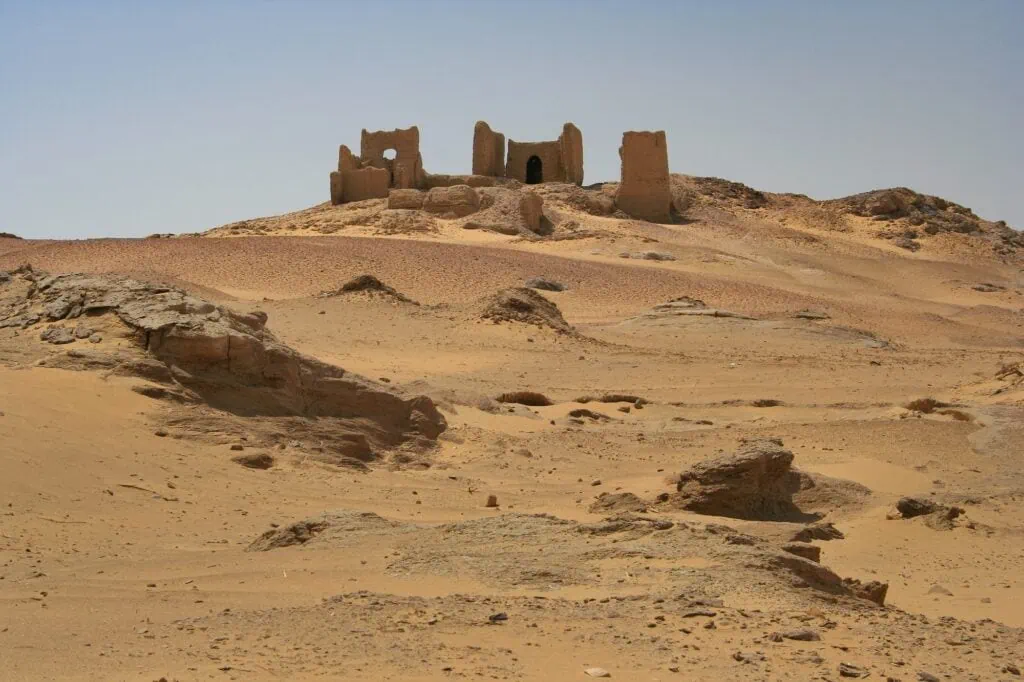
Built on Ptolemaic foundations from the 1st century BC, the temple underwent significant expansion during the early imperial period. The Romans maintained existing Egyptian religious traditions while incorporating their own architectural preferences and decorative elements. Barrel-vaulted ceilings showcase Roman engineering prowess, while hieroglyphic inscriptions preserve traditional Egyptian religious formulas.
The dedication to Serapis, a deity that blended Egyptian and Greek religious concepts, demonstrates how the Romans approached local beliefs. Rather than suppressing indigenous religions, they often incorporated them into broader imperial religious frameworks. This approach proved particularly successful in remote locations like Kysis, where maintaining local support was essential for effective frontier control.
Hypostyle halls within the temple complex provided space for religious ceremonies that continued long after the fortress’s military importance declined. Recent restoration work in 1967 revealed that many original inscriptions remain intact, offering modern scholars unprecedented insights into Roman-period religious practices in Upper Egypt.
The Legendary Treasure of Dush
In 1989, archaeologists made one of modern Egypt’s most spectacular discoveries at this remote site. The Treasure of Dush consisted of exquisite gold artifacts that had remained hidden for nearly two millennia.
The collection included a magnificent gold diadem featuring intricate metalwork, elaborate bracelets displaying advanced goldsmithing techniques, and necklaces decorated with religious motifs honoring Serapis and Harpocrates. Each piece demonstrated the wealth and sophistication of Roman-period Egypt, challenging assumptions about life in remote frontier settlements.
Analysis of the treasure revealed connections to broader Mediterranean trade networks. Gold sources, artistic techniques, and decorative motifs showed influences from across the Roman Empire. This wasn’t provincial craftsmanship—these were luxury items comparable to pieces found in Rome itself.
The treasure currently resides in the Grand Egyptian Museum in Cairo, where it represents one of the finest examples of Roman-period Egyptian metalwork. For visitors to Qasr Dush, replica displays help illustrate the site’s former grandeur.
Archaeological Significance Beyond Gold
While the treasure captures public attention, its archaeological context provides equally valuable information. The burial circumstances, associated pottery, and organic remains offer insights into funeral practices, social hierarchies, and daily life during the Roman period.
French archaeological teams continue studying findings from the 1989 excavation, with results reshaping understanding of Roman Egypt’s western frontiers. These discoveries prove that remote settlements like Kysis maintained direct connections to imperial centers throughout the Roman period.
Visiting the Temple Complex Today
Current site conditions present both opportunities and challenges for modern visitors. The remote location in the New Valley Governorate ensures few crowds, offering an intimate experience with this remarkable monument. However, ongoing conservation concerns require careful visitor management.
Recent UNESCO recognition as part of the Kharga Oasis Tentative List has brought renewed international attention to preservation needs. Sand erosion continues threatening exposed architectural elements, while limited tourism infrastructure affects accessibility for independent travelers.
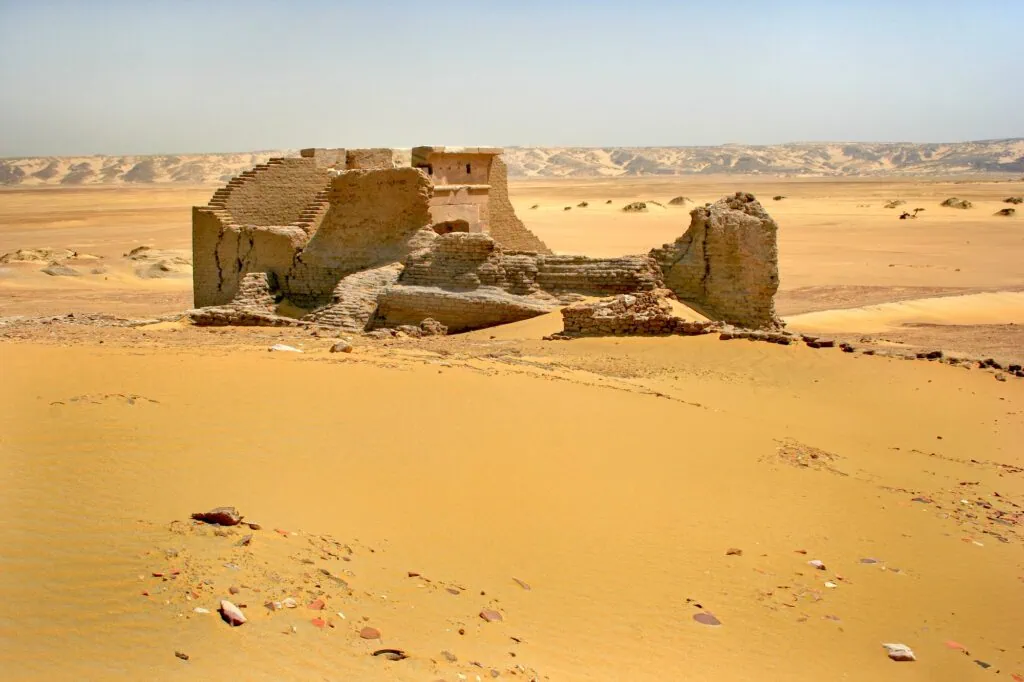
We recommend visiting as part of organized desert expeditions that include expert guides familiar with the site’s archaeological significance. The journey itself becomes part of the experience, following ancient caravan routes through landscapes that have changed little since Roman times.
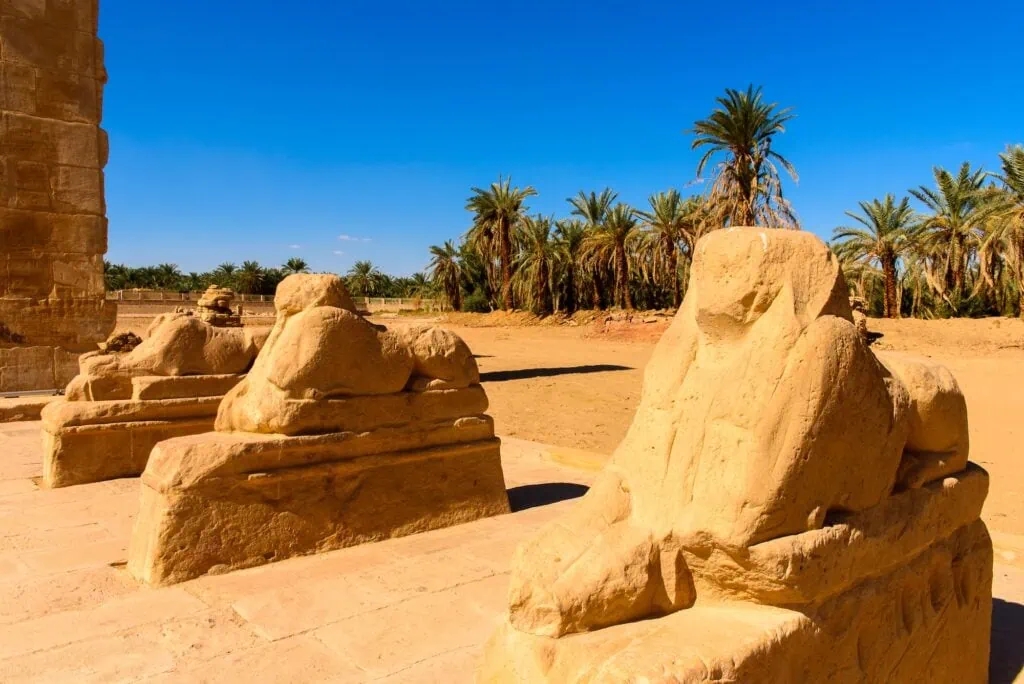
The temple’s architectural details reward close examination. Decorated walls retain much of their original carving quality, while vaulted ceilings demonstrate Roman engineering adapted for desert conditions. Photography opportunities are exceptional, particularly during early morning and late afternoon hours when shadows emphasize architectural features.
Archaeological Research and Future Discoveries
French archaeological missions continue revealing new aspects of this complex site. Recent work has focused on the ancient cemetery, where 92 tombs containing 433 burials provide insights into demography, health, and social organization during the Roman period.
Mortality data from these burials offers unprecedented information about life expectancy and disease patterns in Roman Egypt’s frontier regions. Preliminary analysis suggests that despite harsh desert conditions, the population maintained reasonable health standards comparable to other Roman provincial settlements.
Ongoing excavations in the fortress area continue uncovering evidence of daily life, military organization, and economic activities. Pottery analysis reveals trade connections extending from the Mediterranean to sub-Saharan Africa, confirming Kysis’s role as a major commercial hub.
Conservation Challenges and Opportunities
Modern conservation efforts face unique challenges in this desert environment. While dry conditions preserve organic materials exceptionally well, sand erosion and temperature fluctuations threaten exposed stonework. International cooperation between Egyptian authorities and French archaeological teams has developed innovative preservation techniques specifically adapted for Saharan conditions.
Future research priorities include completing excavation of underground levels, analyzing environmental data from the Roman period, and developing sustainable tourism infrastructure that protects the site while making it accessible to interested visitors.
Planning Your Desert Adventure
The journey to Qasr Dush requires careful planning and appropriate preparation. Located approximately 120 km (75 miles) from Kharga town, the site sits isolated in desert terrain that demands respect and preparation.
Most visitors combine Qasr Dush with other Kharga Oasis attractions, creating comprehensive desert expeditions that showcase the region’s remarkable archaeological heritage. The Temple of Hibis, ancient Bagawat Cemetery, and other Roman-period sites provide context for understanding the broader historical landscape.
Weather considerations are crucial for any visit. Winter months from November through March offer the most comfortable conditions, with daytime temperatures around 20-25°C (68-77°F) and cool evenings perfect for desert camping experiences.
Our desert expeditions include specialized vehicles designed for sand terrain, experienced drivers familiar with desert navigation, and expert guides who bring the site’s history to life. We provide all necessary safety equipment and maintain constant communication with our Cairo headquarters throughout these remote adventures.
Discover The Quiet Power Of The Temple Of Qasr Dush
At the edge of the desert, the Temple of Qasr Dush offers a rare sense of solitude and history—where ancient trade routes, Roman influence, and Egyptian tradition meet in a truly atmospheric setting. With Egypt Tours Plus, we integrate this off-the-beaten-path site into a wider, privately guided journey that connects Egypt’s hidden corners with its world-famous landmarks.
Shape your trip exactly as you want it—choose your travel dates, set your pace, and handpick the experiences and route that match your vision. We take care of every detail with care and expertise, ensuring a seamless, comfortable, and deeply personal travel experience from beginning to end.
Frequently Asked Questions
Construction at the Temple of Qasr Dush began during the late Ptolemaic period in the 1st century BC and expanded substantially under Roman emperors including Domitian, Trajan, and Hadrian during the 1st and 2nd centuries AD. Archaeological evidence shows the site remained active until at least the 3rd century AD as both a religious and military center. The layered construction phases make Qasr Dush especially valuable for understanding how Roman Egypt evolved over several centuries in the Western Desert frontier region.
The “Treasure of Dush” refers to a remarkable cache of gold jewelry and luxury artifacts discovered by archaeologists in 1989 near the temple complex at Qasr Dush. Items included an elaborate gold diadem, necklaces, bracelets, earrings, and coins dating to the Roman period, many now housed in Cairo’s Egyptian Museum. The discovery demonstrated the oasis’s surprising wealth and strategic importance within Roman Egypt. Few Western Desert excavations have produced such a refined collection of elite personal ornaments.
Qasr Dush lies approximately 120 km (75 miles) south of Kharga town in Egypt’s New Valley Governorate, with travel typically taking around 2 hours by four-wheel-drive vehicle. The route crosses isolated desert terrain with limited services, which is why most visitors arrange transportation through licensed guides or organized tours. The temple’s remote setting contributes to its excellent preservation and relatively low visitor numbers compared to Nile Valley monuments. Travelers should carry water and avoid independent desert driving without local expertise.
The Temple of Qasr Dush was primarily dedicated to Isis and Serapis, two major deities associated with Roman-period religious syncretism in Egypt during the first centuries AD. Serapis combined Egyptian and Greco-Roman religious traditions, while Isis remained one of the most widely worshipped goddesses across the Mediterranean world. Inscriptions and reliefs also reference local protective deities connected to oasis life and desert security. The temple illustrates how Roman frontier communities blended Egyptian spirituality with imperial religious practices.
Visitors currently cannot access the underground chambers at Qasr Dush because Egyptian antiquities authorities restrict entry for conservation and archaeological safety reasons. Excavations continue revealing new architectural features, fragile inscriptions, and buried structural elements beneath the visible temple and fortress remains. Restricting underground access helps protect unstable passages from humidity, erosion, and accidental damage caused by tourism. Travelers can still explore the main temple, defensive walls, and surrounding ruins while guides explain the ongoing archaeological discoveries taking place below ground.
Qasr Dush is archaeologically significant because it combines a Roman military fortress, temple complex, settlement remains, and desert trade outpost within a single exceptionally preserved site. Few locations in Egypt demonstrate frontier life so clearly, especially in relation to Roman control of oasis trade routes and agricultural production. Excavations have uncovered inscriptions, military structures, storage facilities, and religious spaces dating from the Ptolemaic and Roman eras. Its isolation in the Western Desert protected many architectural details from later urban development.
Visitor facilities at Qasr Dush remain very limited due to the temple’s remote desert location roughly 120 km south of Kharga Oasis. Travelers should expect minimal infrastructure, with few shaded areas, no extensive restaurants, and limited restroom availability compared to major Egyptian tourist attractions. Organized excursions typically provide transportation, water, and logistical support necessary for safe exploration in desert conditions. Visitors should wear sturdy walking shoes and carry sun protection because temperatures and sunlight intensity can become severe even during winter afternoons.
Weather strongly affects visits to Qasr Dush because the temple sits deep within Egypt’s Western Desert, where summer daytime temperatures regularly exceed 40°C (104°F). The most comfortable visiting season runs from November through March, when temperatures usually remain between 20°C and 25°C (68°F to 77°F). Cooler winter conditions make archaeological exploration and photography significantly easier, especially during midday. Wind and occasional sandstorms can also reduce visibility, so morning visits generally provide the clearest conditions for touring and photography.
Travelers visiting Qasr Dush often combine the site with other Kharga Oasis landmarks including the Temple of Hibis, Al-Bagawat Christian cemetery, the Nadura Temple ruins, and historic Roman caravan routes across the Western Desert. These sites collectively span Pharaonic, Roman, early Christian, and Islamic history within a relatively concentrated region. Kharga’s archaeological diversity makes it one of Egypt’s strongest destinations for travelers interested in lesser-known desert heritage. Multi-day itineraries provide enough time to appreciate the oasis without rushed travel schedules.
The Institut Français d’Archéologie Orientale (IFAO) has directed major archaeological research at Qasr Dush since 1976, documenting the temple, fortress structures, inscriptions, and surrounding settlement remains. French and Egyptian teams have uncovered important evidence relating to Roman military logistics, oasis agriculture, and religious practices in Egypt’s Western Desert frontier. Ongoing excavations continue producing new findings, particularly regarding underground structures and residential areas near the temple. Qasr Dush remains one of the most actively studied Roman desert sites in Egypt today.
Qasr Dush forms part of the Kharga Oasis UNESCO Tentative List, recognizing the region’s outstanding archaeological and historical value within Egypt’s Western Desert heritage landscape. Inclusion on the Tentative List is an early step toward possible future World Heritage status, although it does not guarantee full UNESCO inscription. Experts consider the oasis important because it preserves interconnected Roman, Christian, and Pharaonic sites across remote desert trade corridors. Its exceptional preservation strengthens arguments for long-term international conservation support and recognition.
Visitors exploring Qasr Dush should bring sun protection, at least 2 to 3 liters of water per person, sturdy walking shoes, sunglasses, and lightweight clothing suitable for intense desert sunlight. Temperatures fluctuate sharply between daytime and evening, especially during winter months, so an extra light layer is also useful. Camera equipment is highly recommended because the fortress and temple sit within dramatic open desert scenery rarely seen at mainstream Egyptian archaeological sites. Early morning departures help avoid peak heat and improve photography conditions.
Design Your Private Western Desert Adventure
Travel with your own expert guide, private 4×4 vehicle, and a route tailored to you.