

Souk Semmarine – The Heartbeat of Marrakech
Step into the heart of Marrakech’s most famous marketplace.
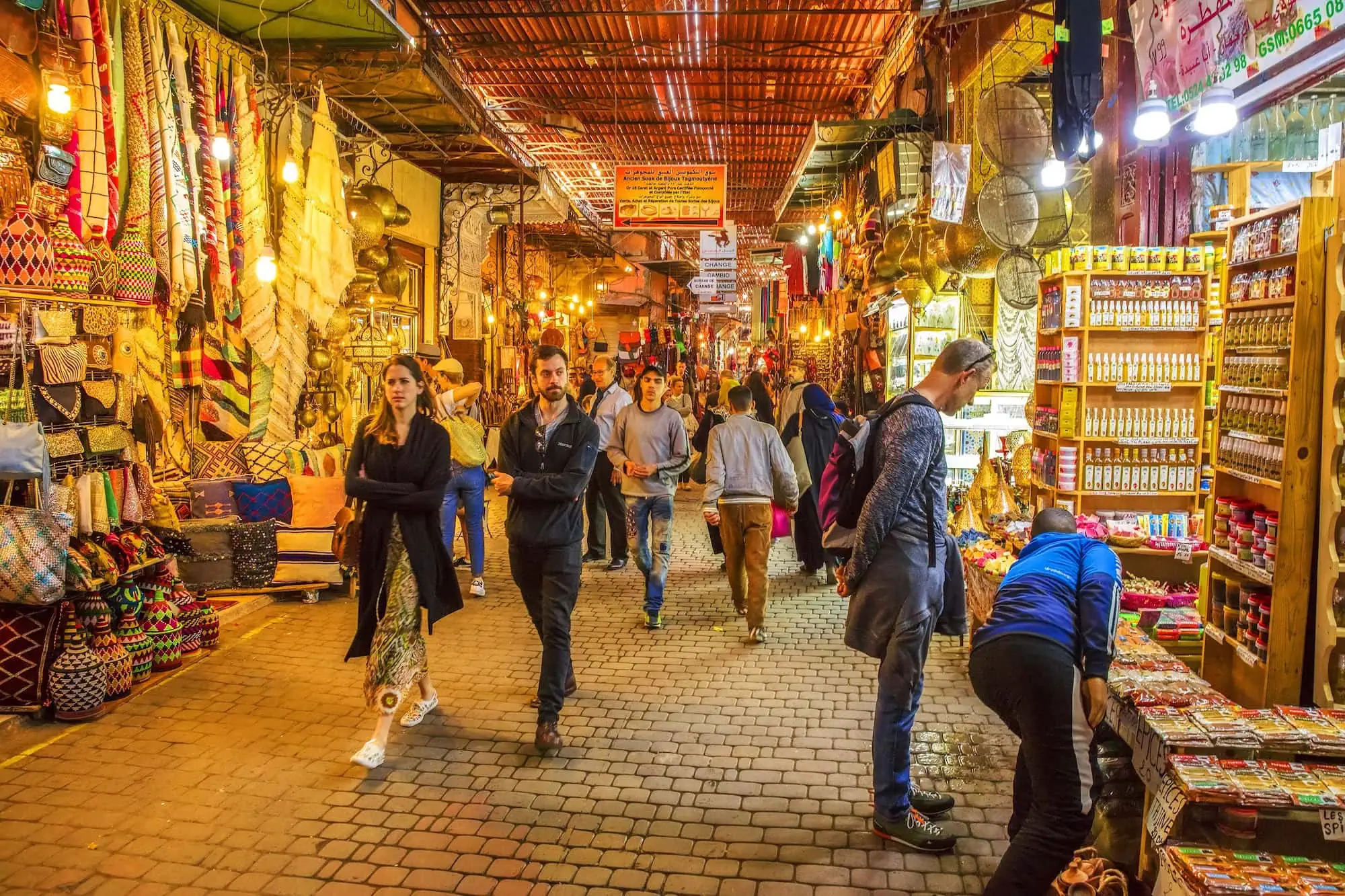
Souk Semmarine serves as the main shopping artery of Marrakech’s medina, connecting Djemaa el-Fna square to the extensive network of traditional souks that define the city. Often referred to as the “Bond Street of Marrakech,” this covered market is constantly alive with movement, color, and trade.
Souk Semmarine can be included in our Egypt and Morocco vacation packages, where Morocco’s vibrant markets and cultural highlights are combined with its historic cities and Egypt’s ancient wonders for a rich and immersive travel experience.
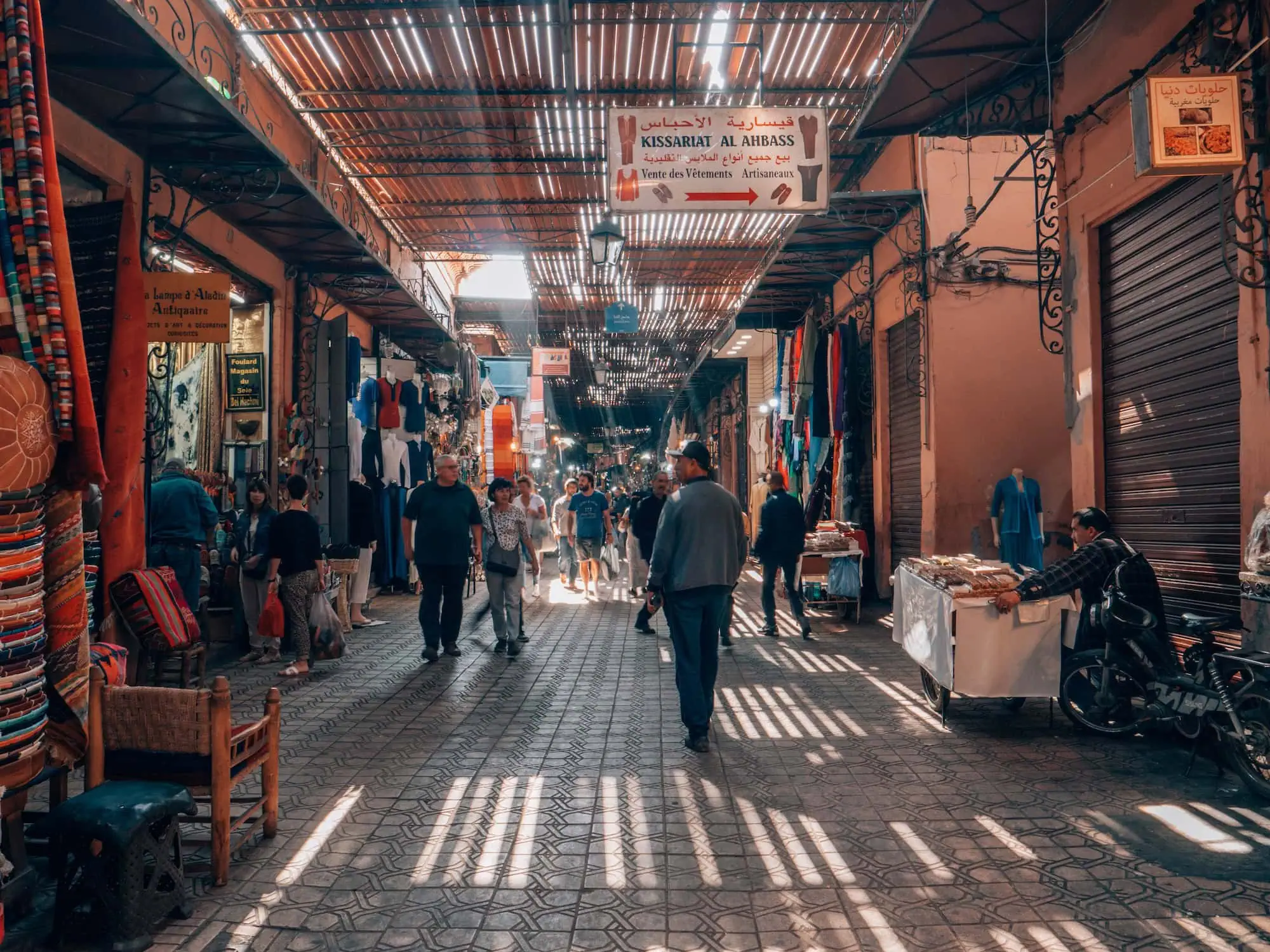
Overhead wooden slats soften the intense sunlight, creating a distinctive atmosphere where the scent of spices blends with the sounds of bargaining and daily life. From handcrafted carpets to detailed metalwork, the variety reflects Morocco’s deep artisan traditions.
With the right guidance, navigating this lively marketplace becomes an enjoyable and rewarding experience—revealing both authentic culture and unique finds.
What Makes Souk Semmarine Special
The marketplace operates as the gateway to Marrakech’s entire souk system. Unlike other Moroccan cities where markets might be spread across different areas, Souk Semmarine consolidates centuries of trading tradition into one accessible location.
The Main Shopping Corridor
Running directly north from the famous Djemaa el-Fna square, this covered passageway creates the backbone of the medina’s commercial district. Local merchants have operated family businesses here for generations, passing down both their craft techniques and their prime shop locations. The wooden roof structure, supported by ancient stone pillars, maintains a comfortable temperature even during Marrakech’s hottest summer days.
Traditional Berber architecture shapes every corner of this marketplace. Stone walls display centuries of wear, while intricate tile work adorns doorways and shop fronts.
Connection to Specialized Markets
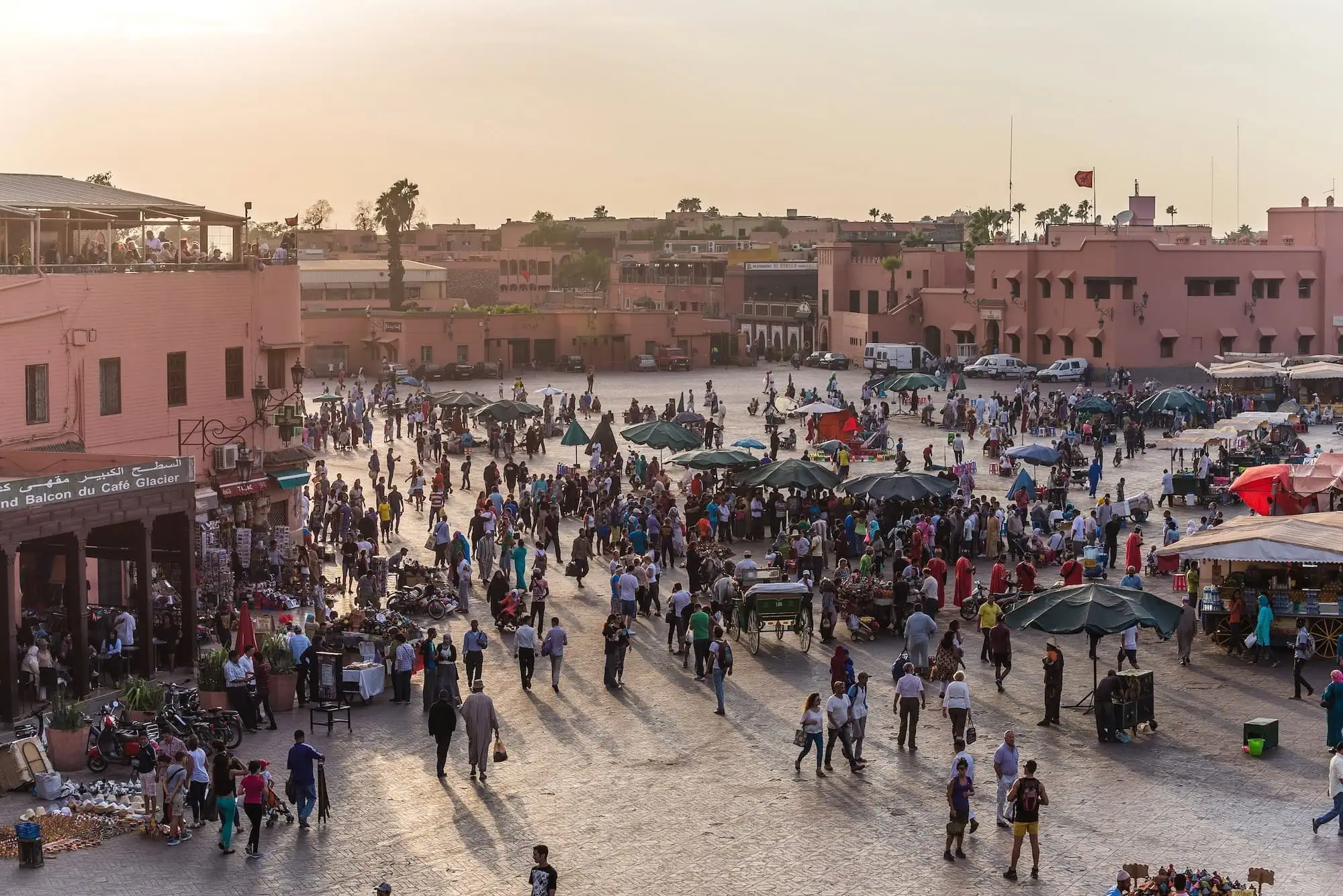
Souk Semmarine acts as your starting point for exploring the medina’s specialized trading areas. From here, narrow alleyways branch off toward the spice market (Souk el Attarine), the metalwork quarter, and the leather goods section. Each specialized souk maintains its own character and traditions, yet all connect through this central thoroughfare.
Authentic Cultural Experience
Morning hours reveal the souk’s most authentic character as local residents conduct their daily shopping. Tourists arrive later, creating a natural rhythm that experienced visitors learn to appreciate. We recommend starting your visit between 9:00 am (09:00) and 10:00 am (10:00) to witness this transition.
Shopping Successfully in Souk Semmarine
Successful shopping here requires understanding both the cultural context and practical strategies. Moroccan trading culture values relationship-building over quick transactions, creating opportunities for meaningful interactions with local artisans.
Master the art of respectful haggling by starting conversations with genuine interest in the craftsmanship. Ask about materials, techniques, and the story behind specific pieces. This approach often leads to better prices than aggressive bargaining tactics. Expect initial prices to be 3-4 times higher than the final agreed amount, especially for larger items like carpets or furniture.
Cash remains king throughout the marketplace. While some larger shops accept credit cards, smaller family businesses prefer Moroccan dirhams. ATMs are available near Djemaa el-Fna square, but we suggest having sufficient cash before entering the souk system.
Traditional Crafts and Specialties
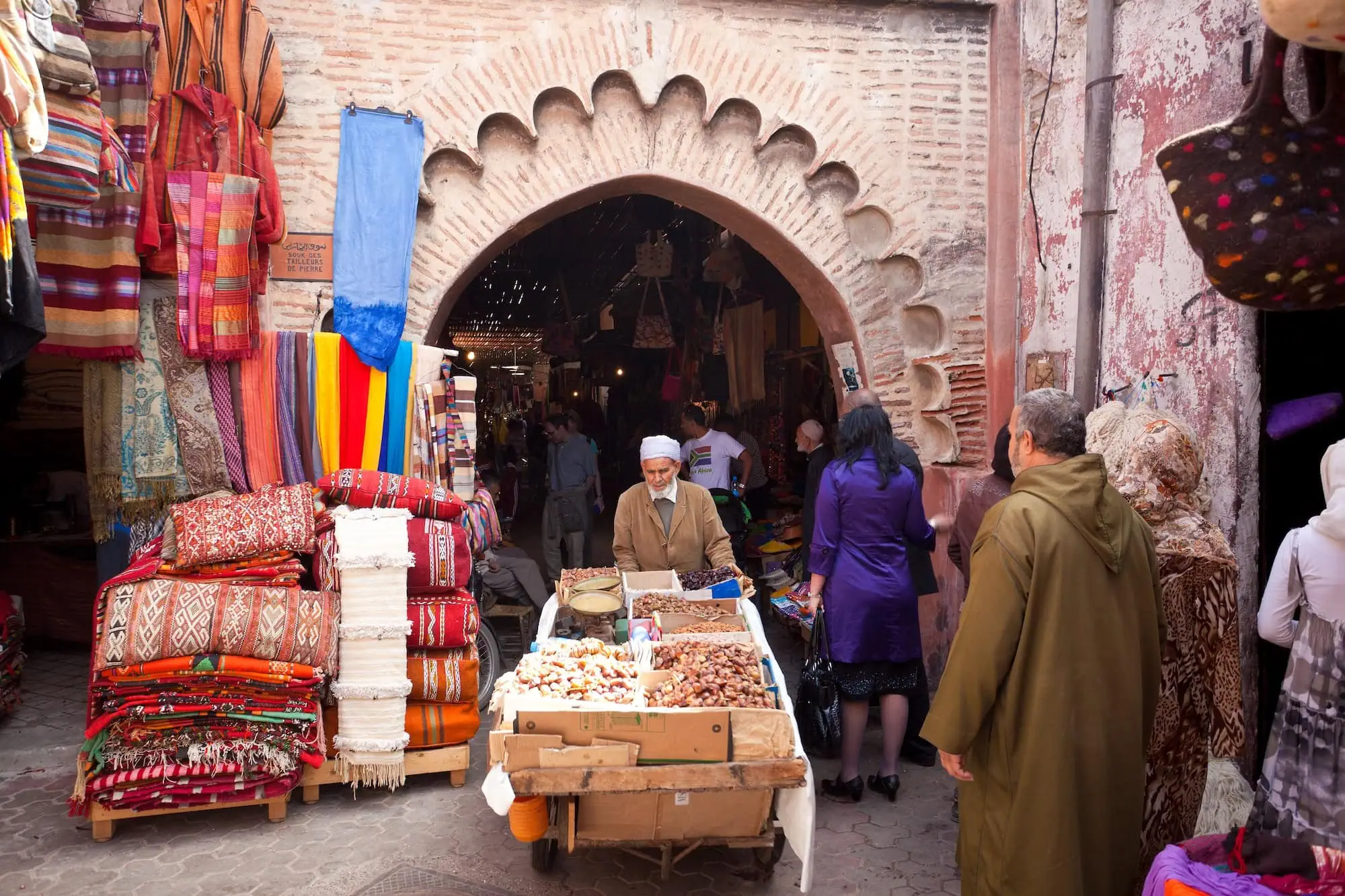
Moroccan carpets represent the most significant purchase opportunity, with prices ranging from 200 dirhams for small decorative pieces to several thousand for large, hand-knotted masterpieces. Sellers will unroll multiple options, creating an impromptu showroom right in their shop. Quality indicators include knot density, natural versus synthetic dyes, and wool texture.
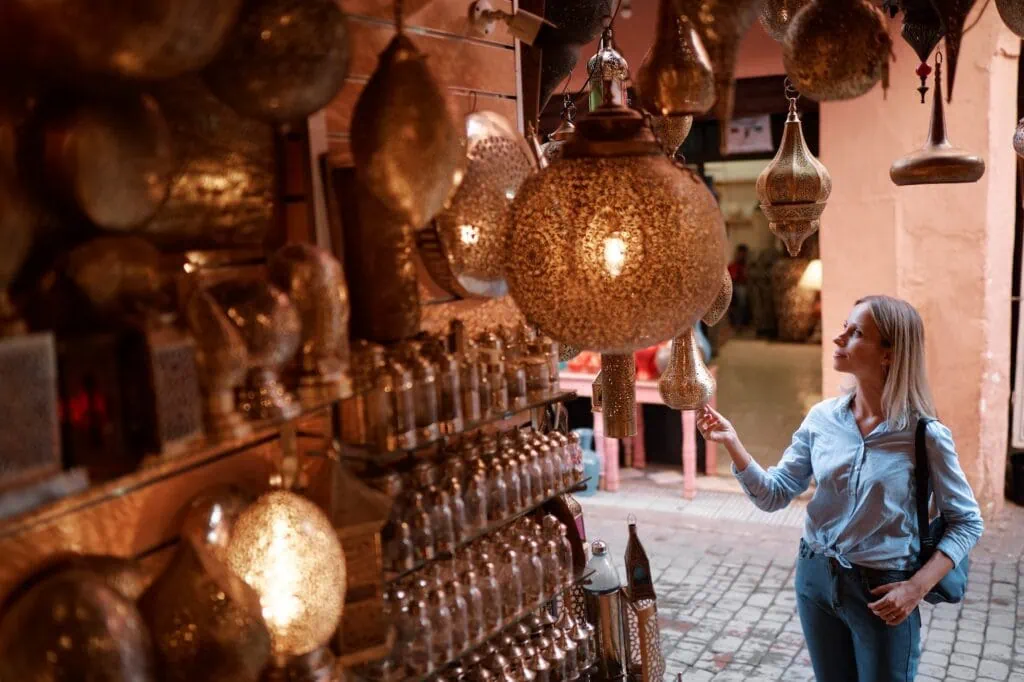
Metalwork items showcase another local specialty. Brass lanterns, silver jewelry, and copper cookware reflect techniques passed down through generations of artisans. Look for items with clean welding seams and consistent metal thickness.
Leather goods offer practical souvenirs at reasonable prices. Moroccan leather processing creates supple textures and rich colors, though quality varies significantly between shops.
Navigating the Marketplace Like a Local
The souk’s layout follows ancient patterns that can confuse first-time visitors. Unlike modern shopping centers with clear signage, these passages evolved organically over centuries, creating a maze-like structure that rewards patient exploration.
Key landmarks help maintain orientation throughout your visit. The main entrance near Djemaa el-Fna features distinctive archways with tile work. The Ben Youssef Medersa provides another reference point, located northeast of the main shopping area. These historical markers serve as navigation aids when exploring deeper into the medina.
Small cafes and restaurants scattered throughout the area offer rest stops and additional orientation points. Local residents frequent these establishments, making them excellent spots for authentic Moroccan tea and brief conversations with friendly locals.
Best Times to Visit
Early morning shopping (8:00 am to 10:00 am / 08:00 to 10:00) provides the most authentic experience as local residents conduct their daily errands. Shop owners are fresh and more willing to engage in extended conversations about their products.
Late afternoon (4:00 pm to 6:00 pm / 16:00 to 18:00) brings cooler temperatures and different lighting as the sun filters through the wooden slats overhead. Photography opportunities improve during these golden hours, though crowds increase significantly.
Evening visits focus more on atmosphere than serious shopping, as many merchants begin closing their stalls around 7:00 pm (19:00).
Traditional Craftsmen and Their Work
Generations of skilled artisans continue practicing traditional techniques within Souk Semmarine’s workshops. These craftsmen often welcome visitors to observe their work process, providing insights into Morocco’s rich artistic heritage.
Textile Artisans
Berber women weave carpets using techniques unchanged for centuries. Natural dyes create the distinctive colors – saffron for yellows, pomegranate for reds, and indigo for blues. Each region of Morocco produces carpets with unique patterns and color combinations, making them valuable cultural artifacts beyond their decorative function.
Silk weavers create scarves and clothing items using both traditional looms and modern equipment. The finest pieces incorporate gold and silver threads, creating shimmering textures that catch light beautifully.
Metalwork Masters
Brass and copper artisans shape their materials using hand tools and techniques passed down through family lines. Watching them create intricate patterns through hammering and engraving provides fascinating insight into Moroccan craftsmanship. These workshops often allow visitors to try basic techniques under expert guidance.
Silver jewelry makers specialize in traditional Berber designs featuring geometric patterns and semi-precious stones. Each piece tells a story through its symbols and construction methods.
Practical Shopping Strategies
Understanding Quality Indicators
Authentic Moroccan crafts display specific characteristics that distinguish them from mass-produced items. Hand-knotted carpets show slight irregularities in pattern and texture – these imperfections actually indicate genuine craftsmanship. Machine-made alternatives appear too perfect and uniform.
Genuine leather goods feel supple and display natural grain patterns. Poor-quality items often feel stiff or show artificial texturing. Ask to see how the leather bends and recovers its shape.
Metalwork quality appears in the weight, finish, and joining techniques. Solid brass items feel substantial, while cheaper alternatives use thin metal or plating over other materials.
Price Negotiation Guidelines
Starting prices often reflect a markup of 300-400% above acceptable final prices. Begin negotiations at approximately 25-30% of the initial asking price, then work toward a middle ground. Remember that quality items deserve fair compensation for the artisan’s skill and time.
Payment in cash often results in additional discounts of 5-10%. Large purchases provide more negotiation leverage than small items where profit margins are already minimal.
Group purchases from the same vendor can lead to package deals, especially for items like scarves, small decorative pieces, or spices.
Cultural Etiquette and Local Customs
Respectful behavior enhances your shopping experience while showing appreciation for Moroccan culture. Greet shop owners with “As-salamu alaikum” (peace be upon you) or “Bonjour” (good day), and expect warm responses. Many merchants speak multiple languages including Arabic, French, English, and Spanish.
Photography requires permission, especially in shops where people are working. Some artisans enjoy sharing their craft with visitors, while others prefer privacy. Always ask before taking photos of people or their work.
Dress modestly out of respect for local customs. This means covering shoulders and knees, especially when entering more traditional areas of the medina. Conservative clothing also helps you blend in better and may result in more favorable treatment from local merchants.
Building Relationships with Merchants
Successful shopping often depends on building rapport with shop owners. Express genuine interest in their products, ask about their family traditions, and show respect for their craftsmanship. These conversations often lead to invitations to see special pieces not displayed in the main shop area.
Return visits to the same shops can result in better prices and access to higher-quality items. Merchants remember customers who treated them well and often reserve special pieces for repeat visitors.
Getting There and Practical Information
Souk Semmarine sits just steps from Djemaa el-Fna square, making it easily accessible from most accommodations in the medina. The main entrance is clearly marked and impossible to miss when approaching from the famous square.
Transportation Options
Walking remains the primary method for reaching the souk from within the medina. Most riads and traditional accommodations are within 5-10 minutes’ walking distance. The narrow streets prohibit vehicle access, making walking both necessary and pleasant.
Taxis can drop you at the edge of Djemaa el-Fna square, from where Souk Semmarine is clearly visible. Negotiate taxi fares in advance or ensure the meter is running to avoid inflated prices.
Our private tours include comfortable transportation to and from your accommodation, plus expert guidance throughout your shopping experience.
Safety and Security
The souk maintains excellent safety standards with regular police patrols and helpful local merchants who watch out for visitors. Pickpocketing is rare but possible in crowded areas, so keep valuables secure and maintain awareness of your surroundings.
Lost visitors can ask any shop owner for directions back to Djemaa el-Fna square. The merchant community takes pride in helping tourists navigate successfully, and most speak enough English to provide clear directions.
U.S. Visitors Entry Requirements
U.S. citizens can enter Morocco without a visa for stays up to 90 days. Your passport must be valid for at least six months beyond your planned departure date. European visitors follow similar requirements, while Latin American travelers should check specific agreements between their countries and Morocco, as some nationalities may need advance visa arrangements.
Our Expert-Guided Shopping Experiences
We provide private guided tours that transform your Souk Semmarine visit into an educational and rewarding cultural experience. Our local guides have decades of relationships with trusted merchants, ensuring you access authentic products at fair prices while learning about Moroccan traditions and craftsmanship.
Each tour is tailored to your interests and shopping goals. Whether you’re seeking specific items like carpets or jewelry, or simply want to explore and discover treasures along the way, our guides adapt the experience to match your preferences. We also provide translation services for complex negotiations and cultural context that enhances your understanding of what you’re purchasing.
Our 24/7 customer support ensures assistance throughout your visit, and our modern, comfortable vehicles make transportation seamless from your accommodation to the marketplace and back.
Frequently Asked Questions
Most shops open around 8:00 am and close by 8:00 pm, though individual merchants set their own schedules.
Budget 100-500 dirhams for small souvenirs, 500-2000 dirhams for quality goods, and 2000+ dirhams for carpets.
Bargaining is absolutely expected and considered part of the cultural experience and trading tradition.
Some larger shops accept credit cards, but most businesses operate on cash only with Moroccan dirhams.
Many merchants offer international shipping services, or you can arrange shipping through local providers.
Authentic items show slight imperfections, natural material variations, and superior craftsmanship quality indicators.
Yes, the marketplace maintains good security with regular patrols and helpful merchant community.
Ask any shop owner for directions back to Djemaa el-Fna square – they’re helpful and speak English.
Tipping is appreciated but not mandatory. Tips of 50-100 dirhams are appropriate for excellent service.
Return policies vary by merchant and are not standardized – discuss concerns before finalizing purchases.
Avoid endangered species items, antiques over 100 years old, or weapons – guides advise on regulations.
Allow 3-4 hours for a comprehensive shopping experience, including negotiations and cultural interactions.

Design Your Custom Tour
Explore Egypt & Morocco your way by selecting only the attractions you want to visit