

Qasr Al-Mshatta – The Winter Retreat of a Short Reigning Caliph
Jordan is home to one of the Islamic world’s most ambitious yet unfinished architectural projects.
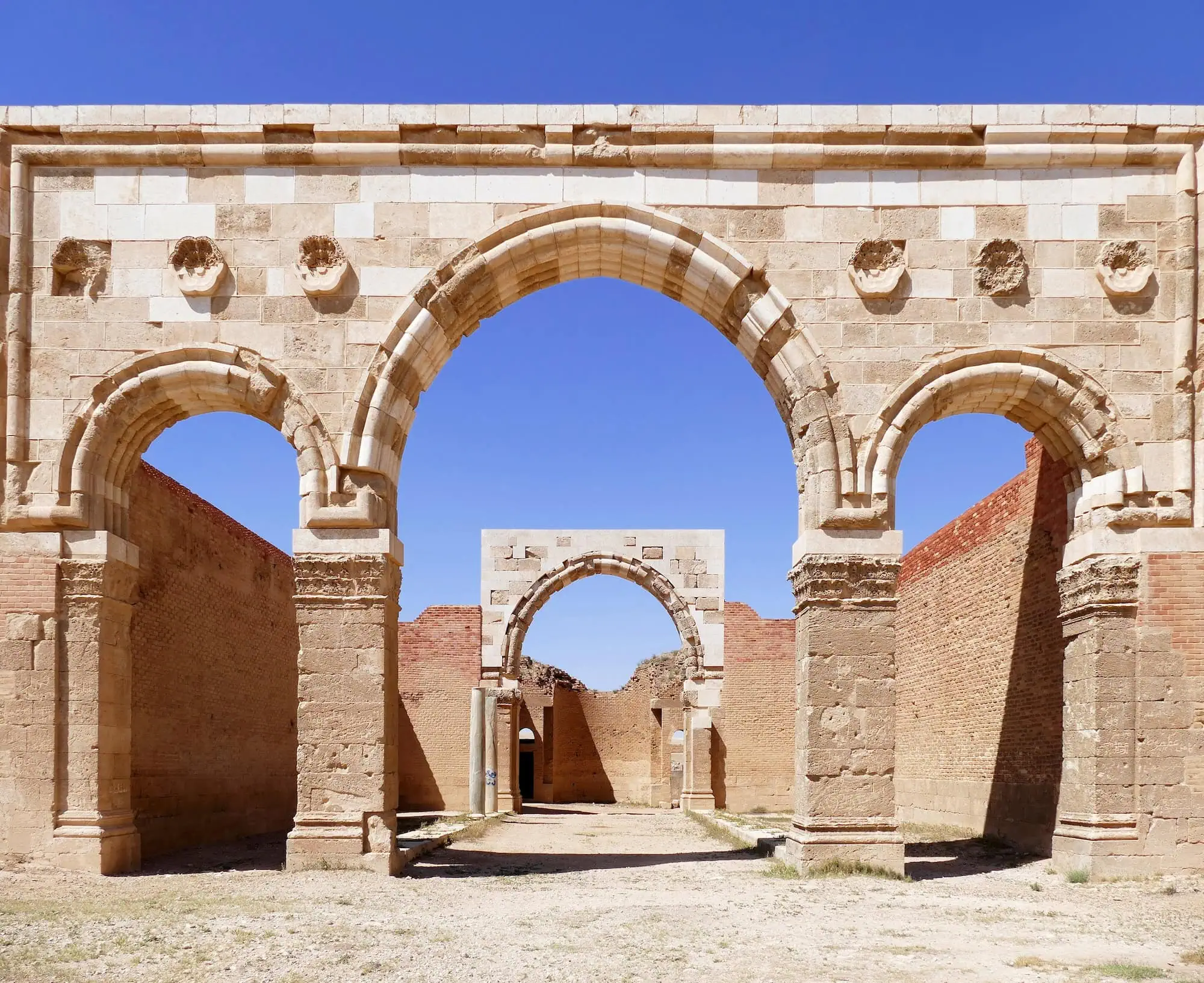
Located near Queen Alia International Airport, Qasr Al-Mshatta represents the grand vision of the Umayyad dynasty at its peak. Commissioned during the brief reign of Caliph al-Walid II (743–744 CE), this vast desert palace was never completed, yet it remains one of the most important examples of early Islamic architecture. The complex features a विशाल square enclosure reinforced by 25 towers, while its intricately carved southern façade showcases some of the finest stone relief work from the period.
Despite standing unfinished for more than 1,200 years, the site continues to fascinate archaeologists and historians. Parts of its ornate façade were relocated to Berlin’s Pergamon Museum, further highlighting its global significance and artistic value.
To explore Qasr Al-Mshatta alongside Petra, Wadi Rum, and Egypt’s iconic landmarks, discover our Egypt and Jordan multi-country tours.
Table of Contents
Archaeological Marvel in the Jordanian Desert
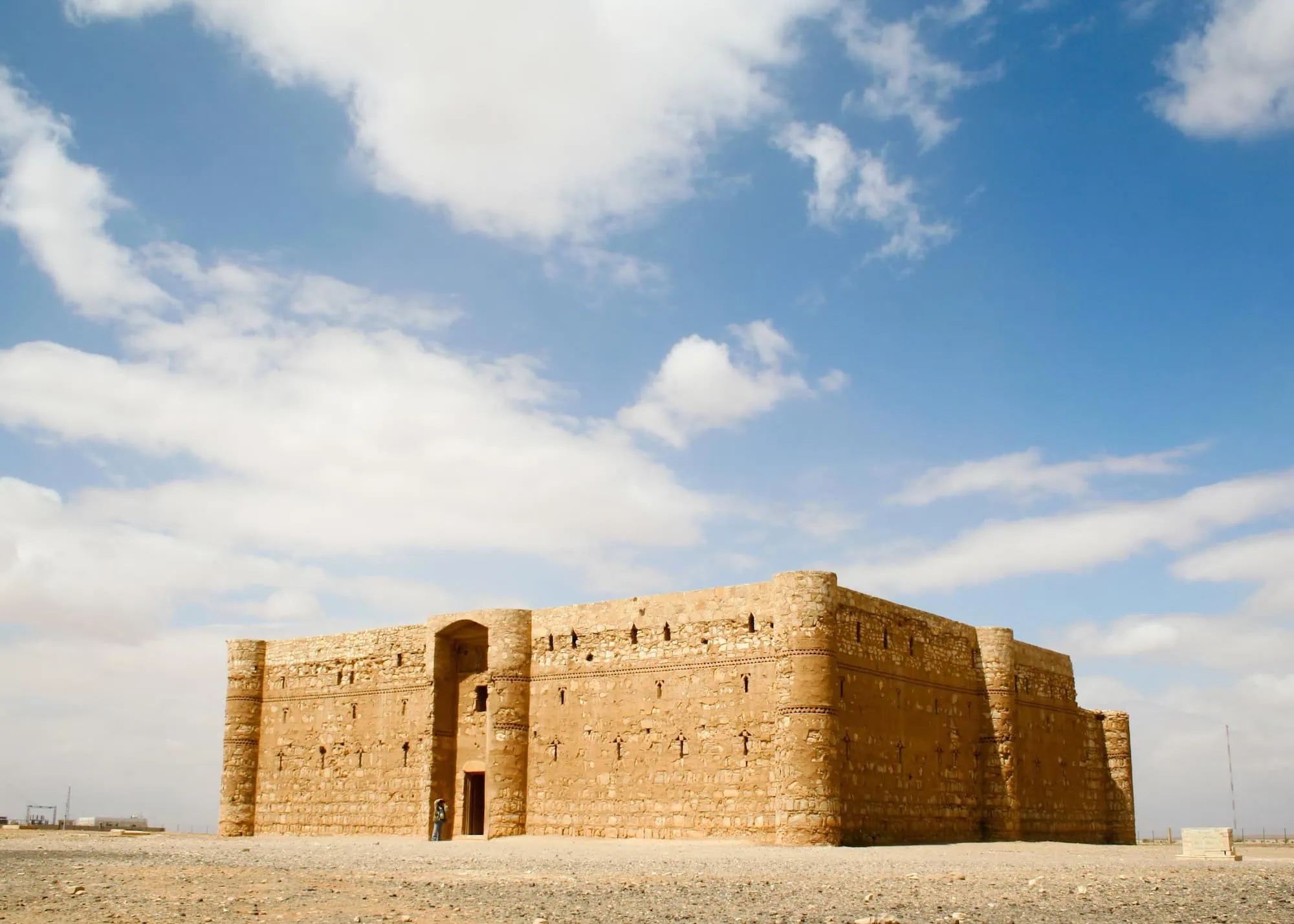
The sheer scale impresses visitors immediately upon arrival. Qasr al-Mshatta covers a massive square area measuring approximately 144 meters on each side, making it the largest known Umayyad palace complex.
Strategic Desert Location
Positioning near modern Amman provided the Umayyad court access to major trade routes while maintaining distance from urban political pressures. The desert setting offered privacy for the caliph’s residence and hunting expeditions.
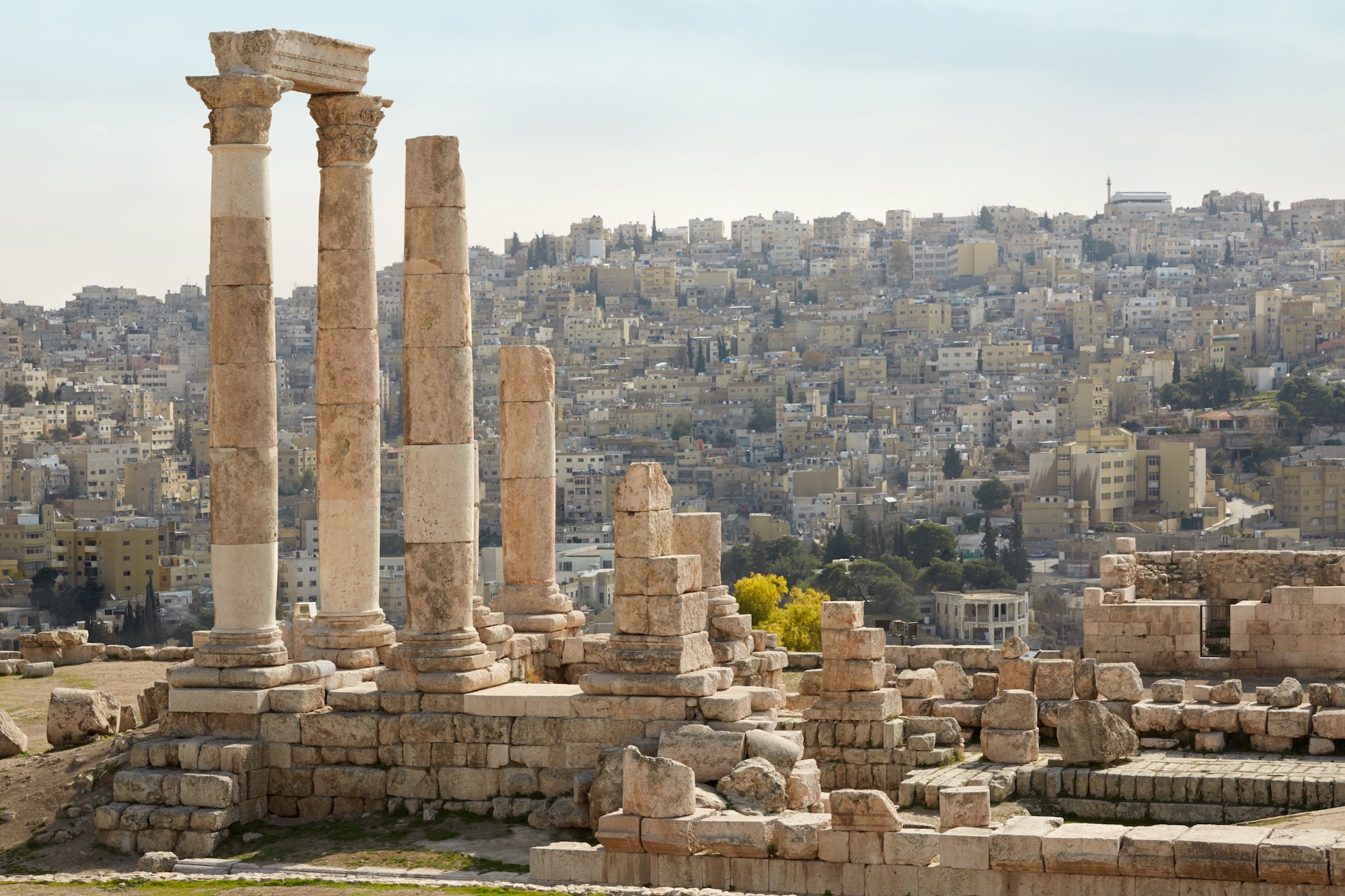
Archaeological evidence suggests the site connected to a broader network of desert castles throughout Jordan, each serving specific administrative or recreational purposes for the Umayyad elite.
Architectural Scale and Design
Twenty-five semicircular towers punctuate the fortress walls at regular intervals. The northern section housed the main palace quarters, while southern areas contained service buildings and workshops. Central courtyards provided open spaces for ceremonies and daily activities within the protected enclosure.
Construction Techniques
Builders employed limestone blocks quarried locally, using advanced masonry techniques that created remarkably stable walls. The construction quality demonstrates sophisticated engineering knowledge, with foundations designed to support multi-story structures. Stone cutting precision rivals contemporary Byzantine and Sasanidian monuments.
Artistic Masterpiece: The Decorated Facade
Qasr al-Mshatta’s southern facade represents one of Islamic art’s greatest achievements, featuring intricate stone relief work that has fascinated scholars for centuries.
The facade decoration covers approximately 47 meters of the southern wall with elaborate carved panels showing remarkable artistic sophistication. Each triangular section displays different motifs – some featuring animals, birds, and mythological creatures, while others showcase purely geometric and vegetal patterns. This artistic choice reflects early Islamic art’s evolving relationship with representational imagery, particularly regarding religious spaces versus secular palace decoration.
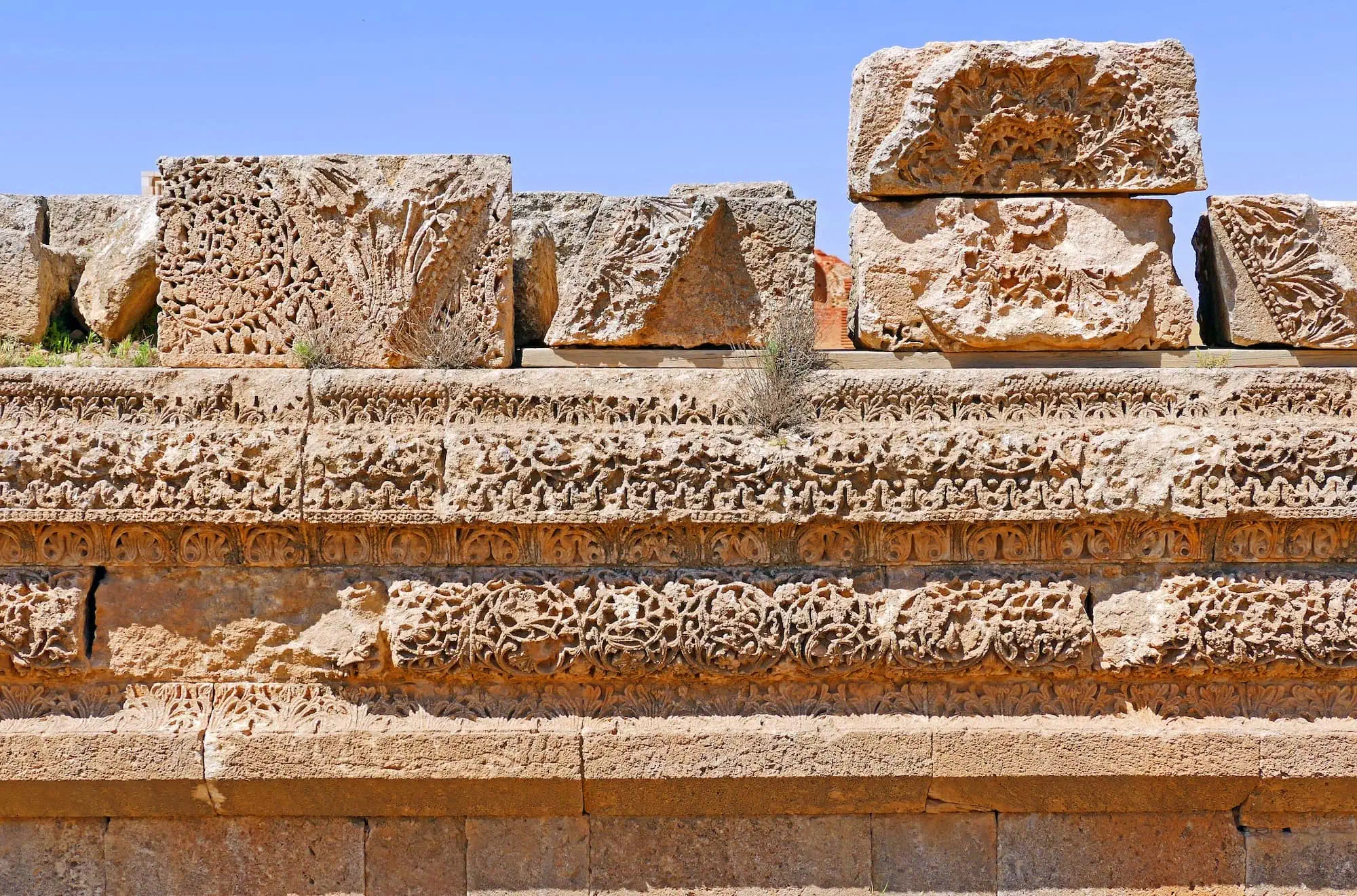
Relief panels demonstrate clear Sasanidian and Byzantine influences, yet the overall composition creates distinctly Islamic artistic language. Craftsmen carved deeply into limestone blocks, creating dramatic shadow effects that change throughout the day as sunlight moves across the facade. The work required exceptional skill levels, suggesting royal workshops employed master stone carvers from across the empire.
Missing Masterpiece in Berlin
Kaiser Wilhelm II received large sections of the decorated facade as a diplomatic gift from Ottoman Sultan Abdul Hamid II in 1903. These irreplaceable fragments now form part of the Pergamon Museum’s Islamic Art collection in Berlin, creating ongoing discussions about cultural heritage repatriation.
German museum officials maintain the pieces received proper conservation treatment, while Jordanian authorities continue diplomatic efforts for their return.
Umayyad Dynasty and Historical Context
Caliph al-Walid II commissioned Qasr al-Mshatta during a tumultuous period in Umayyad history. Political instability plagued the dynasty’s final years, contributing to the palace’s incomplete state.
Al-Walid II ruled for only one year before his assassination in 744 CE, leaving numerous construction projects unfinished across the empire. The caliph favored artistic patronage and architectural monuments over military campaigns, creating tension with conservative Islamic factions. His death effectively ended work at Qasr al-Mshatta, preserving the complex as a remarkable time capsule of 8th-century Umayyad ambition.
The palace represents broader Umayyad architectural traditions established across their territories from Spain to Central Asia. Desert palaces in Jordan, Syria, and Palestine served multiple functions – administrative centers, hunting lodges, agricultural estates, and symbols of dynastic power. Qasr al-Mshatta’s unfinished state provides unique insights into Umayyad construction methods and artistic workshops.
Religious and Cultural Significance
Early Islamic palace decoration navigated complex theological questions about representational art. The facade’s animal imagery appears only on sections not facing Mekka, suggesting deliberate religious considerations. This careful positioning demonstrates sophisticated understanding of Islamic artistic conventions even during the faith’s early development period.
UNESCO World Heritage Significance
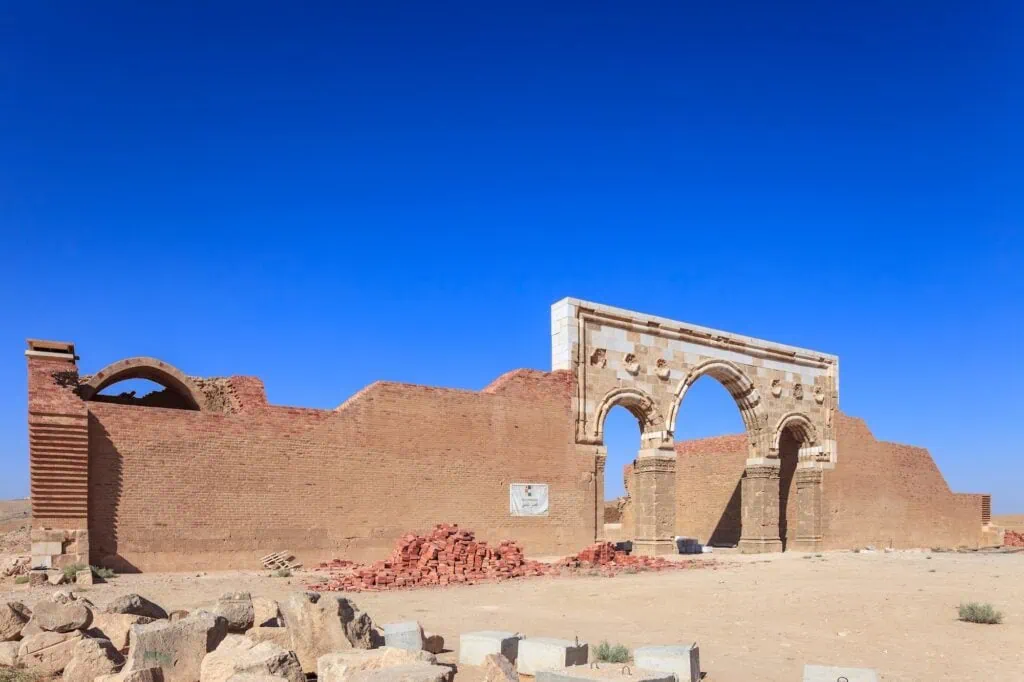
Jordan nominated Qasr al-Mshatta for UNESCO World Heritage status, recognizing its outstanding universal value for understanding early Islamic civilization.
Cultural Heritage Protection
The tentative list nomination emphasizes the monument’s role in demonstrating Islamic art’s evolution and architectural innovation. UNESCO criteria highlight the palace’s exceptional artistic achievement and historical significance for the Islamic world’s formative period. Protection measures address environmental threats from urban development near Amman and tourism pressures.
International recognition would enhance conservation funding opportunities and establish formal protection protocols. The site currently operates under Jordanian antiquities laws, but World Heritage status would provide additional international oversight and support.
Research and Conservation Challenges
Weather erosion affects exposed stone surfaces, requiring ongoing conservation attention. Urban expansion near Queen Alia Airport creates development pressures on the archaeological zone. International cooperation between Jordan and Germany supports research initiatives and documentation projects.
Modern Research and International Cooperation
The German-Jordanian research partnership represents exemplary international collaboration in archaeological conservation and study.
German technical expertise combines with Jordanian archaeological knowledge to advance understanding of Umayyad construction techniques and artistic production. Research teams from TU Berlin and Jordanian universities conduct detailed documentation using advanced surveying methods and digital reconstruction technologies. This partnership extends beyond pure research to include conservation training for local specialists and community engagement programs.
Scientific analysis reveals construction sequences, helping archaeologists understand why specific sections remained incomplete. Ground-penetrating radar surveys identify buried foundations and infrastructure elements invisible from surface observation. These investigations contribute valuable data for broader studies of Umayyad urban planning and architectural development.
Documentation efforts create permanent records protecting knowledge even if physical deterioration continues. High-resolution photography and 3D scanning preserve detailed information about carved decorations and structural elements. Digital archives ensure research accessibility for future generations of scholars worldwide.
Visiting Qasr al-Mshatta Today
The site welcomes visitors year-round, offering unique opportunities to experience one of Islam’s earliest architectural masterpieces in its original desert setting.
Practical Access Information
Located approximately 32 kilometers (20 miles) south of central Amman, the palace sits conveniently near Jordan’s main international airport. Most visitors combine Qasr al-Mshatta with other desert castle sites during day trips from the capital. Private transportation provides the most flexible access, though organized tours include the monument in broader archaeological circuits.
Opening hours typically run from 8:00 am (08:00) to 5:00 pm (17:00) during winter months, extending to 6:00 pm (18:00) in summer. Entrance fees remain modest, supporting site maintenance and guard services. We recommend early morning or late afternoon visits for optimal lighting conditions and comfortable temperatures.
Archaeological Experience
Visitors can walk through the original palace courtyards and examine remaining architectural elements in their historical context. Information panels provide background about Umayyad history and construction techniques. The scale becomes apparent only through direct experience – photographs cannot convey the monument’s impressive dimensions.
The southern facade fragments still visible on-site demonstrate the original decoration’s quality and artistic sophistication. Comparing these remnants with historical photographs helps visitors understand the devastating loss represented by the Berlin collection’s removal.
Cultural Tourism and Desert Castle Circuit
Jordan’s desert castle route connects Qasr al-Mshatta with other significant Umayyad monuments throughout the eastern desert region.
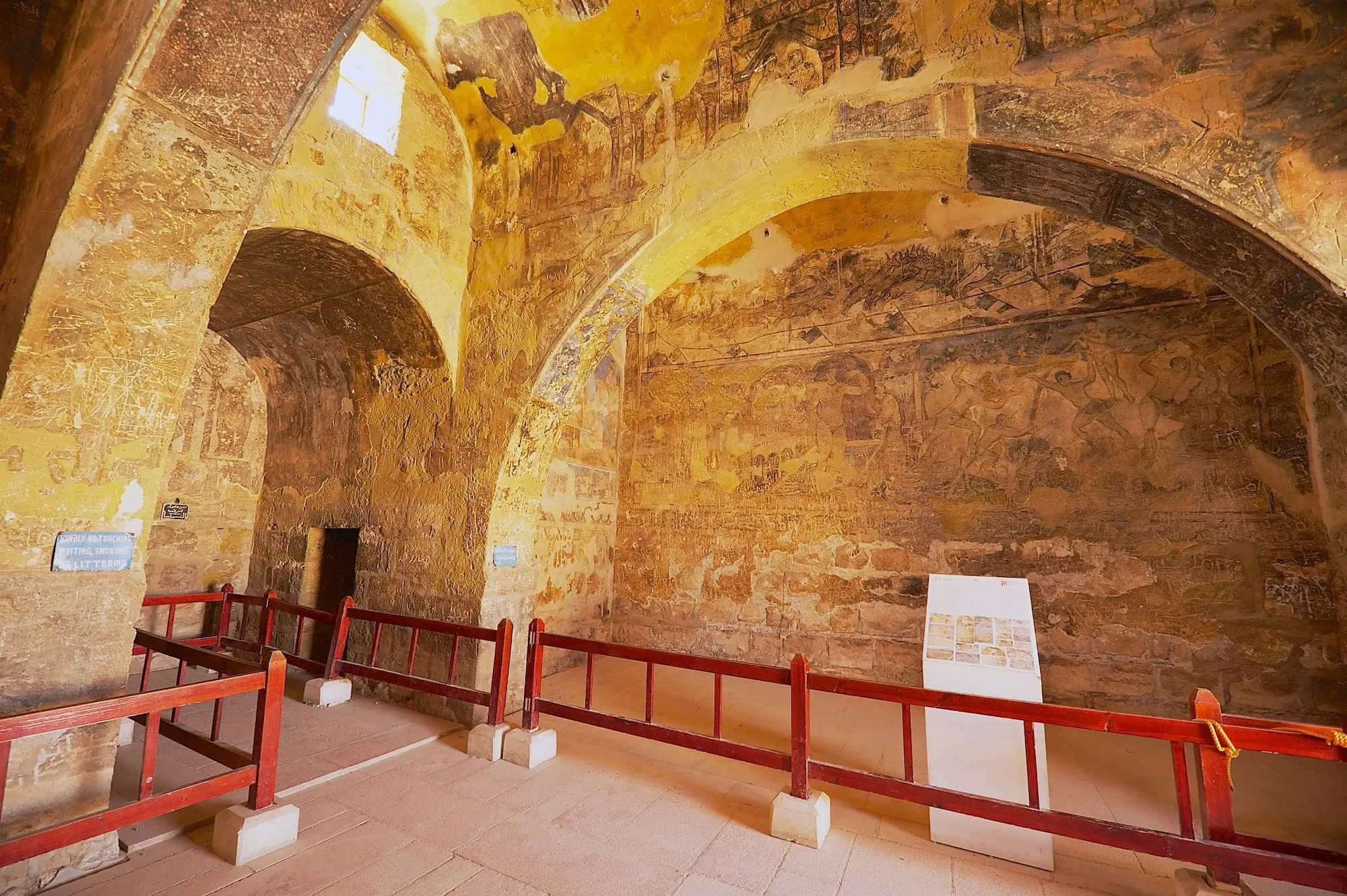
Amra, Kharana, and Azraq castles each represent different aspects of early Islamic architecture and social organization. Together, these sites illustrate the Umayyad dynasty’s systematic approach to controlling desert territories through strategic fortifications and administrative centers. Most visitors require 2-3 days to explore the complete circuit properly, though individual sites can be visited separately.
We arrange private guided tours that provide expert archaeological commentary and historical context for each monument. Our experienced guides explain complex artistic and religious themes while ensuring comfortable transportation between remote desert locations. Group sizes remain small to preserve the contemplative atmosphere these ancient sites deserve.
The desert castle experience offers profound insights into Islamic civilization’s early development and the sophisticated culture that emerged from Arabian Peninsula traditions combined with Byzantine and Sasanidian influences.
Frequently Asked Questions
Its enormous scale, unfinished state, and exceptional facade decoration make it unique among early Islamic monuments.
Caliph al-Walid II’s assassination in 744 CE ended construction before the ambitious project could be finished.
No permanent return has occurred, though diplomatic discussions continue between Jordan and Germany regarding cultural heritage repatriation.
Most visitors spend 1-2 hours exploring the site and learning about its historical significance.
Yes, Qasr al-Mshatta combines well with Qasr Kharana and Qasr Amra in a full-day desert castle tour.
Spring (March-May) and autumn (September-November) offer ideal weather conditions for archaeological site exploration.
Standard photography is permitted, but professional or commercial shoots require advance coordination with antiquities authorities.
Expert guides significantly enhance understanding of complex historical and artistic themes that aren’t immediately obvious to casual visitors.
The facade decoration represents crucial developments in early Islamic artistic conventions and religious considerations.
Weather erosion, urban development pressures, and tourism impact require ongoing conservation attention and international cooperation.
Recognition would provide enhanced protection, conservation funding, and international oversight for this irreplaceable cultural monument.
Most courtyards and surviving structures are accessible, though some areas may be restricted for safety or conservation reasons.
Design Your Custom Tour
Explore Egypt and Jordan your way by selecting only the attractions you want to visit