• Egypt Tours
  • Multi-Country Tours
  • Explore
  • Egypt Tours
  • Multi-Country Tours
  • Explore

Egypt Cultural Tours – Your Complete Guide to Heritage Adventures

Egypt beckons with stories written in stone and sand.

The Church of Saint George in Coptic Cairo

Our expertise comes from decades of guiding curious travelers through this extraordinary land where pharaohs once ruled and ancient wisdom still echoes through temple halls. Cultural tours in Egypt offer far more than simple sightseeing – they provide authentic encounters with a civilization that shaped human history. Whether you’re drawn to the mysteries of the pyramids, the artistry of temple carvings, or the vibrant traditions that continue today, Egypt’s cultural landscape delivers experiences that transform understanding into wonder.

We’ve crafted this guide to help you navigate Egypt’s rich cultural offerings, from iconic archaeological sites to immersive local experiences that reveal the heart of Egyptian life. For travelers ready to commit to a route, our culture-focused Egypt tour packages combine these layers into structured itineraries with private Egyptologist guides at every stop.

Essential Cultural Sites That Define Egypt

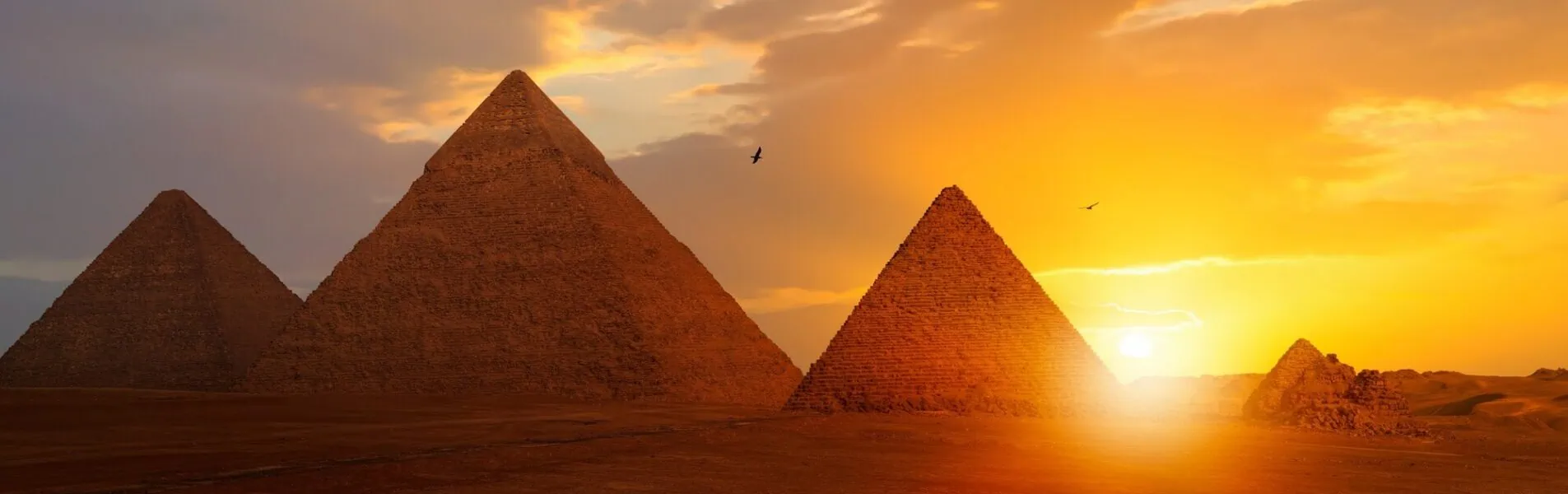
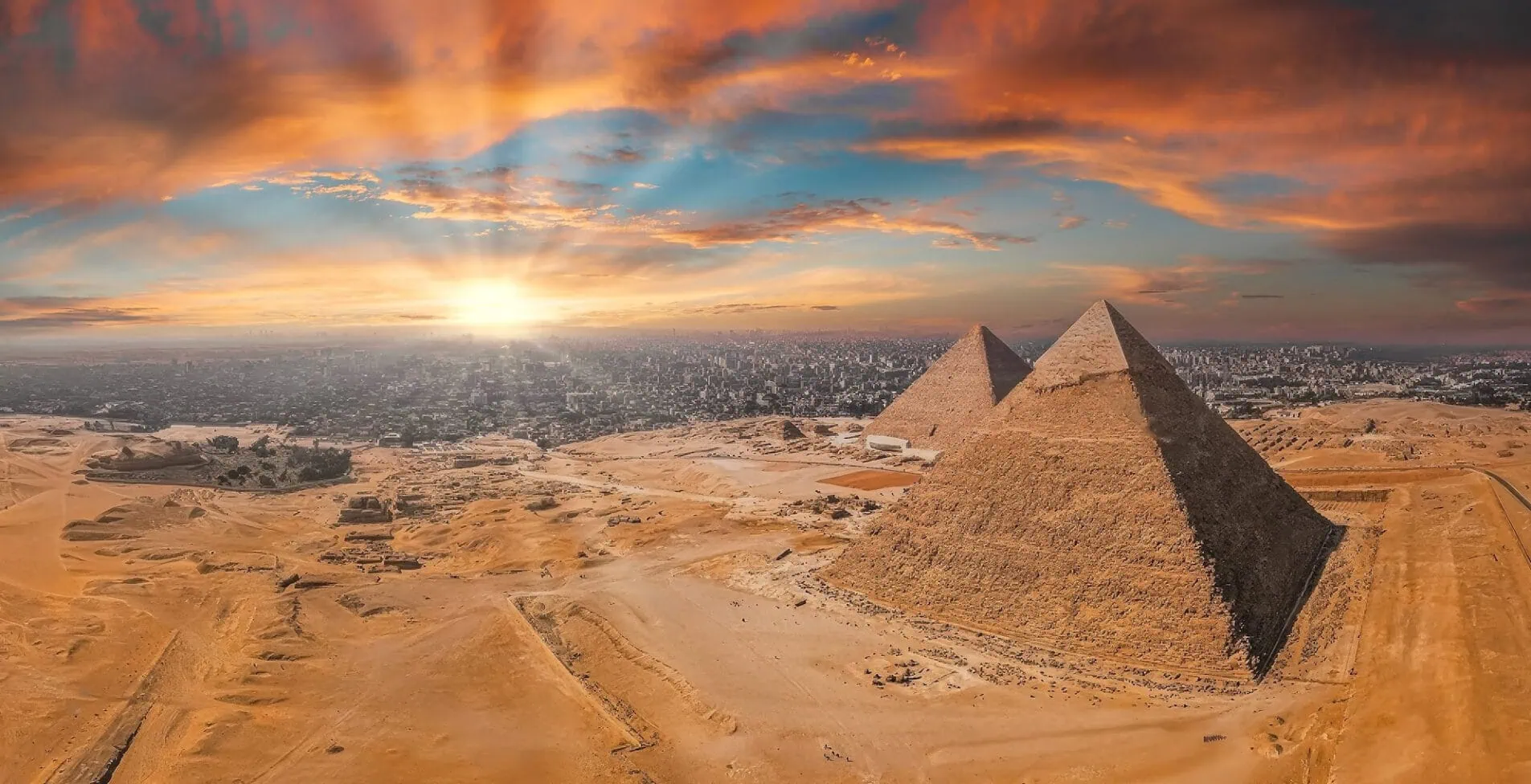
Egyptian civilization reveals itself through monuments that have captivated travelers for millennia. The Pyramids of Giza stand as the last remaining wonder of the ancient world, their perfect geometry defying time itself. These structures represent more than architectural achievement – they embody beliefs about eternity that guided pharaonic culture for over 3,000 years.

Giza Complex: Where Ancient Mastery Lives

The Great Pyramid rises 139 meters (455 feet) above the Giza plateau today, having lost about 8 meters of its original 147-meter height to erosion of the limestone casing stones over 4,500 years. The remaining inner blocks are fitted so precisely that a knife blade cannot slip between them.

Walking through the Grand Gallery feels like entering the pharaoh’s pathway to immortality. The Sphinx guards these monuments with lion strength and human wisdom, its weathered face gazing eternally eastward toward the rising sun.

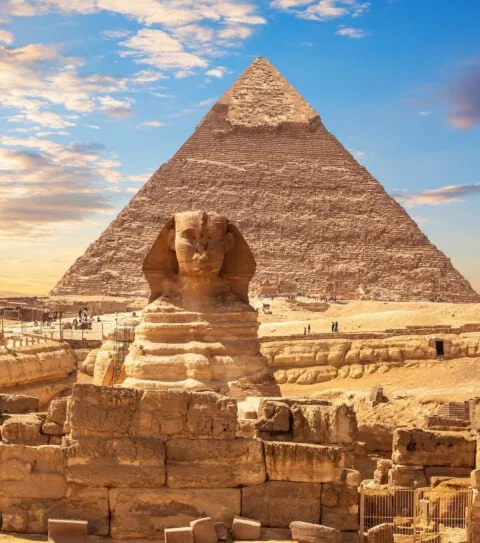
Side profile of the Great Sphinx of Giza with the Pyramid of Khafre and the smaller Pyramid of Menkaure rising in the background under a clear blue sky - Egypt Cultural Tours
The Great Sphinx of Giza in profile with the Pyramid of Khafre directly behind and the smaller Pyramid of Menkaure to the right — three monuments built within a 70-year span around 2550-2480 BC by three generations of pharaohs from the same family

Our private Egyptologist guides unlock the mathematical genius behind pyramid construction, explaining how ancient architects achieved such precision without modern tools. They share stories of pyramid texts – humanity’s oldest religious writings – that adorned burial chambers with spells for the afterlife journey.

Valley of the Kings: Royal Necropolis

Across the Nile from Luxor, the Valley of the Kings holds 65 discovered tombs carved deep into limestone cliffs (KV64 was found in 2011, with KV65 still under investigation). Tutankhamun’s tomb, though modest in size, contains treasures that sparked worldwide fascination with Egyptian culture. The tomb of Ramesses VI displays some of Egypt’s finest wall paintings, depicting the pharaoh’s journey through the underworld.

Decorated burial chamber inside Tomb KV9 in the Valley of the Kings, Luxor, with painted pillars and the astronomical ceiling overhead
The burial chamber of Tomb KV9, started for Ramses V and completed for Ramses VI around 1140 BC. The astronomical Book of the Day stretches across the vaulted ceiling while passages from the Book of Gates and the Book of Caverns cover the walls

Archaeological work in the Theban necropolis remains active. In 2017, muon imaging scans of the Great Pyramid revealed a previously unknown internal void, demonstrating that even the most-studied Egyptian monuments still hold undiscovered features. Climate-controlled access to the most fragile tombs in the Valley of the Kings preserves the painted scenes while allowing intimate encounters with royal burial chambers where pigment still glimmers on 3,300-year-old walls.

Karnak Temple: Sacred City

Karnak Temple complex spans over 200 hectares (494 acres), making it the largest religious building complex ever constructed and larger than most ancient cities. Construction continued for over 2,000 years, with each pharaoh adding magnificent halls, towering obelisks, and intricate reliefs. The Great Hypostyle Hall contains 134 massive columns, with the central twelve reaching 21 meters (69 feet) in height. The largest of these capitals, papyrus-flower in form and 5 meters across, are large enough to hold around 50 people.

Rows of massive papyrus-form stone columns covered in hieroglyphic carvings inside the Great Hypostyle Hall at Karnak Temple, Luxor
The 134 columns of Karnak’s Great Hypostyle Hall, built across the reigns of Seti I and Ramses II (1290-1213 BC). The central twelve are 21 meters (69 feet) tall with open papyrus-flower capitals; the outer 122 stand 12 meters (39 feet) with closed papyrus-bud capitals

Evening sound and light shows transform Karnak into a storytelling stage where ancient voices narrate Egypt’s golden age. Walking through moonlit corridors while listening to tales of Amenhotep III and Ramesses II creates memories that outlast typical vacation snapshots.

Immersive Experiences Beyond Monument Visits

Cultural understanding deepens through hands-on encounters with living Egyptian traditions. Local workshops, family meals, and artisan visits provide insights that guidebooks cannot capture.

Nubian villages near Aswan offer authentic glimpses into Egypt’s diverse cultural heritage. These colorful communities maintain traditions distinct from mainstream Egyptian culture, speaking their own language and practicing crafts passed down through generations. Visiting a Nubian home for traditional tea creates genuine connections while supporting local families.

A man in traditional white robes walking past a brightly painted Nubian house with vivid blue, yellow, and orange exterior walls in a Nubian village near Aswan
A traditional Nubian house in a relocated Nubian village near Aswan — most current Nubian settlements were rebuilt after 1964 when the High Aswan Dam reservoir submerged 45 of the original Nubian villages along the Nile

Alexandria’s ancient library may have vanished, but its modern incarnation – the Bibliotheca Alexandrina – honors that scholarly legacy with cutting-edge architecture and world-class cultural programs. The city’s Mediterranean atmosphere differs markedly from Upper Egypt, reflecting centuries of Greek, Roman, and Islamic influences.

Traditional Craft Workshops

Master artisans in Cairo’s Khan El-Khalili bazaar continue techniques perfected over centuries. Watching a craftsman shape copper into intricate patterns or observing a perfume maker blend oils using ancient formulas provides direct links to Egypt’s artisan traditions. These workshops offer participation opportunities – you might try your hand at hieroglyphic writing or basic metalworking under expert guidance.

Carpet weaving centers in rural areas demonstrate skills that transform wool into masterpieces. Young weavers learn patterns from memory, their fingers moving with rhythms passed down through generations. Purchasing directly from these artisans ensures fair compensation while acquiring authentic Egyptian textiles.

Nile Cultural Cruising: History Flows Past

The Nile River served as Egypt’s highway for over 5,000 years, connecting communities from the Mediterranean to deep Africa. Modern river cruising between Luxor and Aswan follows the same route that carried pharaohs, traders, and pilgrims through Egypt’s heartland.

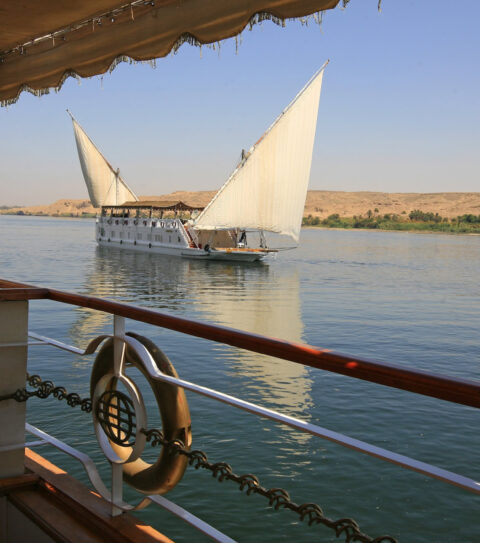
A traditional twin-mast dahabiya sailing vessel with white lateen sails set on the Nile River between Luxor and Aswan
A traditional dahabiya sailing the Nile between Luxor and Aswan — twin-mast vessels carrying 8 to 16 passengers, the small-scale alternative to the larger Luxury Nile Cruise format and a return to the sailing tradition that carried European travelers up the Nile in the 19th century

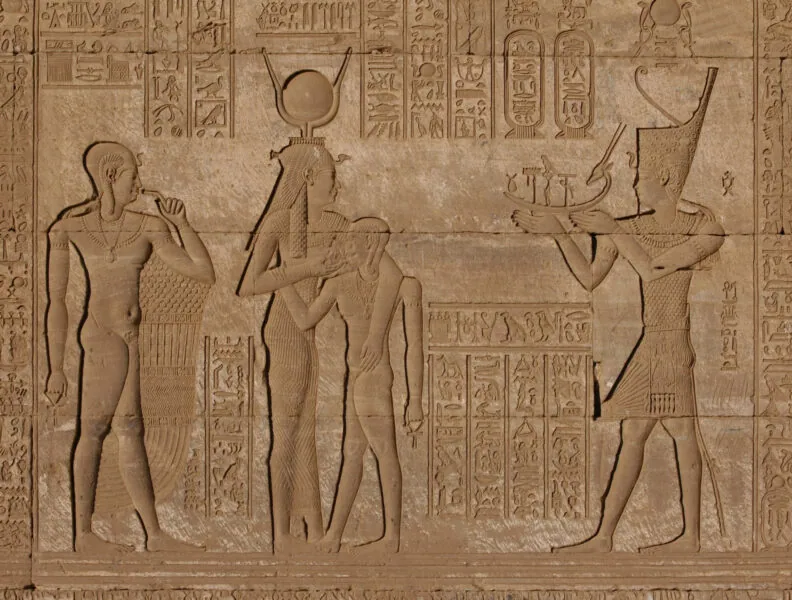
Temple stops along this journey include Edfu, dedicated to the falcon god Horus, and Kom Ombo, unique for its dual dedication to both Sobek the crocodile god and Haroeris the falcon deity. Each temple tells different stories through wall carvings that chronicle royal victories, religious ceremonies, and daily life in ancient times.

Cruising creates natural rhythms for cultural absorption. Mornings begin with temple explorations led by qualified Egyptologists who decode hieroglyphic messages and explain architectural symbolism. Afternoons offer relaxation on deck while traditional landscapes drift past – farmers using wooden plows, children waving from riverbanks, and feluccas sailing with wind-filled canvas just as they did in pharaonic times.

Shore excursions during Luxury Nile Cruise sailings are small group experiences shared with fellow ship passengers, each accompanied by an Egyptologist guide who provides historical context at temple stops. For dahabiya sailings (8 to 16 passengers per vessel), shore excursions feel essentially private. Evening programs might include traditional music performances or informal talks about Egyptian mythology under star-filled desert skies.

The standing columns and pylons of Kom Ombo Temple on the east bank of the Nile River in Upper Egypt at sunset
Kom Ombo Temple on the east bank of the Nile, the only Egyptian temple jointly dedicated to two gods — the right side to Sobek the crocodile god and the left side to Haroeris the falcon-headed deity, with mirrored sanctuaries, halls, and entrances for each

Our luxury Nile cruises feature climate-controlled cabins, gourmet dining that blends international cuisine with Egyptian specialties, and spacious decks designed for river gazing. Modern amenities ensure comfort while maintaining focus on cultural discovery rather than resort-style entertainment.

Egyptian Museum Treasures and Archaeological Wonders

The Egyptian Museum at Tahrir Square, founded in 1902, holds approximately 120,000 objects spanning 5,000 years of civilization, from prehistoric pottery to Roman-era mummies. Following the move of the Tutankhamun collection to the Grand Egyptian Museum, the Tahrir museum now serves as a complementary stop on most cultural itineraries with strong holdings in pre-pharaonic, Old Kingdom, and Greco-Roman artifacts. The Royal Mummies, meanwhile, are now displayed at the National Museum of Egyptian Civilization in their dedicated hall.

The pink neoclassical facade of the Egyptian Museum at Tahrir Square in Cairo, with the gardens and entrance steps in the foreground
The Egyptian Museum at Tahrir Square, Cairo, opened in 1902 and designed by French architect Marcel Dourgnon. Following the move of the Tutankhamun collection to the Grand Egyptian Museum, the Tahrir museum now serves as a complementary stop on Cairo cultural itineraries with strong holdings in Old Kingdom and Greco-Roman artifacts

Walking through museum halls with knowledgeable guides transforms artifact viewing into storytelling sessions. They explain how canopic jars preserved organs for the afterlife, why certain colors held religious significance, and how jewelry revealed social status in ancient Egypt. Interactive elements help visualize how these objects functioned in daily religious and royal life.

The Grand Egyptian Museum near the Pyramids of Giza is now fully open and houses the world’s most comprehensive pharaonic collection, with over 100,000 artifacts spanning 5,000 years of civilization. The complete Tutankhamun burial treasure (more than 5,000 items including the golden funerary mask, the inner shrines, and the chariots) is displayed together for the first time since the tomb’s discovery in 1922. Interactive displays and immersive galleries bring ancient Egypt into focus with modern clarity and scale.

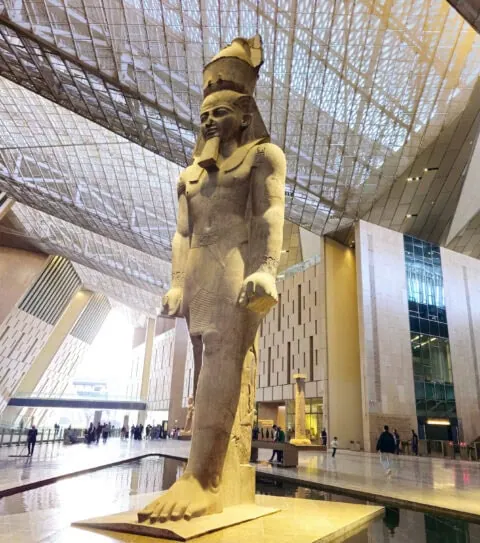
Grand staircase atrium of the Grand Egyptian Museum at Giza with monumental pharaonic statues lining the central staircase under high glass walls and pleated ceiling
The grand staircase atrium of the Grand Egyptian Museum at Giza — the world’s largest archaeological museum dedicated to a single civilization, now fully open and housing the complete Tutankhamun collection of more than 5,000 items together for the first time since the tomb’s discovery in 1922

Saqqara: Pyramid Evolution Site

Located approximately 30 kilometers (19 miles) south of Cairo, Saqqara contains Egypt’s oldest pyramid, the Step Pyramid of Djoser, designed by the architect and high priest Imhotep around 2670 BC. The site demonstrates pyramid architecture’s evolution from simple mastaba tombs to the geometric perfection later achieved at Giza, with neighboring Dahshur showing the experimental stage between the two through Sneferu’s Bent Pyramid and Red Pyramid.

Corner view of the Bent Pyramid at Dahshur showing the distinctive change of angle from the steep lower section to the shallower upper section against the desert plateau
The Bent Pyramid at Dahshur, built around 2600 BC under Pharaoh Sneferu — the lower portion rises at 54 degrees while the upper section bends to 43 degrees, the architectural compromise that taught Egyptian builders the geometry that would later produce the perfect Great Pyramid at Giza

Recent archaeological work has revealed spectacular discoveries here. In 2020, archaeologists uncovered over 100 sealed sarcophagi, many containing perfectly preserved mummies with original wrappings intact. These findings provide fresh insights into burial practices spanning multiple Egyptian dynasties.

Planning Your Cultural Journey Through Egypt

The optimal cultural tour duration ranges from 8 to 12 days, allowing thorough exploration without rushed schedules. Most visitors begin in Cairo for pyramid visits and museum tours, then travel south to Luxor and Aswan for temple discoveries and Nile experiences.

Seasonal considerations affect cultural touring comfort significantly. October through April offers pleasant temperatures ranging from 20-25°C (68-77°F) during the day, ideal for outdoor monument exploration. Summer months can reach 40°C (104°F), making early morning and late afternoon visits more comfortable.

We recommend private guided tours for cultural depth that group tours cannot provide. Private Egyptologists adjust explanations to your interests, spend extra time at sites that fascinate you, and answer questions that arise naturally during exploration. Our guides hold degrees in archaeology or Egyptology, ensuring scholarly accuracy combined with engaging storytelling abilities.

An Egyptologist guide and travelers in silhouette in front of a temple wall covered in hieroglyphic carvings in Luxor
An Egyptologist guide reading the hieroglyphic carvings on a Luxor temple wall — every Egypt Tours Plus land-touring itinerary in Cairo, Luxor, Aswan, and Alexandria runs privately with just your party, your Egyptologist guide, and your driver

Transportation between cultural sites uses modern, air-conditioned vehicles with professional drivers familiar with archaeological areas. Domestic flights connect Cairo with Luxor and Aswan efficiently, though overland travel allows greater appreciation for Egypt’s diverse landscapes and rural communities.

Cultural Tour Preparation Tips

Comfortable walking shoes prove essential for temple exploration, as most sites involve uneven stone surfaces and significant walking distances. Lightweight, long-sleeved clothing protects against sun exposure while respecting local customs at religious sites.

Photography permissions vary by location – most sites allow personal photography, but professional equipment may require special permits. Flash photography is prohibited inside most tombs to preserve ancient pigments on wall paintings.

A traveler in silhouette photographing the painted wall scenes inside Tomb KV62, the Tomb of Tutankhamun, in the Valley of the Kings, Luxor
A traveler photographing the painted scenes inside Tomb KV62, the burial chamber of Tutankhamun discovered by Howard Carter in 1922. The mummy of the young pharaoh remains in his original tomb, while his complete burial treasure (golden mask, inner shrines, chariots, and over 5,000 other items) is now displayed at the Grand Egyptian Museum

We provide detailed pre-trip briefings covering Egyptian history, cultural customs, and site-specific information. Understanding basic Egyptian mythology, historical chronology, and archaeological terminology enhances appreciation for everything you’ll encounter during cultural explorations.

Authentic Local Cultural Encounters

Beyond monumental sites, Egyptian culture thrives in daily traditions that welcome respectful visitors. Traditional coffee houses serve as community gathering places where locals discuss politics, play backgammon, and maintain social connections that span generations. Participating in these relaxed environments provides glimpses into contemporary Egyptian life.

Coptic Christianity represents Egypt’s pre-Islamic religious heritage, traditionally tracing its founding to the apostle Mark in Alexandria around 42 AD. Coptic Cairo contains numerous ancient churches, monasteries, and religious sites where Christian worship has continued uninterrupted for over 1,900 years, including the Hanging Church (Saint Virgin Mary’s), the Church of Saint George, and the Coptic Museum housing the world’s largest collection of Coptic Christian art. These sacred spaces offer different cultural perspectives within Egypt’s diverse religious landscape.

The interior of the Mosque of Muhammad Ali with hanging chandeliers, alabaster-clad walls, and the central dome rising above visitors inside the Citadel of Cairo
The Ottoman-style interior of the Mosque of Muhammad Ali (1830-1848) inside Saladin’s 12th-century Citadel of Cairo — the alabaster-clad walls and central dome are modeled on Istanbul’s imperial mosques rather than the medieval Mamluk style of Cairo’s older mosques, marking the architectural shift under Egypt’s 19th-century Ottoman governors

Islamic architecture throughout Egypt demonstrates artistic achievements spanning the Tulunid, Fatimid, Ayyubid, Mamluk, and Ottoman periods. The Citadel of Saladin in Cairo provides panoramic city views while showcasing military architecture commissioned by Saladin in 1176 to defend against Crusader threats. Ibn Tulun Mosque, completed in 879 AD, remains one of the world’s oldest functioning mosques with most of its original architectural features intact and is the largest mosque in Cairo by area.

Traditional Egyptian Cuisine Experiences

Egyptian food culture reflects thousands of years of cultural mixing – ancient grains, Mediterranean vegetables, African spices, and Arab cooking techniques create distinctive flavors found nowhere else. Traditional dishes like koshari (rice, lentils, and pasta with spicy sauce) or molokhia (leafy green soup) offer authentic tastes that connect modern meals to ancient agricultural traditions.

Cooking classes with Egyptian families provide intimate cultural exchanges while learning techniques passed through generations. You might help prepare bread in traditional clay ovens, learn spice combinations for meat dishes, or discover how ancient preservation methods keep foods fresh in desert climates.

Tea culture permeates Egyptian social life – mint tea ceremonies follow precise rituals that honor guests while creating opportunities for conversation and cultural exchange. These seemingly simple interactions often become trip highlights that reveal Egyptian hospitality traditions.

Build the Cultural Egypt Trip You’ve Just Read About

Pyramids and Karnak, Nubian villages and Coptic Cairo, a Nile cruise stretch and an evening tea in Khan el-Khalili — every element in this guide is something we’ve been arranging for travelers since 1955. Tell your Travel Concierge which threads pulled at you most, and we’ll build a private cultural Egypt itinerary around them with your own Egyptologist guide, personal driver, and the pace you prefer. First-draft itinerary back in your inbox within 1 to 12 hours.

Frequently Asked Questions

Famous Great Sphinx and pyramids of Chephren and Cheops, Cairo, Egypt. Great Pyramids and ancient statue of Sphinx,

Design Your Custom Tour

Explore Egypt your way by selecting only the attractions you want to visit