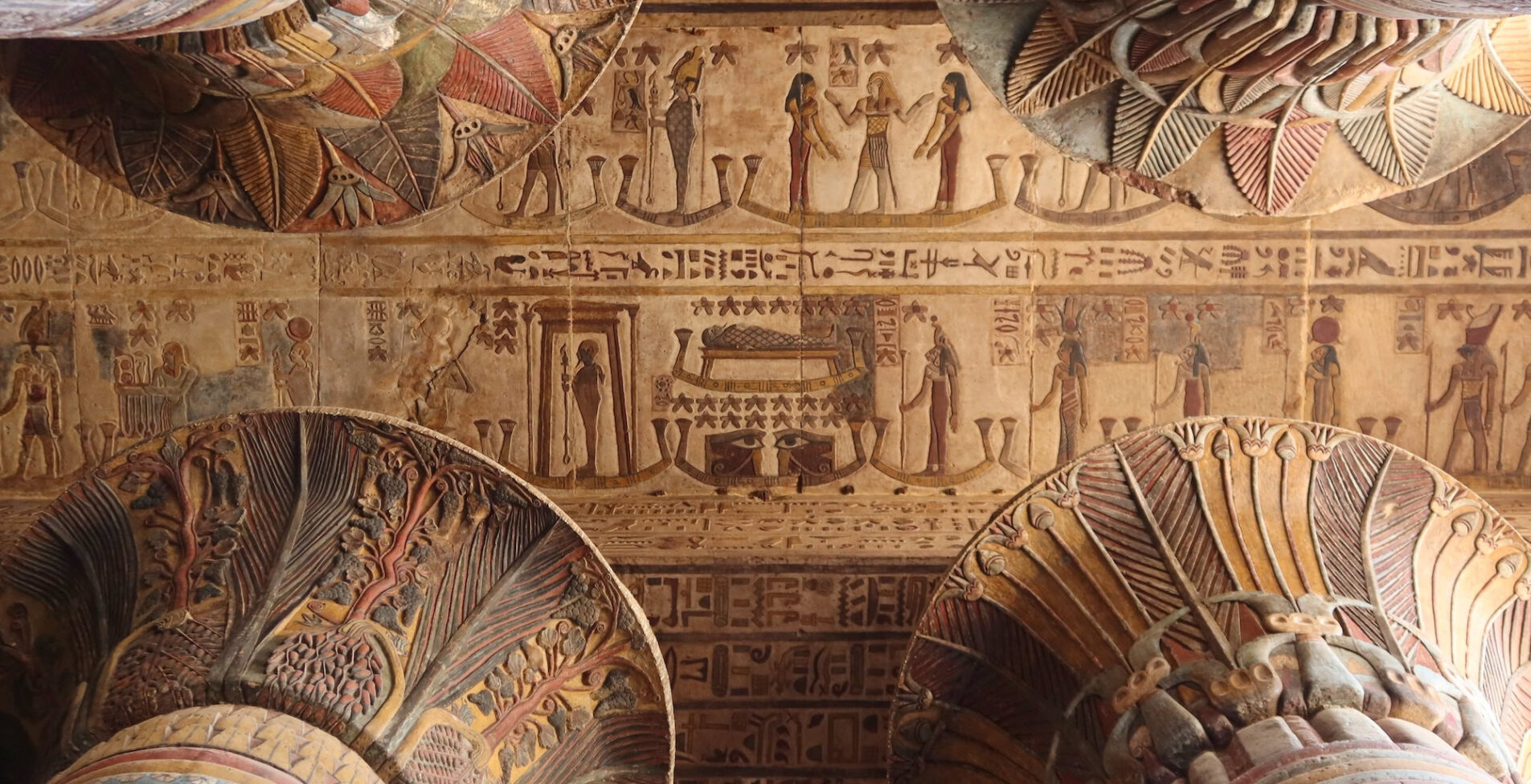
Just you. Your Egyptologist. Your tempo.
Escorted Egypt Tours, Done Privately
Egypt Tours Plus has arranged escorted tours of Egypt since 1955, and we’ve always done them privately. Every trip is just you, your Egyptologist guide, and your driver. No 25-person coach, no fixed departure date, no compromise on what you came to see. Your dedicated Travel Concierge designs the itinerary around your interests, your pace, and your dates, and sends a tailored quote within 1 to 12 hours.
What “Escorted” Means on an Egypt Tours Plus Trip
Guidance, expertise, and a hand on the wheel, without the bus.
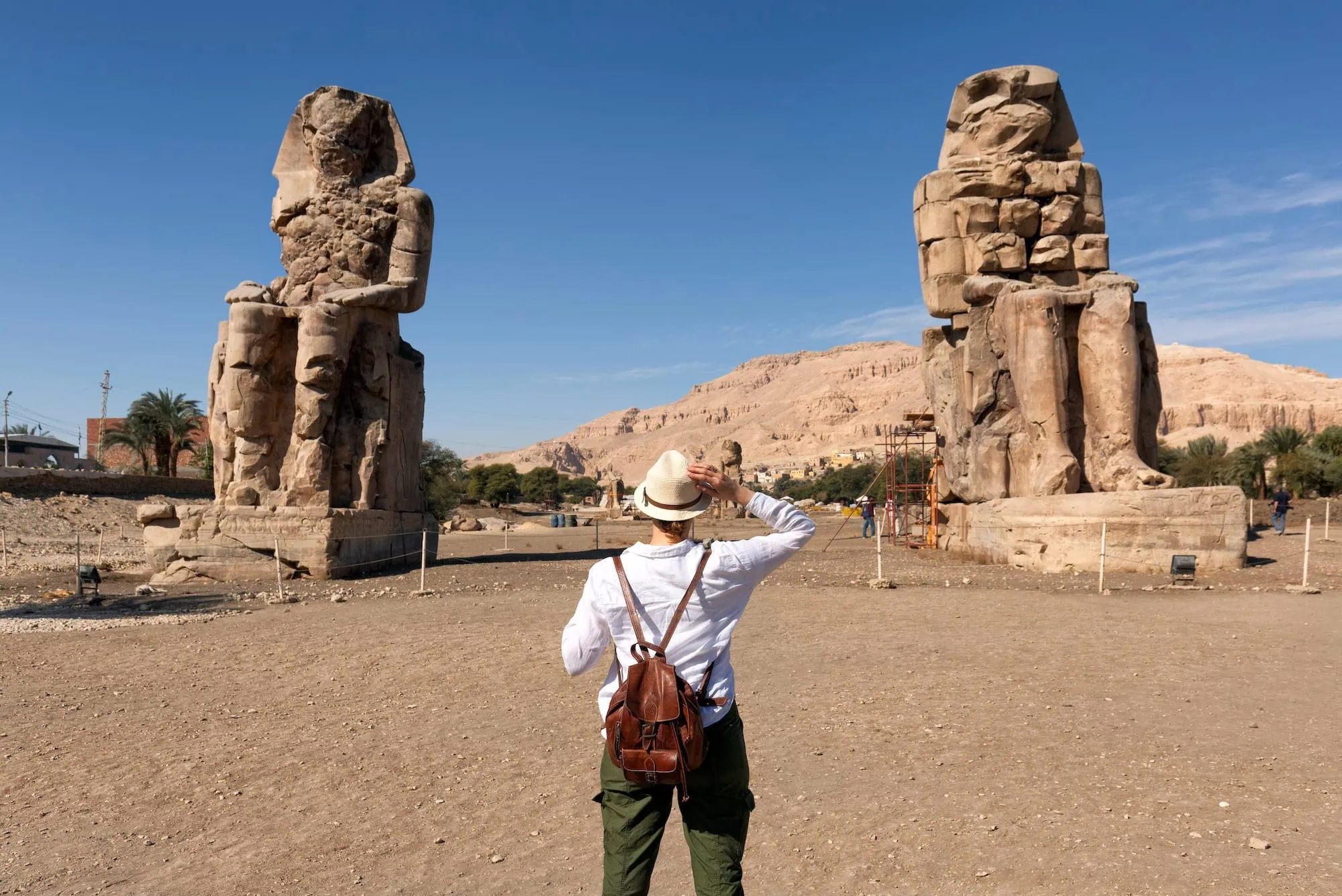
The word “escorted” usually conjures a coach, a tour manager with a clipboard, and 24 strangers you’ll be eating dinner with for the next two weeks. That’s one version of an escorted Egypt tour. It isn’t ours.
Escorted, in the Private Format
At Egypt Tours Plus, an escorted tour means you’re never alone with the logistics. Never left puzzling out a hieroglyph in front of an unmarked wall. Never standing on a Luxor pavement wondering where your driver is.
You’re escorted by a private Egyptologist guide and a personal driver, both dedicated to you and your travelling party only. Whether that’s two of you or twelve.
What Disappears, and What Stays
The format strips away everything most travellers actually disliked about traditional group tours: the fixed departure dates, the lockstep itinerary, the rushed lunch stops, the slow walkers, the queues at security.
What stays is the part that drew you to the search in the first place. Real expertise. Real support. Someone whose job it is to make sure Egypt unfolds at the pace you want it to.
It’s the upgrade you didn’t know was available. Since 1955, it’s the only way we’ve ever done escorted Egypt tours.
Table of Contents
Your Egyptologist Guide, and What That Changes
Academic depth. Local connections. And every minute is yours.
The Egyptologist guide is what separates an escorted Egypt tour from an independent trip with Google Maps.
On a traditional group tour, that guide is shared between 20+ people. Every question gets queued. Every detour gets vetoed. Every story gets pitched at the lowest common denominator of interest in the room.
Academic Depth, Pointed at You Alone
On a private escorted tour, that same level of expertise is pointed at you alone.
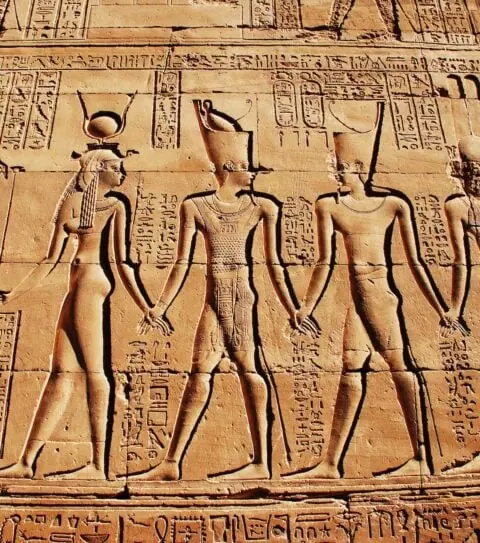
Our guides hold advanced degrees in Egyptology or ancient history, having spent years on excavations, in libraries, and walking the same temple floors they’ll lead you across. They read hieroglyphics as fluently as you read this paragraph.
They know which Karnak chapel was built by which Ramses, why the New Kingdom shifted the capital to Thebes, and what the cartouche on the wall in front of you actually says.
Local Specialists, Not Generalists
Beyond the academic side, every guide on your itinerary is a local specialist in the region they cover.
Your Cairo Egyptologist knows which Khan El Khalili shop has the best fresh karkadeh, and how to navigate the medieval streets of Islamic Cairo without losing an afternoon.
Your Luxor Egyptologist knows which entrance to the Valley of the Kings has the shortest queue at 7am, and which Theban tombs reward an extra hour.
Your Aswan Egyptologist grew up with Nubian culture and the High Dam history, and knows which felucca captain is actually any good.
That depth is impossible to fake from a single seat. It’s why we work with regional specialists rather than one Egyptologist trying to cover the whole country.
Your Language, Whatever It Is
Whatever your language, you’ll be matched with an Egyptologist guide who speaks it: English, Italian, Spanish, Portuguese, German, French, and others available on request.
The Day Is Yours
Because the guide is yours, the day is yours. Want to stay an extra hour at Karnak’s Hypostyle Hall and skip the planned café stop? Done. Want to add the Mortuary Temple of Ramses III at Medinet Habu because you read about it last night? Done.
The itinerary is a plan, not a contract.
Egypt’s Essential Sites, at Your Own Tempo
Cairo, Luxor, Aswan, and Abu Simbel, without the herd.
Most escorted Egypt tours, ours included, are built around four anchor regions. Each one rewards a slower pace, which is precisely what the private format gives you.
Cairo: The Gateway You’ll Underestimate
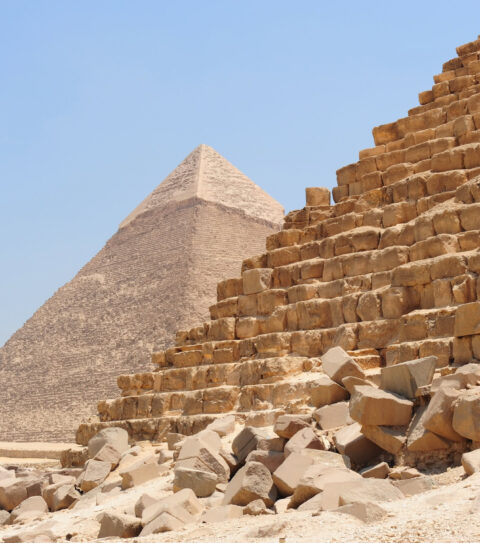
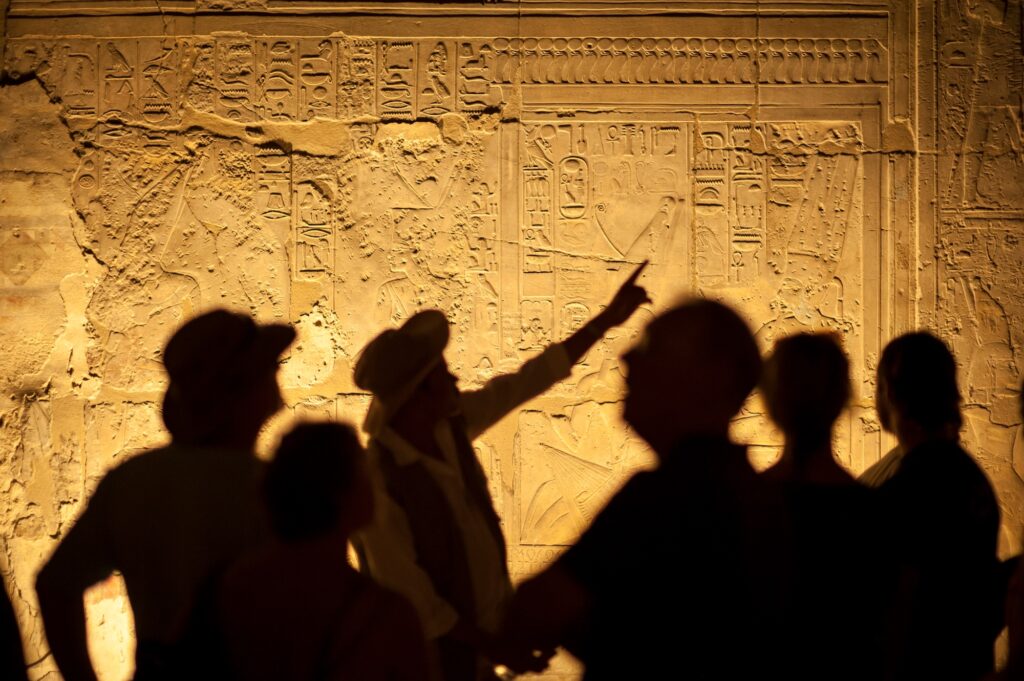
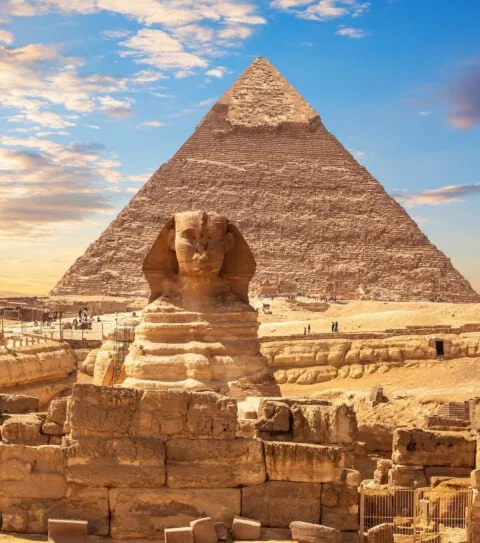
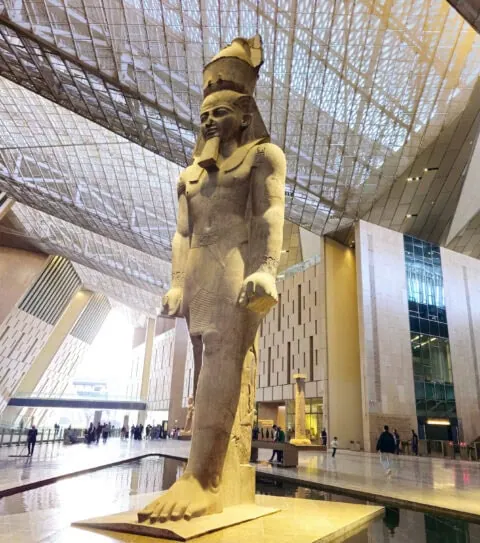
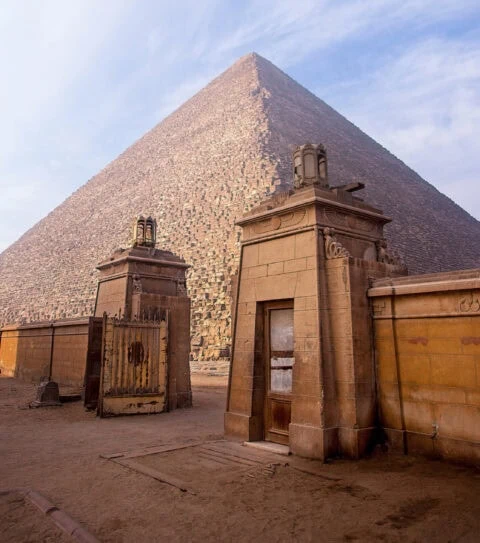
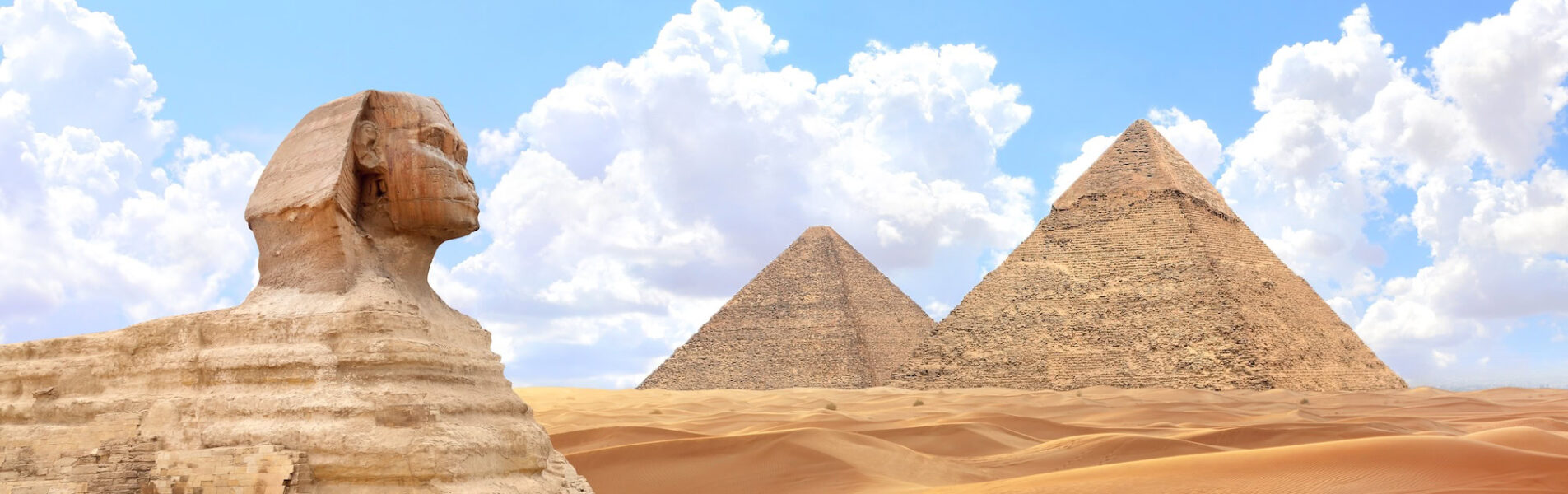
The Pyramids of Giza and the Great Sphinx are the obvious draws. The real revelation, for most travellers, is the Grand Egyptian Museum at the foot of the Giza plateau.
Now fully open, the GEM holds the complete Tutankhamun collection, including the golden mask, the inner shrines, and more than 5,000 artefacts displayed together for the first time in history.
Beyond Giza, Cairo holds Islamic Cairo’s medieval streets, the Citadel of Saladin, and the labyrinth of Khan El Khalili bazaar. Private guidance is what separates a meaningful afternoon there from a confused one.
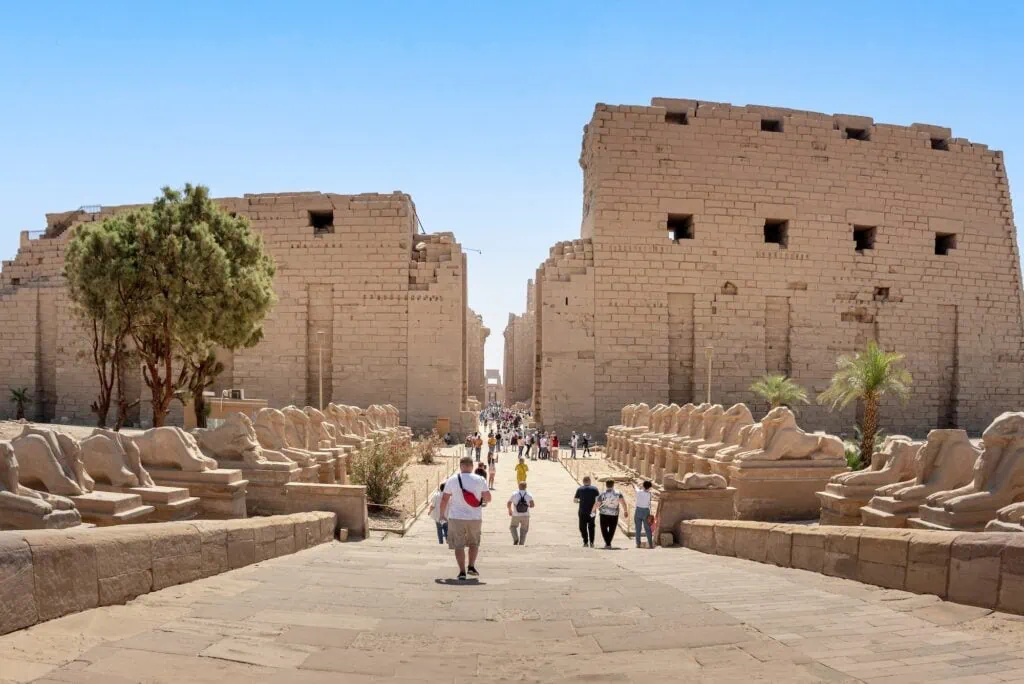
Luxor: Open-Air Museum on a Scale Nothing Else Matches
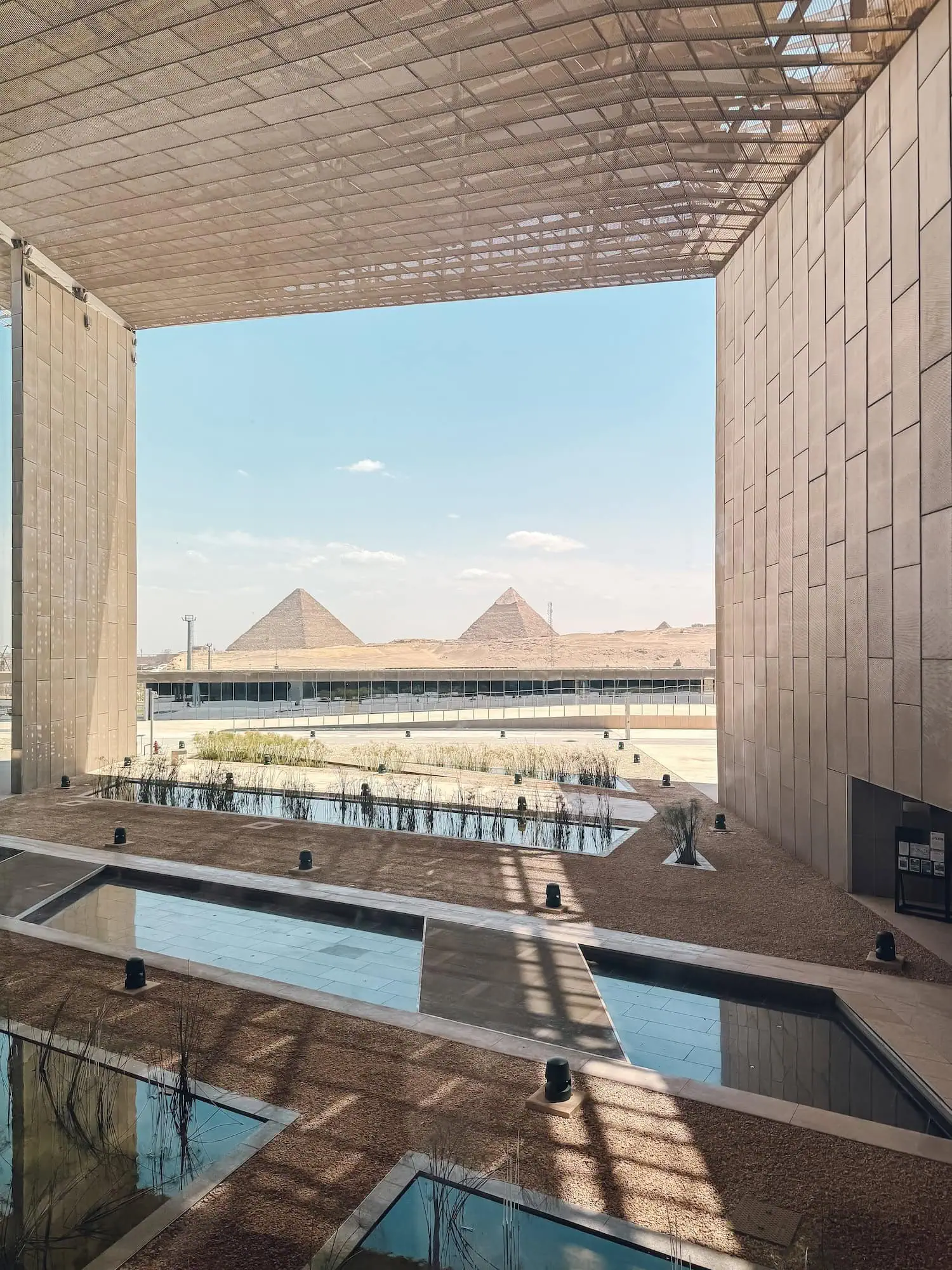
Luxor is the second anchor, and nothing else in the world compares to it.
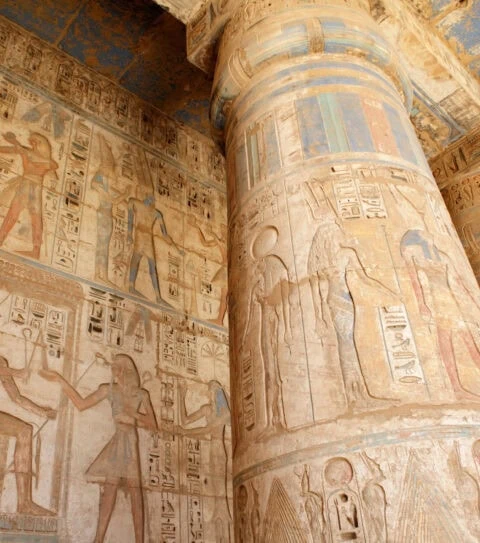
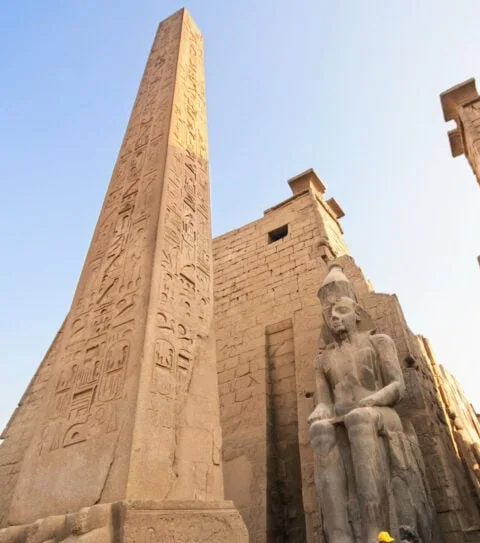
The Karnak Temple complex stretches across more than 200 acres, with a hypostyle hall of 134 sandstone columns built over 2,000 years of pharaonic construction.
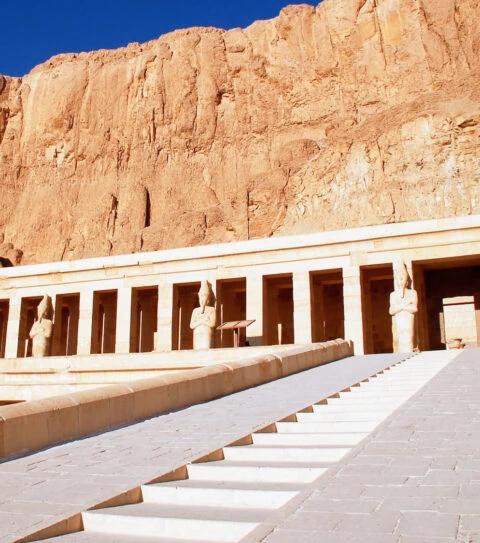
On the west bank, the Valley of the Kings holds the elaborately painted tombs of Ramses VI, Seti I, Tutankhamun, and dozens more. Hatshepsut’s terraced temple at Deir el-Bahari sits against the cliffs nearby.
Without queues to worry about, because your guide times the visits for you, these sites breathe in a way fixed group itineraries rarely allow.
Aswan: Softer, Quieter, Nubian
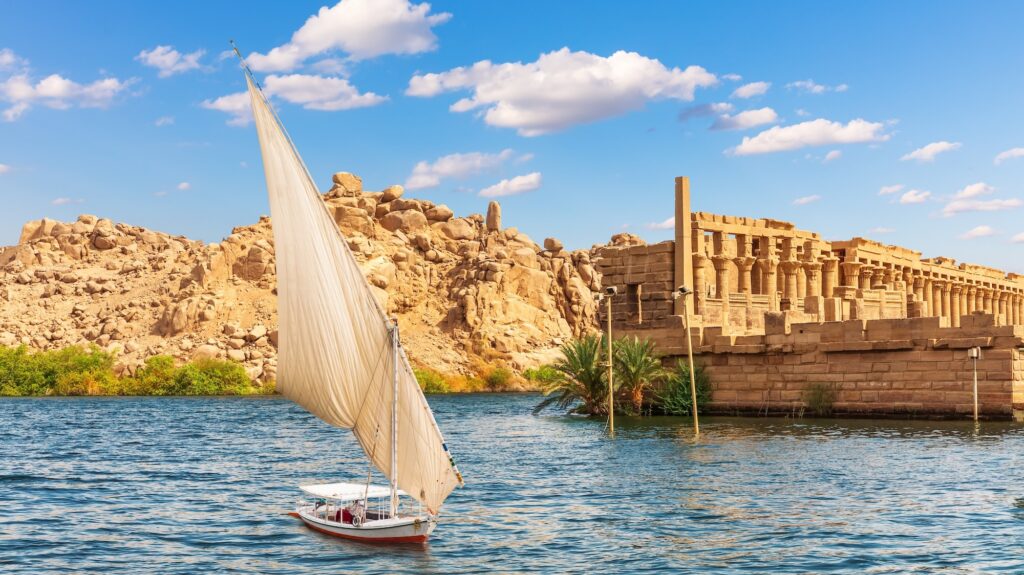
Aswan is the gentler stop. The Nile narrows, the granite turns pink in the evening light, and Nubian culture shapes everything from the music to the food.
Philae Temple, rescued from flooding when the High Dam was built, sits on a small island reached by motorboat.
A felucca sail at sunset is the postcard, and it’s worth every minute.
Abu Simbel: The Most Ambitious Monument Any Pharaoh Built
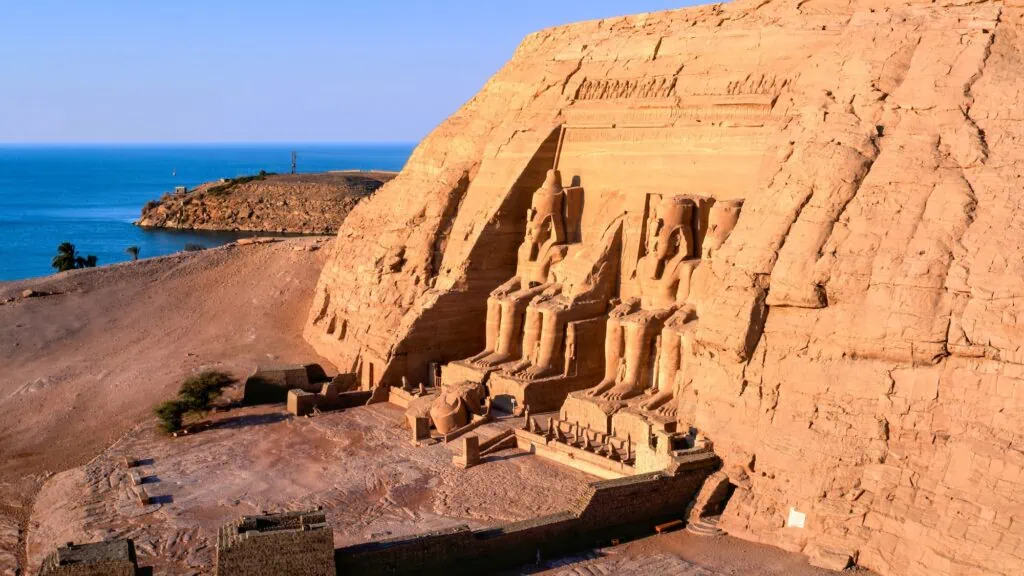
Abu Simbel sits 3 hours south of Aswan by road, or a short internal flight.
Ramses II’s twin temples, one for him and one for his wife Nefertari, were relocated stone by stone in the 1960s to save them from the rising waters of Lake Nasser. They remain the most ambitious monuments any pharaoh ever attempted.
Beyond the Four Anchors
Some travellers extend west to Alexandria’s Greco-Roman heritage. Others head into the Western Desert oases or south to the Red Sea coast for a few days at Hurghada or Sharm El Sheikh.
All of it is on the table.
Your Nile Cruise: Luxury Vessel or Dahabiya
Two cruise formats. Both fit naturally into an escorted tour.
The Nile cruise is the centrepiece of most escorted Egypt itineraries, and we offer it in two formats. Both are excellent. Neither is inherently better; they suit different travellers.
Luxury Nile Cruise
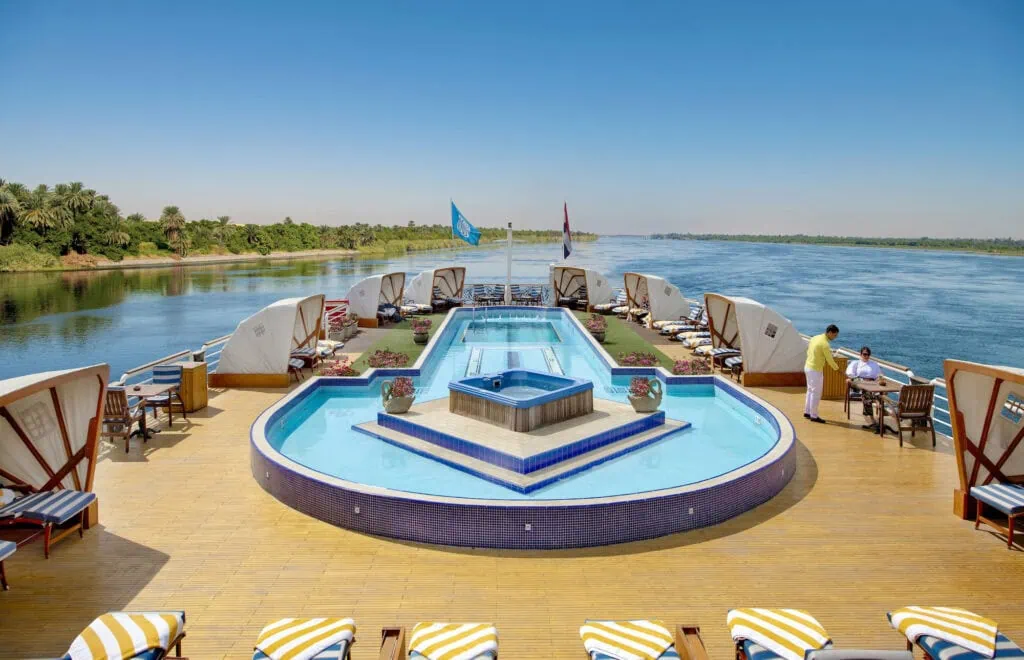
A Luxury Nile Cruise vessel carries between 50 and 150 guests on a refined 5-star ship.
Panoramic cabins, sun decks, swimming pools, multiple dining venues, evening entertainment, and full air conditioning throughout.
The route runs Luxor to Aswan (or the reverse) over four days and three nights as standard, with seven-night upgrades available on request. The cruise visits the Temple of Horus at Edfu and the double temple of Sobek and Haroeris at Kom Ombo, both reached on guided shore excursions.
Dahabiya Nile Cruise
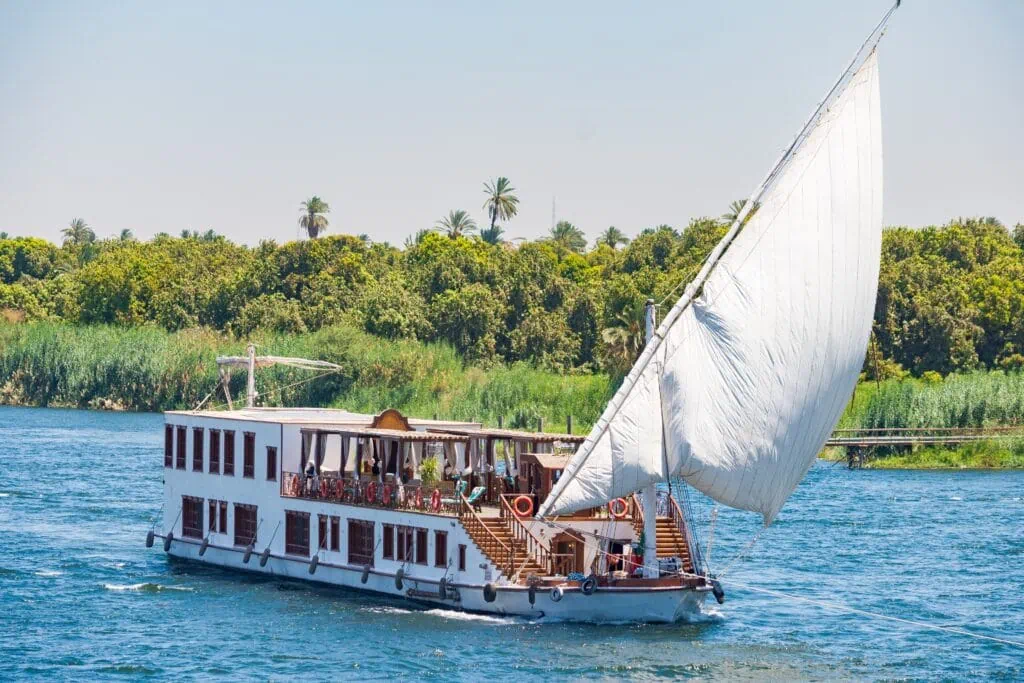
A Dahabiya Nile Cruise is the older format, and the quieter one.
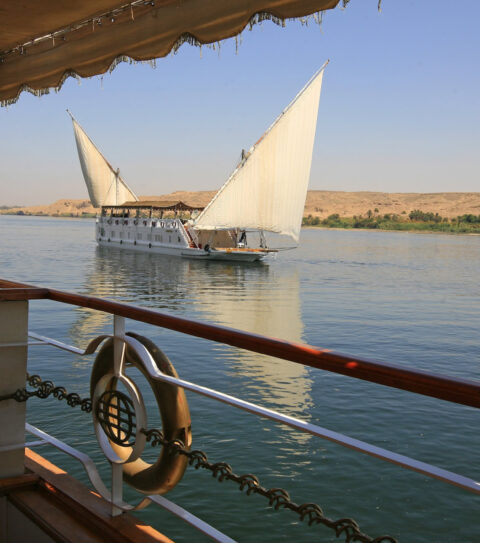
A dahabiya is a traditional twin-mast sailing vessel carrying 8 to 16 guests, wind-powered with no diesel engine, with gourmet meals prepared on board using fresh local ingredients.
Dahabiyas sail the stretches of river inaccessible to larger ships, between Luxor or Esna and Aswan, stopping at small temples and quiet villages the big cruisers pass without docking.
If your image of the Nile is felucca sails, palm groves, and silence, this is the format that delivers it.
One Thing Worth Knowing About Shore Excursions
Shore excursions on a Luxury Nile Cruise vessel run as small groups of around 12 guests per Egyptologist, shared with other passengers on the same ship.
On a dahabiya, the smaller passenger count means excursions feel essentially private.
All of your land-based touring (Cairo, Luxor city, Aswan city) remains fully private throughout. Just your party and your guide.
How Long Should Your Escorted Egypt Tour Be?
8 to 14 days hits the sweet spot. Longer if you’re adding Jordan, Greece, or Morocco.
Tour length is the question we get most often. The honest answer is that 8 to 14 days suits most travellers who want to see Egypt properly without rushing or padding.
8-Day Escorted Egypt Tour
The shortest length we recommend if you want both Cairo and a Nile cruise.
The typical shape is 2 to 3 nights in Cairo, an internal flight to Luxor, a 4-day/3-night Nile cruise to Aswan, and a final night back in Cairo before flying home. Compact, but it works.
10 to 12-Day Escorted Egypt Tour
This is where the itinerary opens up.
The extra days usually add Abu Simbel, a slower pace through the Luxor monuments, and the option of either Alexandria or a few days in the Red Sea for the second half.
It’s the length most repeat travellers say they wish they’d booked the first time.
14-Day Escorted Egypt Tour
The unhurried version.
You’ll have time for the Western Desert oases, a longer dahabiya stretch, a proper visit to Alexandria, or a leisurely few days on the Red Sea coast. Nothing feels squeezed.
15+ Days: Multi-Country Routes
15+ days is where multi-country routes open up. Egypt pairs naturally with:
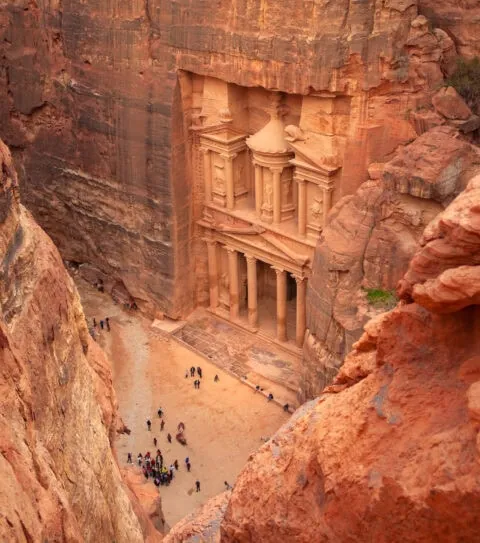
- Jordan (Petra, Wadi Rum)
- Greece (Athens, Santorini)
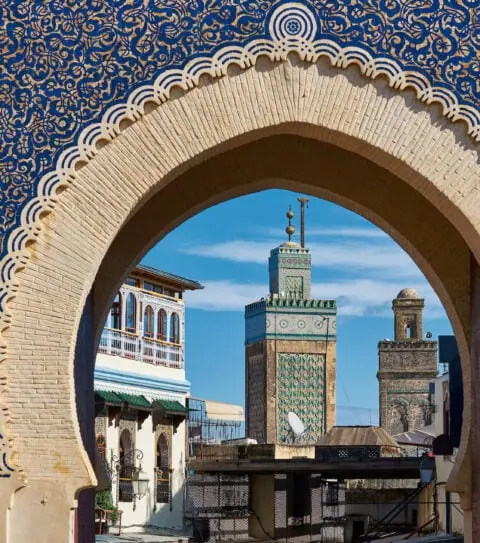
- Morocco (Marrakech, Fez)
- Dubai (Burj Khalifa, desert dunes)
- Turkey (Istanbul, Cappadocia)
All of these are itineraries we build and run regularly through our multi-country tours.
Practical Information for Your Escorted Egypt Tour
Visa, climate, safety, health.
Some of this is universal to any Egypt trip. Some shifts depending on when you go and where you’re coming from.
Visa
Most travellers, including US, UK, EU, Canadian, Australian, and many Latin American nationals, can collect a tourist visa on arrival at Cairo International Airport for $25 USD cash, valid for 30 days.
An e-visa is also available in advance through the official Egyptian government portal. Your Travel Concierge will confirm which option suits your nationality before you travel.
Climate
October through April is the comfortable window. Daytime temperatures between 20 and 25°C (68–77°F), cool, pleasant evenings ideal for Nile cruise deck dining.
December and January are peak season, with the best weather and the highest prices.
Summer, from May to September, regularly exceeds 35°C (95°F) in Upper Egypt. Early starts and late-afternoon resumes are essential, and your guide handles that timing without you having to think about it.
Safety
Egypt’s tourist sites operate under coordinated tourist police presence.
The private escorted format adds a practical layer on top, because you’re never trying to navigate alone. Your guide and driver know which roads to use, which districts are quiet at which hours, and how to handle the everyday small frictions independent travellers sometimes struggle with.
The one region we don’t tour is North Sinai. Everywhere else on the mainstream itinerary sits well within current government advisories.
Health
Drink bottled water throughout the trip. Your driver carries a chilled supply in the vehicle.
No vaccinations are required for entry, though some travellers choose to discuss routine boosters with their GP before departure.
Cairo’s private hospitals meet international standards. 24/7 in-country support means you have someone to call regardless of where you are or what time it is.

What Your Escorted Egypt Tour Quote Includes
Everything that’s in the price, and everything that isn’t.
Egypt Tours Plus quotes are detailed, but the basic shape is consistent across packages.
What’s Included
- Accommodation at your chosen hotel category
- All internal flights between Egyptian cities
- Your private Egyptologist guide on every land-touring day
- Your personal driver with a modern, air-conditioned vehicle
- All major site entrance fees on your itinerary
- VIP arrivals service at Cairo International Airport on your international arrival, where your representative meets you in the arrivals area and walks you through immigration, baggage, and customs
- A local representative meeting you at every internal flight transfer afterwards (Luxor, Aswan, and on return to Cairo), so you’re never alone at an Egyptian airport
- The full Nile cruise or dahabiya segment with all meals on board
- Breakfasts at all hotels
- 24/7 in-country support from your Travel Concierge throughout the trip
What’s Not Included
- International flights between your home country and Cairo
- The $25 USD Egyptian visa
- Travel insurance
- Lunches and dinners outside the cruise segment
- Drinks at meals
- Gratuities for your guide, driver, and cruise crew
- Optional add-ons such as hot air balloon flights over Luxor at sunrise, special-access tomb tickets, sound-and-light shows at Karnak or the Pyramids, and felucca sails in Aswan
Optional Add-Ons
We can include or separately quote any of the optional add-ons.
Some of them, particularly special-access tickets, need a few weeks’ notice and aren’t always guaranteed. Worth asking about early in the planning process.
Designing Your Escorted Egypt Tour
1 to 12 hours for the first itinerary. 2 to 4 rounds of revisions. No commitment until you’re 100% satisfied.
The planning process is built around the idea that the right itinerary takes a few conversations, not a single brochure-flip.
The First Draft, Within 1 to 12 Hours
When you submit your initial preferences through the custom tour planner, a dedicated Travel Concierge picks it up. That’s your single point of contact from start to finish.
Your first-draft itinerary lands back with you within 1 to 12 hours.
Revisions Until It’s Right
That draft is a starting point, not a final answer.
Most travellers go through 2 to 4 rounds of revisions before they’re happy. Adding a day in Aswan. Swapping a hotel category. Changing the cruise format. Building in Abu Simbel. Removing Alexandria. Slowing the pace in Luxor.
No Pressure Before You’re Ready
There’s no commitment until you’re 100% satisfied with the plan.
No deposit pressure during revisions, no countdown, no booking link sent before you’ve said yes to the itinerary itself. We’d rather take a week to get the itinerary right than rush you into a draft that doesn’t fit.
Awarded TripAdvisor Travelers’ Choice every year from 2020 through 2025. Trusted by thousands of travellers since 1955.
Your Escorted Egypt Tour, Designed Around You
Tell us your dates and what pulls at you about Egypt.
Whether you’re planning a compact 8-day first visit, a 14-day deep dive with a dahabiya stretch, or a 21-day Egypt-and-Jordan combination, your Travel Concierge designs the itinerary around what matters most to you.
The private, escorted format means every choice is yours: the cruise, the hotels, the pace, the additions, the order.
Tell us your dates and what pulls at you about Egypt. We’ll send your first-draft itinerary within 1 to 12 hours, and we’ll keep revising until you’re certain it’s the trip you want.
Frequently Asked Questions
Every escorted tour we run is private. That means just you, your travelling party, your private Egyptologist guide, and your personal driver. Never combined with other clients, never run as a fixed-departure group. The land touring across Cairo, Luxor city, and Aswan city is fully private from the moment you leave your hotel to the moment you return.
The one exception worth being upfront about is the shore excursions during a Luxury Nile Cruise segment. Those run as small groups of around 12 guests per Egyptologist, shared with other passengers on the same vessel. If you’d prefer the cruise portion to feel essentially private as well, the dahabiya format (8 to 16 guests on board total) is the option to ask about.
The terms overlap, and different operators use them differently. On Egypt Tours Plus trips, “escorted” means you have continuous private support from arrival to departure: a private Egyptologist guide and personal driver in every city, a representative meeting you at every transfer, and logistical handling throughout.
What it doesn’t mean is that the same individual guide travels with you for the entire trip. Egypt’s regions are distinct, and the best Egyptologists are specialists. When you fly from Cairo to Luxor, a new Luxor-based representative meets you at the airport, a new Egyptologist takes over the guiding, and a new driver handles the vehicle. The same handover happens again in Aswan.
This is by design. A Luxor Egyptologist knows the Theban tombs and Karnak chapels at a depth no Cairo-based guide would attempt. An Aswan guide grew up with the Nubian culture and the High Dam history. The continuity you’re paying for is the support and the standard, not a single face.
A “guided tour”, in contrast, can mean anything from a 90-minute group walk at the Pyramids to a full multi-day itinerary. Escorted, in our usage, signals continuous private guidance and full logistical support across the entire trip.
International flights between your home country and Cairo are not included. We don’t book international air, primarily because it’s almost always cheaper for you to book direct with the airline or your preferred booking platform, and because flexible airline policies have made operator-booked tickets less useful than they once were.
What is included is every internal flight between Egyptian cities: Cairo to Luxor, Aswan to Cairo, Cairo to Abu Simbel if you’re taking that route, and so on. We book those for you as part of the package, time them around your itinerary, and handle the logistics on the Egypt side. Your Travel Concierge can also advise on routing and timing if you’d like a recommendation before you book your international flights.
Whatever your language, you’ll be matched with an Egyptologist guide who speaks it: English, Italian, Spanish, Portuguese, German, French, and others available on request. We’ve been arranging multilingual private tours since 1955, and guide-matching is done specifically per itinerary; you’ll know the language match well before your trip begins.
If you’re travelling as a mixed-language party (for example, a Spanish-speaking family member joining an English-speaking couple), we can usually arrange a guide who works comfortably in both languages, or, for larger parties, coordinate two guides on specific touring days. Let your Travel Concierge know the language preferences when you start the planning conversation.
Egypt’s mainstream tourist regions, including Cairo, Luxor, Aswan, Abu Simbel, the Red Sea coast, and Alexandria, operate under coordinated tourist police presence and have been welcoming international travellers without significant incident for many years. The one region we don’t tour is North Sinai; the rest of the country sits well within standard travel advisories from US, UK, EU, Canadian, and Australian governments.
The private escorted format adds practical safety on top of that baseline. You’re never trying to navigate alone in an unfamiliar city, your driver knows the local roads and traffic patterns, your guide handles ticketing and entry points, and you have 24/7 in-country support throughout the trip. Most travellers find Egypt noticeably more comfortable than they expected.
For a first visit that includes both Cairo and a Nile cruise, 8 days is the shortest length we recommend, and 10 to 12 days is the sweet spot. The extra two to four days let you add Abu Simbel, slow the pace in Luxor, and have a day or two in the Red Sea or Alexandria without anything feeling rushed.
If you’re combining Egypt with Jordan, Greece, Morocco, Dubai, or Turkey, plan on 14 to 21 days total. If you’re returning to Egypt for a second visit and focusing on a specific region (Luxor in depth, the Western Desert, a longer dahabiya, the Red Sea coast), 7 to 10 days works comfortably. Your Travel Concierge will recommend a length once you describe what you want to see.
Yes. That’s the entire point of the format. Every itinerary we build is customized from the first draft onward. You choose the length, the hotels (comfortable 4-star to ultra-luxury 5-star), the cruise format (luxury vessel or dahabiya), the pace, the cities, the add-ons, and the order in which everything happens.
If you want a specific tomb access, a private boat from Luxor to the West Bank, a Coptic Cairo morning that most operators skip, a sunrise hot air balloon flight over Luxor, a cooking class in Aswan, or anything else, your Travel Concierge can build it into the plan. The itinerary stays editable through 2 to 4 rounds of revisions until you’re 100% satisfied with it.
Most do, and we recommend including one. The Nile cruise segment is the part of the trip most travellers describe as the highlight when they get home. Standard packages include a 4-day/3-night Luxor to Aswan cruise on a 5-star Luxury Nile Cruise vessel, with seven-night upgrades available on request.
If you prefer a smaller, quieter format, a dahabiya (8 to 16 guests on a traditional sailing vessel) is the alternative. Dahabiyas sail between Luxor or Esna and Aswan, typically over 4 to 7 nights. For Lake Nasser south of the High Dam, a separate 3 to 4-night cruise visits Abu Simbel and the relocated Nubian monuments. Cruise-free itineraries focused on Cairo, Alexandria, or the Western Desert are also possible if a cruise isn’t your priority.
The private format is particularly well-suited to senior travellers and travellers with mobility considerations, because the pace, the vehicle access, the rest stops, and the daily schedule are all tailored specifically to your party. You’re never trying to keep up with a group, and there’s no pressure to skip a section because everyone else has moved on.
For travellers with specific accessibility needs, we build wheelchair-accessible itineraries that prioritize step-free access where possible, choose hotels with appropriate room configurations, allocate extra time at sites, and use vehicles with easier boarding. Some pharaonic sites involve steps or uneven ground that can’t be modified, but most of the major monuments have workable approaches. Talk to your Travel Concierge about specifics when you start planning.
Egypt Tours Plus packages include accommodation at your chosen hotel category, all internal flights between Egyptian cities, your private Egyptologist guide on every land-touring day, your personal driver with a modern air-conditioned vehicle, all major site entrance fees, hotel transfers conducted as a VIP arrivals service, the Nile cruise or dahabiya segment with all meals on board, breakfasts at all hotels, and 24/7 in-country support throughout the trip.
Not included: international flights to and from Egypt, the $25 USD visa, travel insurance, lunches and dinners outside the cruise, drinks at meals, gratuities, and optional add-ons such as hot air balloon flights, special-access tomb tickets, and sound-and-light shows. Your Travel Concierge will quote any of those separately if you want them added.
Design Your Custom Tour
Explore Egypt your way by selecting only the attractions you want to visit