

Where ancient wonders meet effortless, modern travel
Egypt and Jordan Tours
Our Egypt and Jordan Tours invite you to explore two legendary lands with the comfort and confidence of traveling on your own terms. Enjoy 24/7 support, personalized itineraries, and a premium experience designed to make your journey as smooth as it is unforgettable.
Experience Egypt and Jordan with private guides and personalized itineraries from experts since 1955.
Private Egypt and Jordan Combination Tours
Petra and the Pyramids: The Most Coherent Ancient-World Pairing in the Region
Two of the most photographed monuments on earth, 1.5 hours apart by air, and a thematic link that makes them belong on the same trip.
If you’re going to combine Egypt with one neighbour, this is the one. The Pyramids and Petra are the two most-recognised ancient sites in the Middle East, and they’re not just close — they’re complementary in a way that almost no other multi-country pairing can match. Add the Nile, Wadi Rum, and the Dead Sea, and you have a single trip that delivers across history, landscape, and rest, without trade-offs.
We’ve been crafting Egypt journeys since 1955. Our Egypt and Jordan itineraries are built as one continuous trip, around your dates, pace, and budget — flights, transfers, hotels, and guides coordinated end-to-end so you don’t notice the country line you’re crossing.
Table of Contents
Why Egypt and Jordan Pair So Well
Three reasons this combination works better than most multi-country trips.
Geographic and logistical simplicity
Cairo to Amman is a 1.5-hour direct flight, operated multiple times daily by EgyptAir and Royal Jordanian. Both cities have efficient international airports and well-developed inbound tourist infrastructure. Time zones are within an hour of each other, so jet lag between the two countries is non-existent. We coordinate the international flights, the Cairo–Amman connection, and all transfers as one continuous booking.
Same season, no compromise
Both countries run their high season October through April, with daytime temperatures in the comfortable 20–25°C range. Summer months (May–September) push 35°C+ in southern Egypt and the Jordanian desert, with Petra and Wadi Rum becoming genuinely tough at midday. There’s no point in the year where one destination is in season and the other isn’t.
Ancient civilisations that actually connect
Egyptian and Nabataean civilisations did not develop in isolation. The Nabataeans were trade-route operators whose caravans crossed Egypt; their architecture borrowed openly from Egyptian and Hellenistic-Egyptian models; their kingdom existed inside the Roman world that Egypt was also part of. Walking the Avenue of Sphinxes in Karnak and then walking the Siq into Petra two weeks apart is not just two impressive sites — it’s two halves of the same conversation about how the ancient eastern Mediterranean organised itself.
How We Build an Egypt + Jordan Trip
Every Egypt + Jordan itinerary we run is built privately, around the travelers booking it. There’s no fixed-departure version. Your party travels with its own Egyptologist guide and personal driver in Egypt, and with a licensed local guide and driver throughout Jordan.
A typical Egypt + Jordan trip runs 10 to 14 days. The split that works for most travelers:
- 6 to 8 days in Egypt (Cairo, optionally a 4-day Nile cruise, Abu Simbel)
- 4 to 6 days in Jordan (Petra, Wadi Rum, the Dead Sea, Amman)
Shorter pairings (10 days) drop the Nile cruise and run Cairo + Petra + Wadi Rum. Longer pairings (14–18+ days) add Alexandria, the Red Sea, an Abu Simbel extension via Lake Nasser, or a third country (Dubai, Saudi Arabia, or Morocco being the most popular add-ons).
Order of travel
We sequence Egypt first, Jordan second, in nearly all cases. Two reasons. The first is intensity: Cairo is dense, Jordan’s pacing is more relaxed, and finishing in Jordan gives travelers a softer landing before the long flight home. The second is logistics: Amman’s airport (Queen Alia International) has good direct connections to Europe and North America, so flying out of AMM rather than Cairo opens up flight options on the way home.
Cruise or no cruise
The Nile cruise is the strongest single experience on the Egypt side. Itineraries with a cruise spend 4 days / 3 nights between Luxor and Aswan on either a Luxury Nile Cruise (50–150 guests, 5-star, panoramic cabins) or a Dahabiya Nile Cruise (8–16 guests, traditional twin-mast sailing vessel). We also offer 5, 6, 7, and 8-day cruise options on select Luxury Nile Cruise vessels for travelers wanting more time on the river. Itineraries without a cruise still cover Cairo properly and can include Luxor and Aswan via flights and hotel-based touring.

A note on cruise shore excursions, since this is where some operators over-promise. On Luxury Nile Cruises, shore excursions run as small group experiences (around 12 guests per Egyptologist), shared with fellow ship passengers. Fully private excursions can be arranged on request at additional cost. On Dahabiyas, the boat itself is small enough that excursions feel essentially private. All your land-based touring in Cairo, Luxor, Aswan, and across Jordan is fully private throughout: just your party plus your guide and driver.
The Pharaonic–Nabataean Axis: Why These Two Cultures Travel Together
This is the section that makes Egypt + Jordan different from any other multi-country pairing in the region. The two civilisations the trip is built around were not just neighbours — they were structural opposites whose contrast is what makes the journey worth taking.
Pharaonic Egypt was a centralised river-state. The Pyramids, the temples at Karnak and Luxor, the colossi at Abu Simbel: all are products of a single, continuous civilisation that organised itself around the Nile for over 3,000 years. The pharaohs’ power radiated outward from a state apparatus, a priestly class, and a labour force on a scale almost impossible to grasp. The Great Pyramid at 4,500 years old, weighing roughly 6 million tonnes, is what a centralised civilisation builds when it has time, hierarchy, and a flooding river to feed it.
Nabataean Jordan was the opposite. The Nabataeans were trade-route specialists — caravan merchants who controlled the incense, spice, and bitumen routes connecting Arabia to the Mediterranean from roughly the 4th century BC to the 1st century AD. Their kingdom had no Nile, no agricultural surplus, no permanent peasantry. What they had was water management (their hydraulic engineering at Petra is genuinely astonishing) and a position athwart the most lucrative trade corridor in the ancient world. Petra is what a trading civilisation builds when its wealth comes from movement rather than soil.
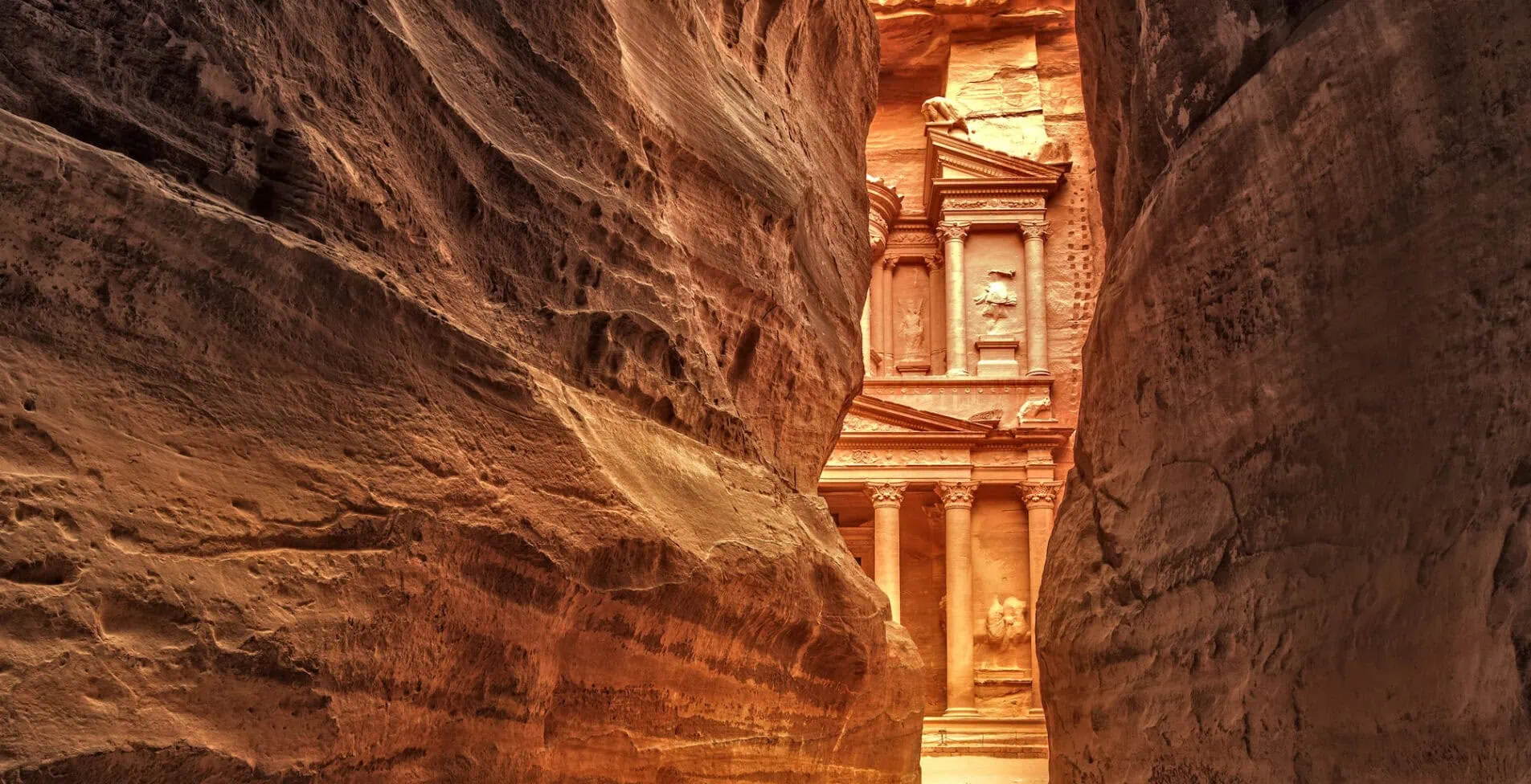
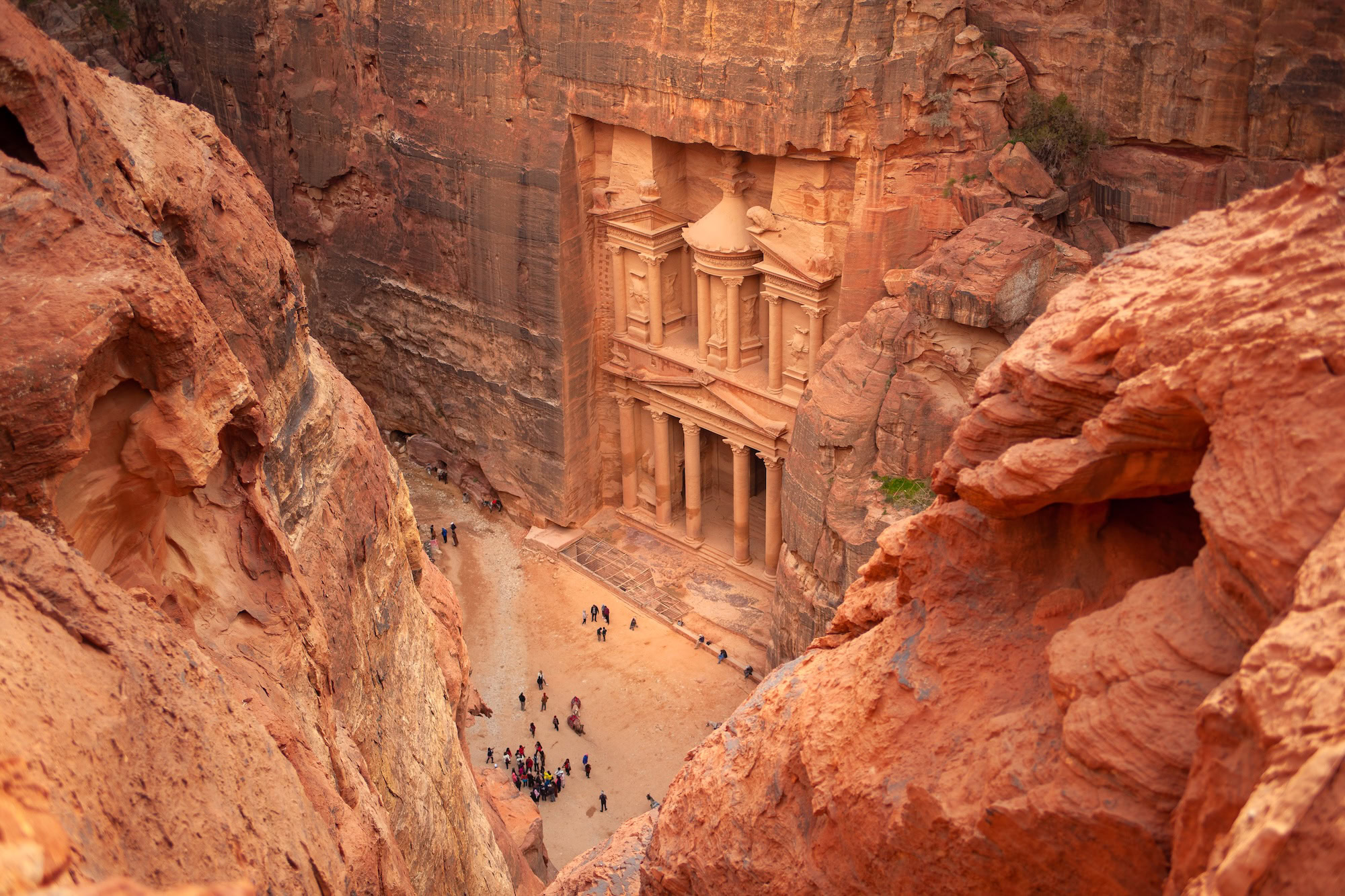
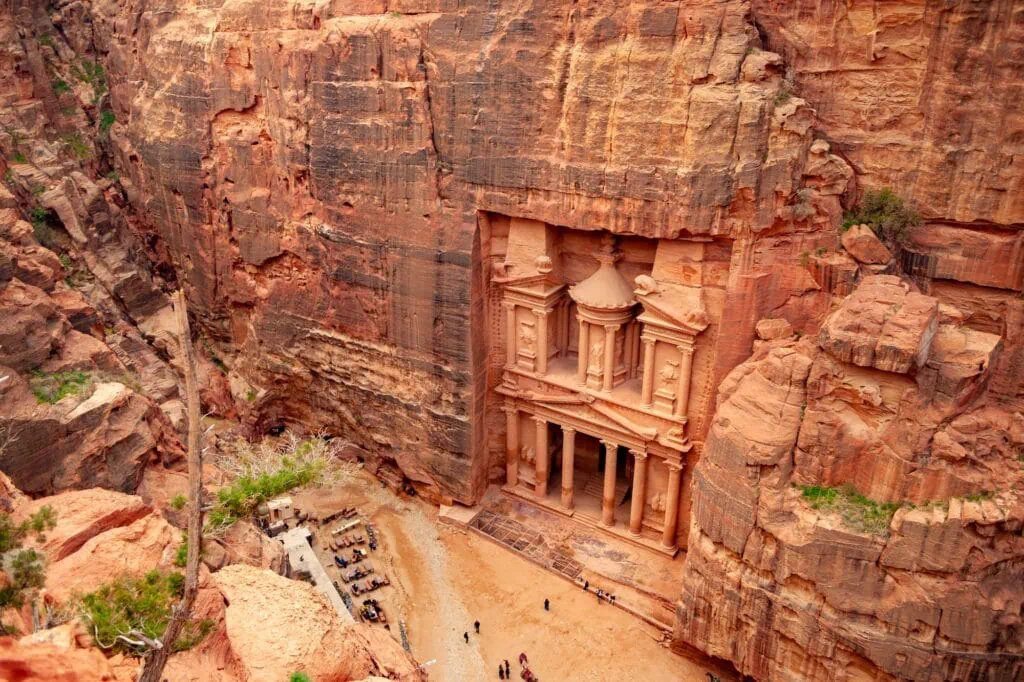
The architectural conversation between the two is real. The Treasury facade at Petra is Hellenistic-Egyptian-Roman in its vocabulary — Corinthian columns, a broken pediment, a tholos at the centre, decorative reliefs that nod to Egyptian iconography. The Nabataeans saw Alexandria’s Greco-Egyptian architecture and brought elements of it back into Petra’s sandstone. You don’t need to be an archaeologist to feel the link; once you’ve stood in front of Karnak and then in front of Al-Khazneh, the connection is on display.
This is why Egypt and Jordan combined rewards travelers more than equivalent-distance pairings. You’re not just stamping two countries on a passport. You’re tracing the actual cultural thread that ran between them for centuries.
What Egypt Gives You
Each tour itinerary on the site lists what’s included as standard. Below is the broader picture — what Egypt can deliver across an Egypt and Jordan trip.
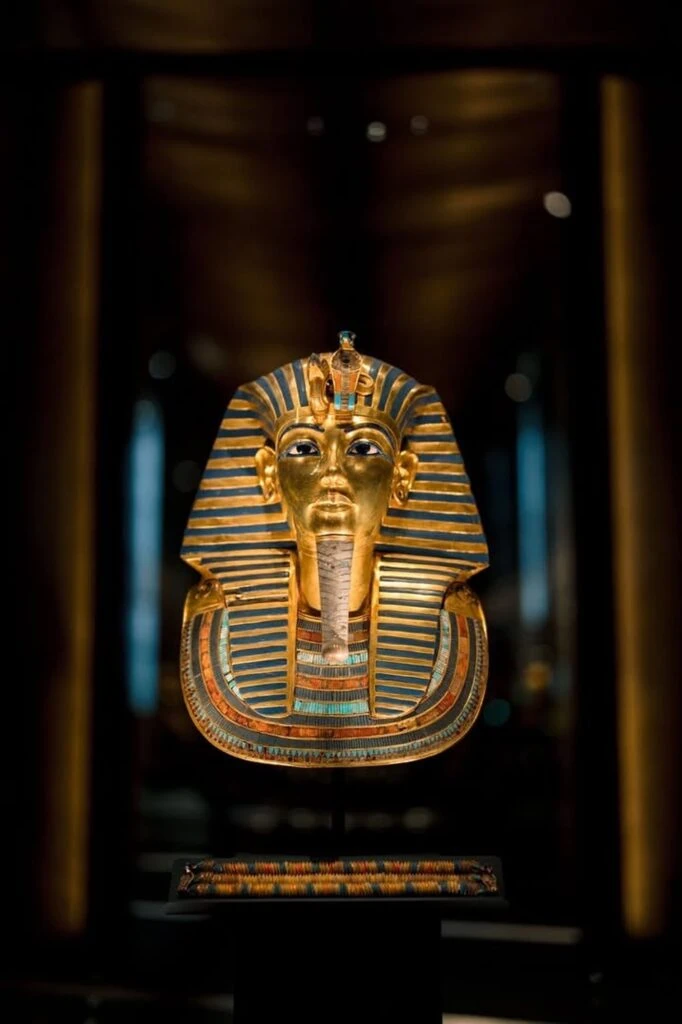
The Grand Egyptian Museum (GEM), now fully open, is the dominant museum draw. It holds the world’s most comprehensive pharaonic collection, including the complete Tutankhamun ensemble — the golden mask, the inner shrines, and the rest of the 5,000+ items displayed together for the first time in history. A half-day visit is the minimum.
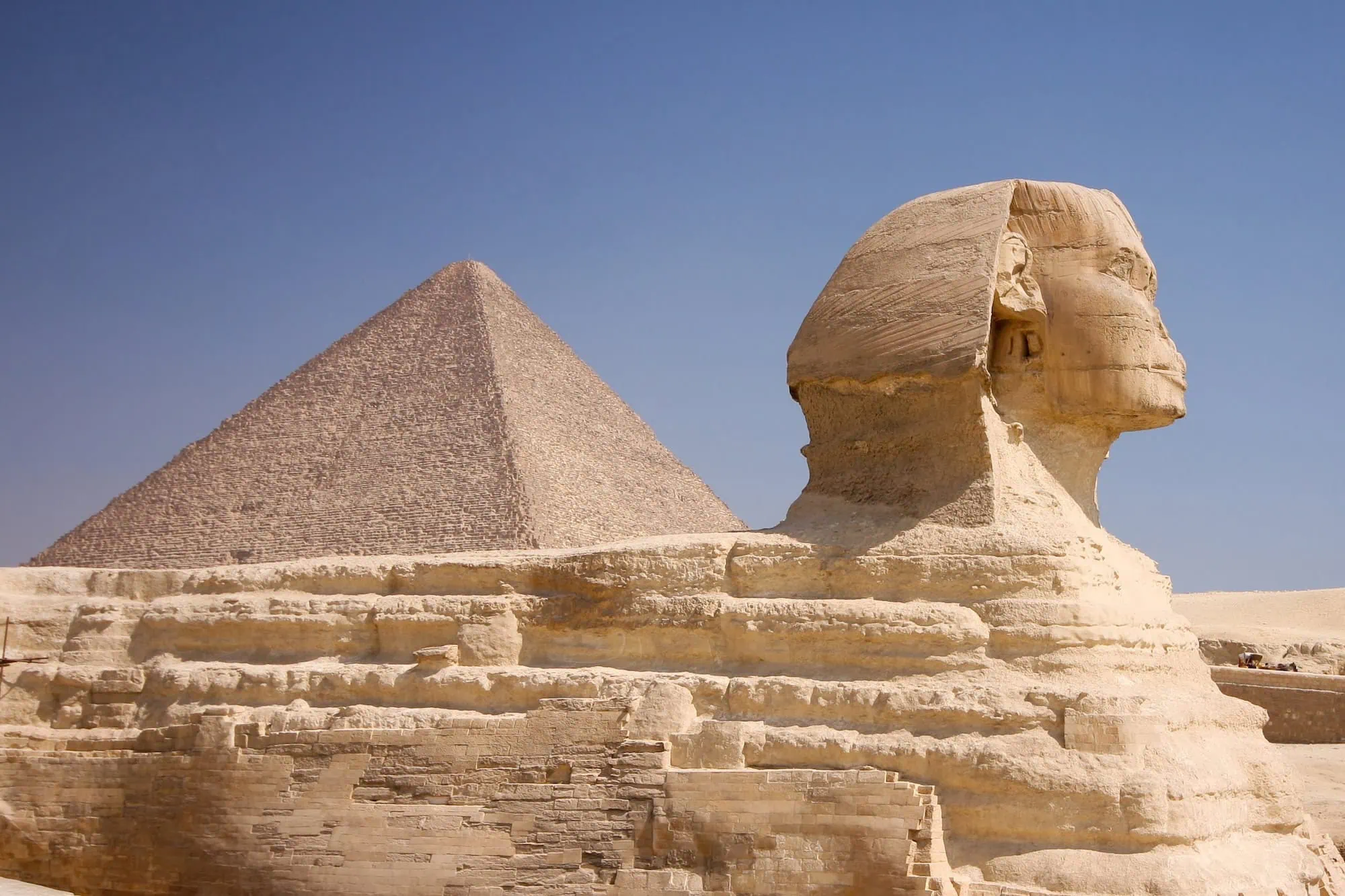
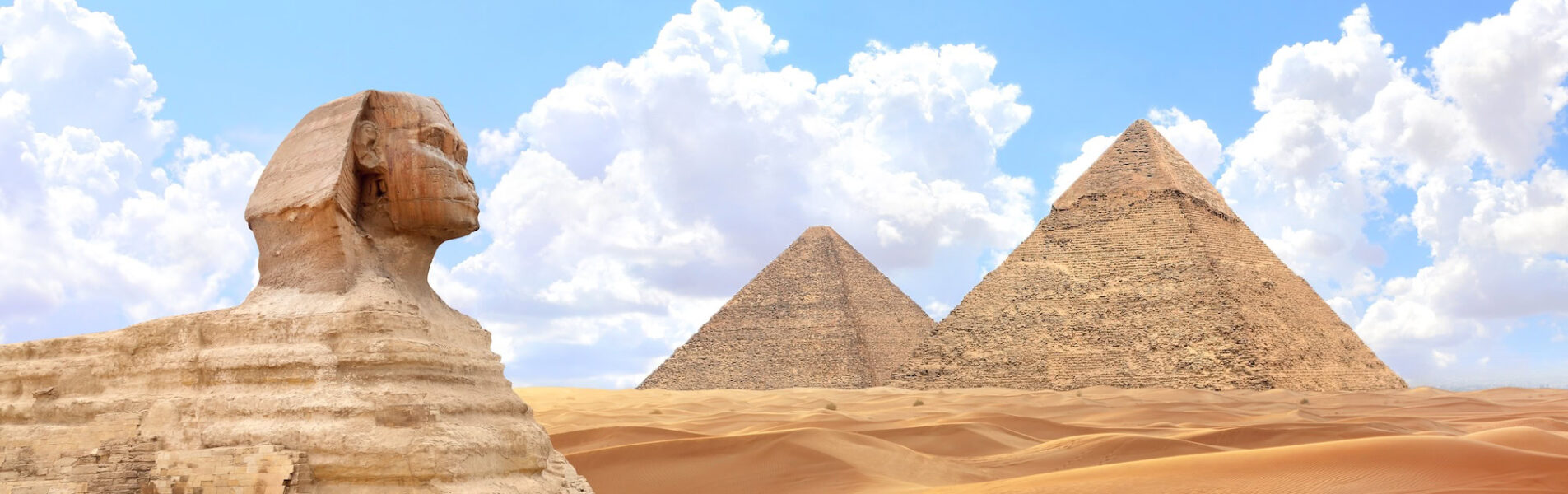
The Pyramids of Giza remain the moment most travelers came for. The Great Pyramid is roughly 4,500 years old and is the only surviving Wonder of the Ancient World. Interior access (a separate ticket with a daily quota) can be added on request if you want to climb into the burial chamber.
Khan El Khalili is the medieval bazaar quarter, alive since the 14th century. Coptic Cairo anchors the early Christian heritage of the country, with the Hanging Church (Al-Muallaqa) at its centre. The Citadel of Saladin offers the best panoramic view of Cairo and houses the Mosque of Muhammad Ali.
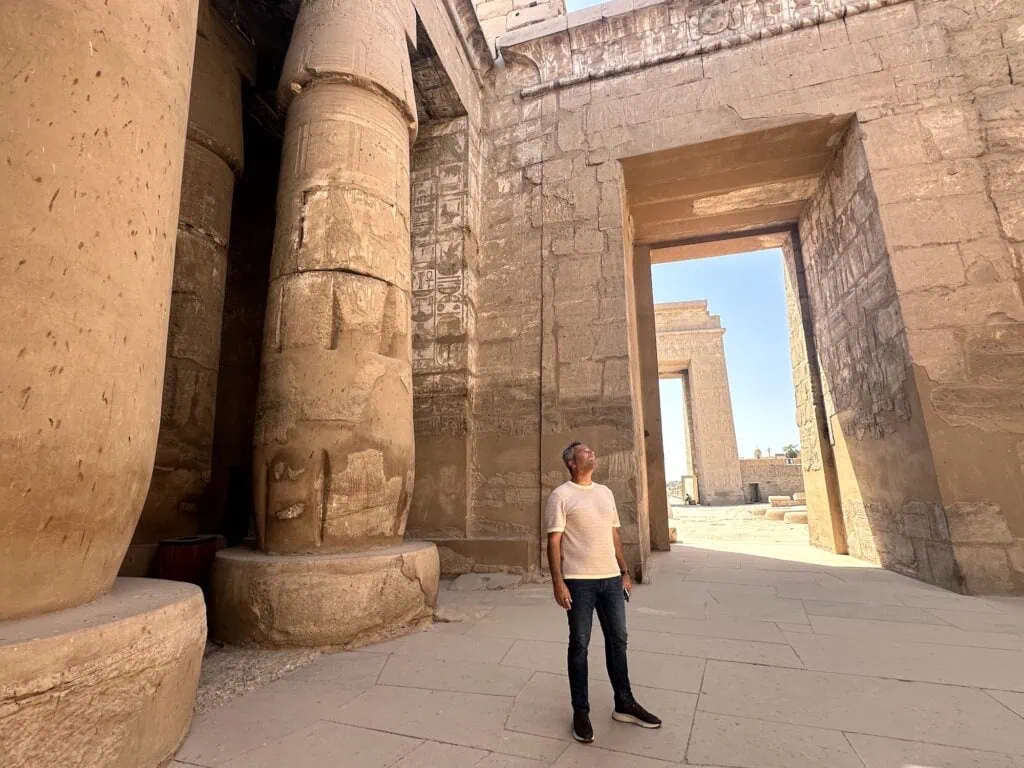
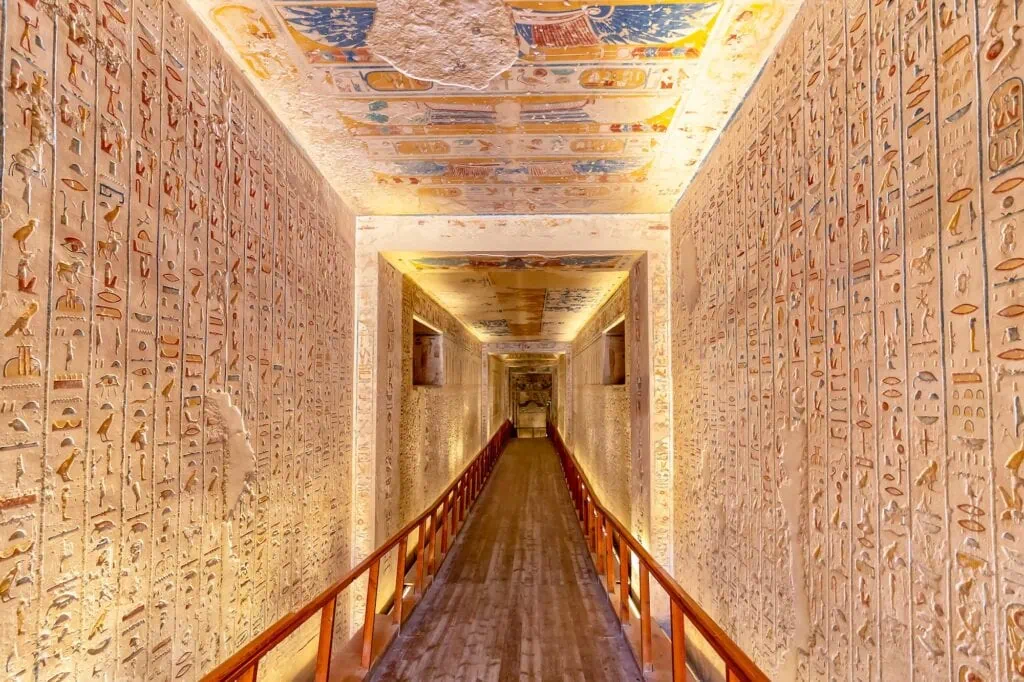
If your itinerary includes Luxor and Aswan, the highlights are Karnak Temple (with its Hypostyle Hall of 134 columns, and the 2.7 km Avenue of Sphinxes connecting to Luxor Temple), the Valley of the Kings, Hatshepsut’s Mortuary Temple at Deir el-Bahari, Philae Temple in Aswan, and Abu Simbel (either as a flight day from Aswan or via a Lake Nasser cruise extension).
What Jordan Gives You
Jordan delivers on a smaller, more intimate scale than Egypt — and that’s the point. Three to five days covers the headlines properly.
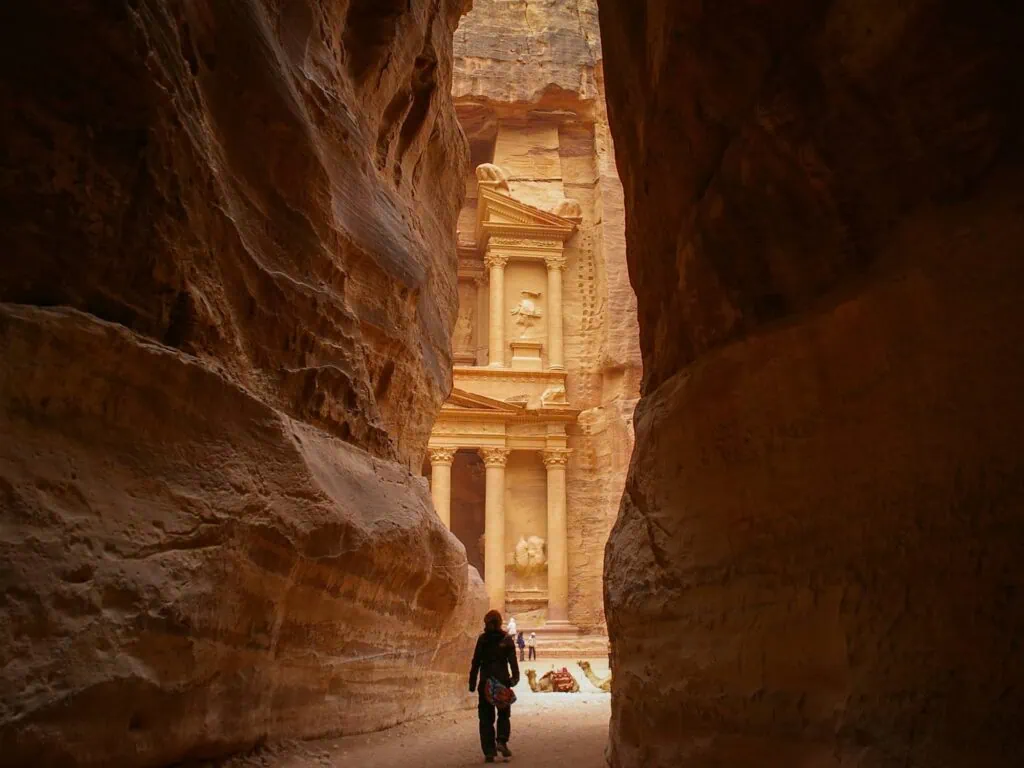
Petra is the obvious anchor. Carved into rose-red sandstone by the Nabataeans around the 1st century BC, it’s a sprawling site that needs at least a full day, ideally two. The classical entrance is the 1.2 km walk through the Siq, the narrow sandstone gorge that opens onto Al-Khazneh (the Treasury), the 40-metre facade that anchors every Petra photograph ever taken. Beyond the Treasury, the site continues for several kilometres and includes the Monastery (Ad Deir), the Royal Tombs, the Roman Theatre, and dozens of smaller carved facades that most day-trippers never reach. We build the visit around early morning starts to get into the Siq before the day’s tour groups arrive, and around longer days at the site if you want to walk to the Monastery (an 800-step climb worth every step).
For travelers with the time, a second full day at Petra opens up two things most visitors never see: the High Place of Sacrifice (a Nabataean ritual platform with one of the best views over the entire site) and the Petra by Night experience on Monday, Wednesday, and Thursday evenings, when the path through the Siq is lit by 1,500 candles and Bedouin musicians play in front of the Treasury.
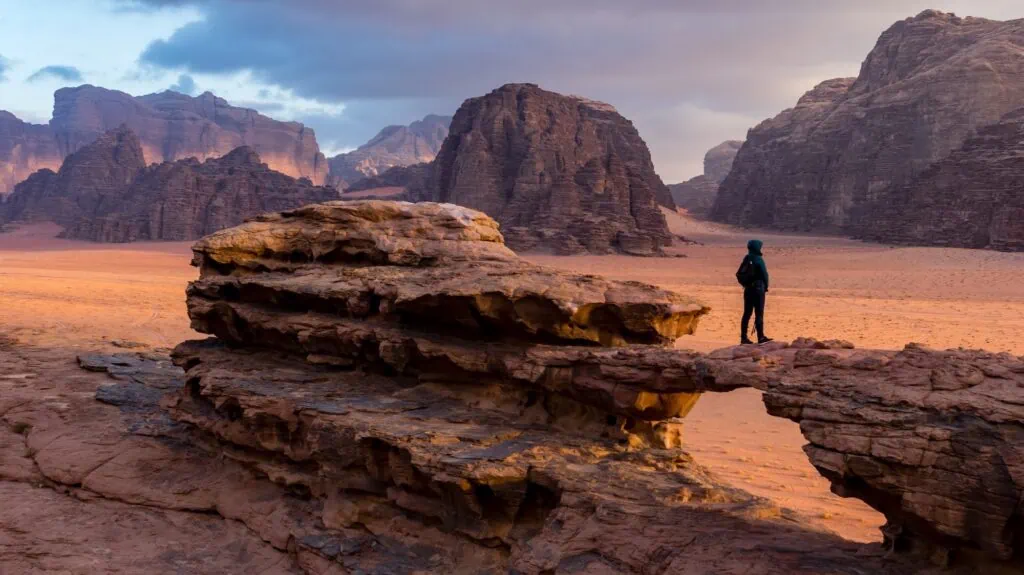
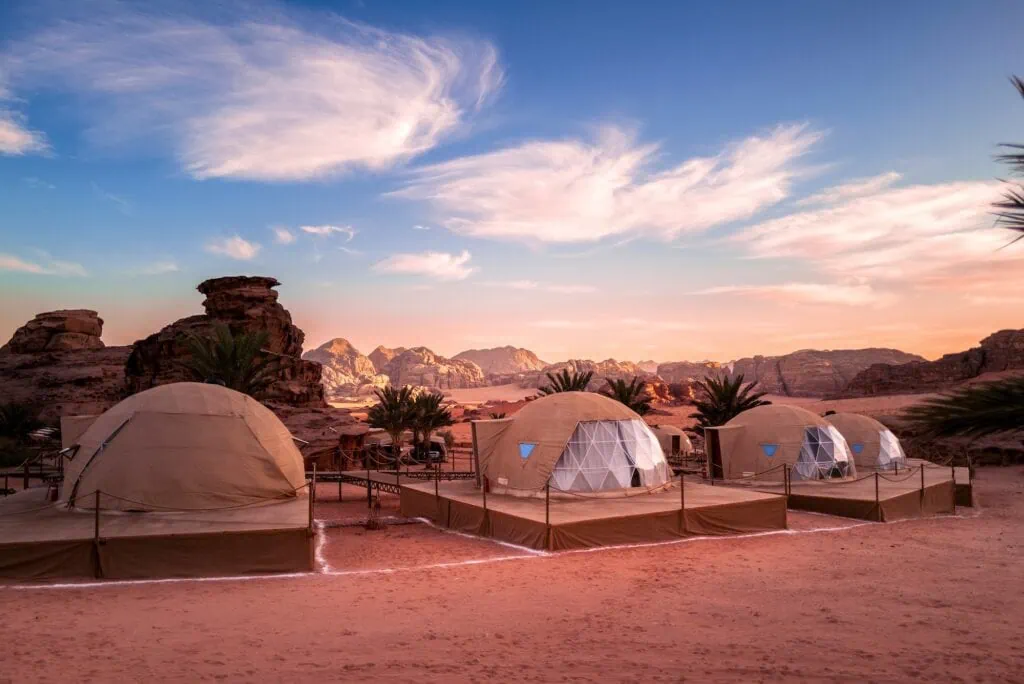
Wadi Rum is the protected desert area south of Petra, covering 720 sq km of red sandstone valleys, natural arches, and Bedouin grazing land. Activities range from 4×4 desert tours through the canyons, to camel rides at sunset, to overnight stays in Bedouin-style camps under some of the clearest skies on earth. Wadi Rum was used as the Mars surface in The Martian and several other Hollywood films — the geology genuinely looks alien.
The Dead Sea is the lowest point on earth (430 metres below sea level) and the standard Jordan trip closer. Floating in salt water at 34% salinity is the experience most travelers have heard about and want to try at least once. Modern resort hotels along the shoreline offer day-spa facilities, mineral mud treatments, and infinity pools overlooking the Sea.

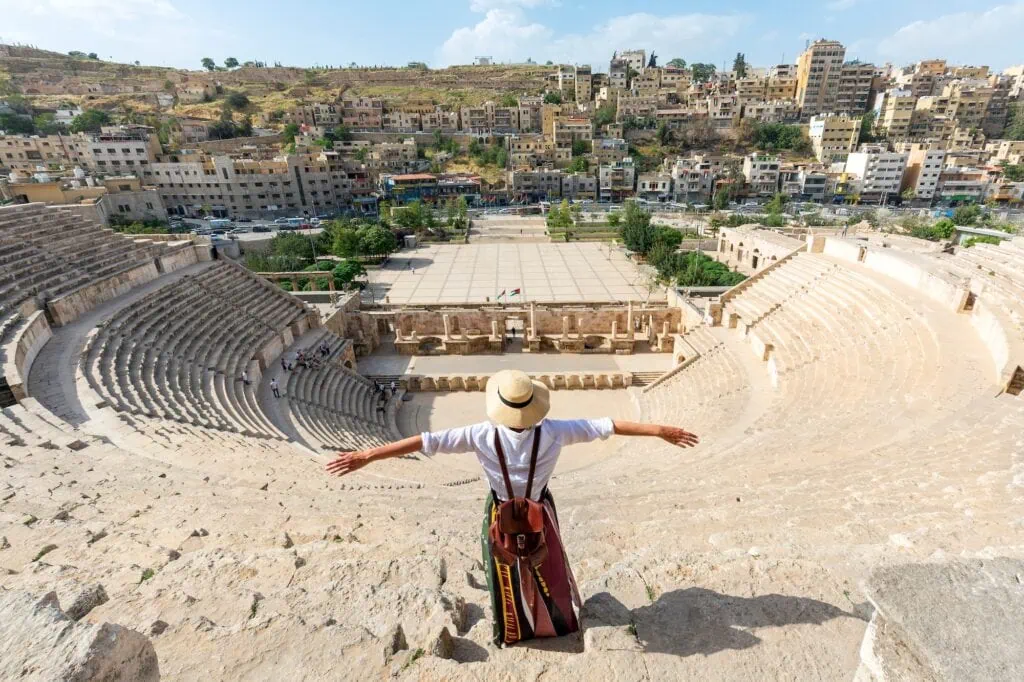
Amman is the capital and the typical entry/exit point. Worth a half-day for the Citadel (Roman, Byzantine, and Umayyad layers all on one hilltop), the Roman Theatre, and Rainbow Street for food. Most travelers don’t need more than that, though Amman is also the launchpad for half-day trips to Jerash (the most complete Roman provincial city outside Italy) and Mount Nebo (where Moses, in the biblical tradition, looked across to the Promised Land).
Hotels Across Both Countries
Each tour itinerary on the site lists the specific hotels included in that package. Those are our recommended starting points, picked for location, comfort, and consistency of service. Anything below is alternatives or upgrades you can request when you’re tuning the trip with your Travel Concierge.
In Egypt, the historic anchor properties are worth knowing about even if you end up choosing something else: Marriott Mena House in Giza (pyramid views from the room balcony), Sofitel Winter Palace in Luxor (late-19th-century landmark, walking distance to Luxor Temple), and Sofitel Legend Old Cataract in Aswan (colonial-era property overlooking the Nile and Elephantine Island; this is the hotel where Agatha Christie stayed and which is widely associated with the inspiration for Death on the Nile). For modern Cairo luxury, Four Seasons-tier downtown and Nile-side hotels are the alternative.
In Jordan, the categories run from luxury cliffside lodges in Petra (Movenpick Petra, Petra Marriott), to Bedouin-style desert camps in Wadi Rum (ranging from authentic traditional camps to luxury bubble-tents with private bathrooms and air conditioning), to Dead Sea resort hotels (Kempinski Ishtar, Movenpick Dead Sea), to Amman’s downtown landmarks (Four Seasons Amman, Fairmont Amman). Cabin upgrades on the Nile cruise from standard to suite are also worth flagging if you want extra space.
Visas, Practicalities, and Money
Most travelers, including U.S., U.K., E.U., Canadian, Australian, and many Latin American nationalities, can obtain a 30-day Egypt tourist visa on arrival at Cairo Airport for $25 USD, or apply for an e-visa online before departure.
Jordan’s entry rules are slightly different. Most nationalities receive a tourist visa on arrival at Queen Alia International Airport, but the Jordan Pass (a pre-purchased combined entry visa + entrance tickets to 40+ sites including Petra) is by far the better option. It waives the visa fee, includes Petra entry (otherwise the most expensive single ticket in the country), and pays for itself if you visit Petra on more than one day. Your Travel Concierge will arrange Jordan Passes as part of the booking.
A dedicated representative meets you in the arrivals area at Cairo International Airport and Queen Alia International Airport in Amman, and guides you through immigration, baggage claim, and customs.
Whatever your language, you’ll be matched with an Egyptologist guide who speaks it — English, Italian, Spanish, Portuguese, German, French, and others available on request. Jordan guides are typically fluent in English and Arabic, with other languages available on request.
Money: Egypt uses the Egyptian Pound (EGP); Jordan uses the Jordanian Dinar (JOD). Major cards are accepted across hotels, restaurants, and most shops in both countries. Cash is useful for tips, taxis, and souk shopping in both Khan El Khalili and Amman’s downtown markets.
Best Time to Travel
October through April offers ideal weather conditions across both countries, with daytime temperatures of 20–25°C (68–77°F) and cool, comfortable evenings. Summer months can exceed 35°C in Egypt and 40°C in Jordan’s desert areas, making outdoor sightseeing genuinely difficult, though our private tours adjust pacing where needed.
The peak weeks within the high season are Christmas/New Year and Easter, in both countries. Pricing reflects demand in both windows, and hotel inventory tightens months ahead. Petra’s hotel inventory in particular is tight relative to its visitor numbers, and the historic anchor properties on the Egypt side sell out first. Shoulder seasons (October–November and March–April) are the best balance of weather, availability, and pricing.
A note on Petra in winter: December through February can be surprisingly cold at altitude, with rain and occasional snow possible. The site is still remarkable (snow on the Treasury is one of the rarest and most dramatic Petra photographs you’ll see), but pack a proper warm layer. This is the one practical asymmetry between the two countries’ high season — Egypt stays warm enough at midday to wear short sleeves through January, while Petra at the same week can require a fleece and a wool hat at sunrise.
Pairing With a Third Country
Two weeks or more is what you need to comfortably add a third country. The most popular pairings:
- Egypt + Jordan + Saudi Arabia. The historically deepest three-country combination available. AlUla and Hegra (Saudi Arabia’s first UNESCO site, opened to international tourism in 2019) are the Nabataean sister-city to Petra — same culture, same architectural vocabulary, same period, but in a more remote desert setting and with far fewer visitors. For travelers serious about the Nabataean–pharaonic conversation that this trip is built around, this is the natural extension.
- Egypt + Jordan + Dubai. The classic three-country Middle East circuit. Cairo, the Nile, Petra, Wadi Rum, then Dubai’s modern contrast with Burj Khalifa, the desert, and an Abu Dhabi day trip. 13–15 days does this comfortably.
- Egypt + Jordan + Morocco. North African add-on. Marrakech, Fes, the Sahara at Erg Chebbi. Heavier pacing across regions but works for travelers with three weeks who want the full North African–Levantine arc.
Mention which countries interest you and your Travel Concierge will model durations and pricing across the options. Or skip ahead and build your own multi-country itinerary — choose your countries, dates, and pace, and we’ll send back a tailor-made quote within 1 to 12 hours.
How the Planning Process Actually Works
Egypt and Jordan tours have specific friction-points that need real planning attention. Petra’s hotel inventory is tight relative to its visitor numbers, the Jordan Pass has to be timed against your itinerary so you don’t pay for the visa twice, school holidays push Christmas/New Year and Easter into the realm of “book six months out”, and the cruise-or-no-cruise question genuinely changes the trip’s character. None of this is hard, but all of it benefits from someone who’s done it before.
Your Travel Concierge builds a first-draft itinerary based on one conversation: your dates, who’s travelling, what you want included, pace preferences, hotel category, and how the time should split between Cairo, the Nile, and Jordan. The first draft typically lands in your inbox within 1 to 12 hours.
What follows is the back-and-forth, and it’s the part that matters most. We swap hotels, change cabin categories on the cruise, adjust the Egypt-Jordan split, layer in or pull out Wadi Rum desert camp upgrades, model the Dead Sea resort options, add Abu Simbel or Alexandria, and rework the trip until every piece sits right. Most travelers go through two to four rounds of revisions before booking, though some take significantly more until every detail is locked. There’s no pressure to commit at any stage. The itinerary is finalised only when you’re 100% satisfied and ready to confirm.
Ready to Plan Your Egypt and Jordan Tour?
Cairo to Karnak, the Nile to Abu Simbel, the Siq to the Treasury, Wadi Rum to the Dead Sea — the most coherent ancient-world pairing in the region, mapped from start to finish around your dates and pace.
Tell us your dates, who’s travelling, and what matters most, and your dedicated Travel Concierge will have a tailor-made Egypt and Jordan itinerary back in your inbox within 1 to 12 hours. We’ve been crafting Egypt journeys since 1955, with TripAdvisor Travelers’ Choice 2020 through 2025 in our pocket, with one Travel Concierge coordinating the entire trip from first email to return home.
Frequently Asked Questions
Ten days is the realistic minimum to cover Cairo, Petra, and Wadi Rum without rushing. Twelve to fourteen days lets you add a 4-day Nile cruise. Fifteen days or more opens up Abu Simbel, the Red Sea, Alexandria, or a third country (most commonly Saudi Arabia or Dubai).
Egypt first, Jordan second, in nearly all cases. Cairo is dense and Jordan’s pacing is more relaxed, so finishing in Jordan gives a softer landing before the long flight home. Amman’s airport also has good direct connections to Europe and North America for return flights.
By direct flight between Cairo (CAI) and Amman (AMM), operated multiple times daily by EgyptAir and Royal Jordanian. Flight time is approximately 1.5 hours. We coordinate the connection as part of one continuous booking, with airport meet-and-greet at both ends.
Standard inclusions: domestic and accommodations across both countries, a 4-day Nile cruise (full board on the cruise) where included, entrance fees to standard sites (with the Jordan Pass covering Petra and 40+ Jordan sites), your private Egyptologist guide and driver throughout Egypt, your private guide and driver throughout Jordan, airport meet-and-greet at Cairo and Amman, and 24/7 support throughout.
Not included: international flights to/from your home country and inter-country flights (Cairo–Amman), tipping, and optional add-ons (interior pyramid access, hot air balloon over Luxor, luxury Wadi Rum bubble-tent upgrade, Petra by Night, special access tombs, road convoy or flight to Abu Simbel beyond what your package specifies).
Some meals (typically lunches and some dinners outside the cruise) are quoted separately.
Each tour itinerary on the site lists the precise inclusions and exclusions for that specific package — those are the authoritative reference, and your Travel Concierge will confirm everything in your final itinerary.
Private. Every Egypt + Jordan itinerary we run is built around the travelers booking it, with a private guide and driver in each country. The exception is Nile cruise shore excursions, which run as small group experiences (around 12 guests per Egyptologist) on Luxury Nile Cruises, shared with fellow ship passengers. Fully private cruise excursions and Dahabiya cruises (where the whole vessel is essentially private) are available on request.
Yes, and most travelers do. Twelve days is the comfortable minimum for Cairo + 4-day Nile cruise + Jordan. The Nile cruise is the strongest single experience in Egypt and is well worth the extra days if your trip allows it.
Yes. Abu Simbel is added in one of three ways.
The fastest is a flight day from Aswan (45 minutes each way, ideal if your time is tight).
The most cost-effective is a small-group road convoy from Aswan (3-hour drive each way through the Western Desert, departing pre-dawn, runs as a small-group format rather than private).
The most immersive is a Lake Nasser cruise extension (a 3- or 4-night cruise from Aswan to Abu Simbel and back, taking in the relocated Nubian temples along the way).
The flight and road options each add 1 day to your trip; the Lake Nasser option adds 3 to 4 days. Your Travel Concierge will recommend the right option based on your budget, pacing, and broader itinerary.
The Jordan Pass is a pre-purchased combined product that bundles your tourist visa and entry to 40+ Jordanian sites including Petra (with options for 1, 2, or 3 days at Petra). It waives the standard visa fee and includes Petra’s entrance ticket, which is otherwise the most expensive single attraction ticket in Jordan. It pays for itself if you visit Petra on more than one day, which we typically recommend. We arrange the Jordan Pass as part of the booking and confirm which Petra option fits your itinerary.
Partially. The walk through the Siq to the Treasury is 1.2 km on a relatively flat path, and horse-drawn carriages run from the visitor centre to the Treasury for travelers who can’t manage the walk. Beyond the Treasury, the main path through the city is walkable but sandy, and golf-cart shuttles run during peak season. The 800-step climb to the Monastery and the High Place of Sacrifice are not accessible. We can build a Petra day around Treasury access only if mobility is a concern, and donkey rides up to the Monastery are also available with advance arrangement.
Yes. Saudi Arabia (AlUla, Hegra) is the most thematically coherent extension because of the direct Nabataean cultural link to Petra. Dubai (Burj Khalifa, desert safari, Abu Dhabi day trip) is the most popular logistical extension. Morocco is the North African add-on. Two weeks or more is the realistic window for any of these.
October through April: comfortable, 20–25°C in both countries, ideal for outdoor sightseeing. May through September: extremely hot, with Wadi Rum and southern Egypt regularly exceeding 40°C. December–February in Petra can be cold at altitude, with rain and occasional snow — beautiful but pack a warm layer.
For trips during the high season (October–April), three to four months in advance is the comfortable window. For trips during peak weeks (Christmas/New Year and Easter), six months is more realistic — Petra’s hotel inventory in particular is tight, and the historic anchor properties on the Egypt side sell out first. Last-minute bookings inside four weeks of the high season are sometimes possible but with compromises on hotel availability.
Whatever your language, you’ll be matched with an Egyptologist guide who speaks it — English, Italian, Spanish, Portuguese, German, French, and others available on request. Jordan guides are typically fluent in English and Arabic, with other languages available on request.
Yes, but the Jordan side is simplified by the Jordan Pass (see above), which bundles the visa with site entries. Egypt requires a $25 tourist visa for most nationalities (visa-on-arrival or e-visa, 30 days). Your Travel Concierge will arrange the Jordan Pass and confirm what specifically applies to your passport.
Yes. Tourist areas in both countries are well-policed and have strong safety records. Jordan in particular has a long-standing reputation as one of the most stable destinations in the region. Our 24/7 worldwide customer service is on call throughout your trip, and your dedicated Travel Concierge stays your point of contact from booking through return home.
Yes, all three. The trip works well for honeymoons (Petra at sunrise, a Wadi Rum bubble-tent overnight, the Dead Sea spa close), for families with kids 8 and up (Pyramids, Tutankhamun at GEM, Wadi Rum 4×4 desert tours, Dead Sea floating), and for older travelers who appreciate the private guide-and-driver pacing throughout. Walking distances at Petra in particular can be adjusted, with horse-drawn carriages and golf carts available within the site for travelers with reduced mobility.
Yes, across both countries. Egyptian cuisine has strong vegetarian roots (foul, koshari, vine leaves, baba ghanoush, dozens of vegetable dishes), and Jordanian cuisine is similarly accommodating (mansaf is the national dish but Jordanian mezze, falafel, and vegetable dishes are excellent). Hotels and restaurants in both countries handle vegetarian, vegan, gluten-free, halal, kosher, and most other dietary needs with advance notice.
Three things. First, depth on the Egypt side: 70+ years of operational experience, our own fleet of vehicles, private Egyptologist guides, and the relationships that come with running Egypt as our home market since 1955. Second, the Egypt + Jordan side is built as one trip, not two trips taped together — coordinated flights, coordinated transfers, one Travel Concierge, one point of contact across both countries. Third, the trip is genuinely customisable: dates, pace, hotels, inclusions, the cruise question, the Abu Simbel question, the third-country question — all designed around you.
Design Your Custom Tour
Explore Egypt and Jordan your way by selecting only the attractions you want to visit