

Ancient City Of Jerash: Jordan’s Best-Preserved Roman Wonder
Walking through the colonnaded streets of Jerash feels like stepping directly into the Roman Empire.
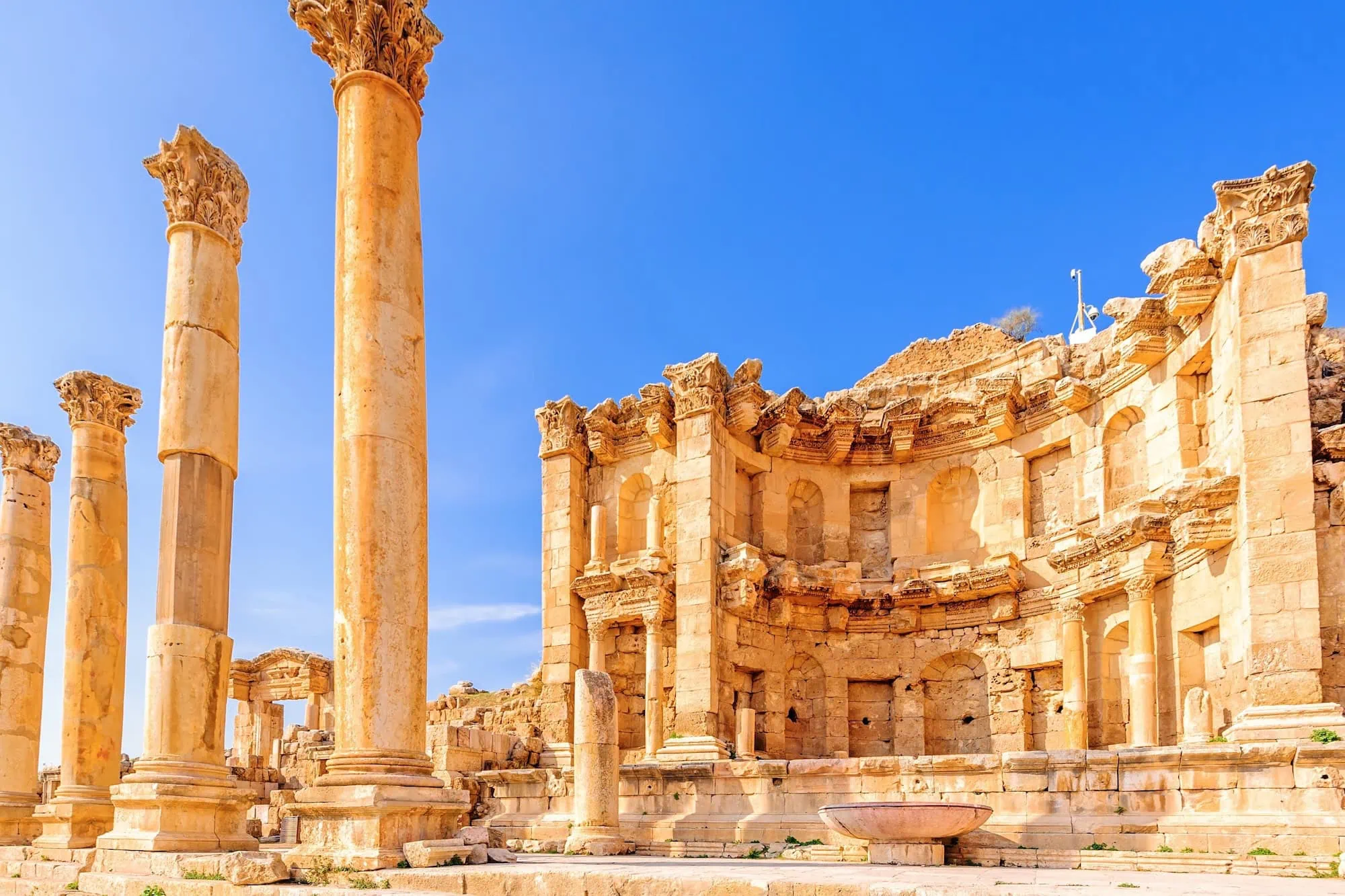
Located just an hour north of Amman, this extraordinary archaeological site offers one of the best-preserved examples of Roman provincial urbanism outside Italy. Known in antiquity as Gerasa, Jerash was a thriving member of the Decapolis league, flourishing for centuries before earthquakes and shifting trade routes led to its gradual decline. Today, its remarkably intact ruins reveal a city where Greco-Roman architectural grandeur meets local cultural traditions, offering a rare and immersive glimpse into ancient Middle Eastern life.
Having explored these magnificent ruins countless times, we design our Egypt and Jordan combined tours to showcase Jerash in depth—uncovering the stories, details, and atmosphere that bring this ancient metropolis vividly to life.
Table of Contents
Discovering Jerash’s Rich Historical Timeline
Jerash’s story begins far earlier than most visitors realize. Archaeological evidence suggests continuous habitation since the Neolithic period, making this one of the oldest continuously occupied sites in Jordan.
The transformation into a major urban center began when Pompey conquered the region in 64 BC, incorporating Jerash into the Roman province of Syria. As one of the ten cities forming the Decapolis league, Gerasa enjoyed considerable autonomy while benefiting from Roman protection and investment. This period, spanning from the 1st to 3rd centuries AD, represents the city’s golden age when its population swelled to approximately 20,000 inhabitants.
The Roman Boom Years
During the reign of Emperor Hadrian, Jerash experienced unprecedented prosperity. Wealthy merchants funded elaborate public buildings while skilled craftsmen created the intricate stone carvings and mosaics that still captivate visitors today. The city’s strategic location on major trade routes connecting Arabia with Damascus and the Mediterranean coast brought immense wealth, evident in the grand scale of civic projects undertaken during this era.
Byzantine Transformation and Christian Heritage
The 4th century brought significant religious change as Christianity became the empire’s official religion. Jerash adapted remarkably well to this transformation, constructing over a dozen churches decorated with stunning mosaic floors. Many former pagan temples were converted into Christian places of worship, while new Byzantine architectural elements began appearing alongside classical Roman designs.
Medieval Decline and Rediscovery
The devastating earthquake of 747 AD marked the beginning of Jerash’s decline. Though briefly occupied by Crusaders in the 12th century, the city never recovered its former glory. Desert sands gradually buried the ruins, preserving them until British archaeologist John Garstang began systematic excavations in 1925, unveiling the extraordinary site we can explore today.
Architectural Marvels That Define Jerash
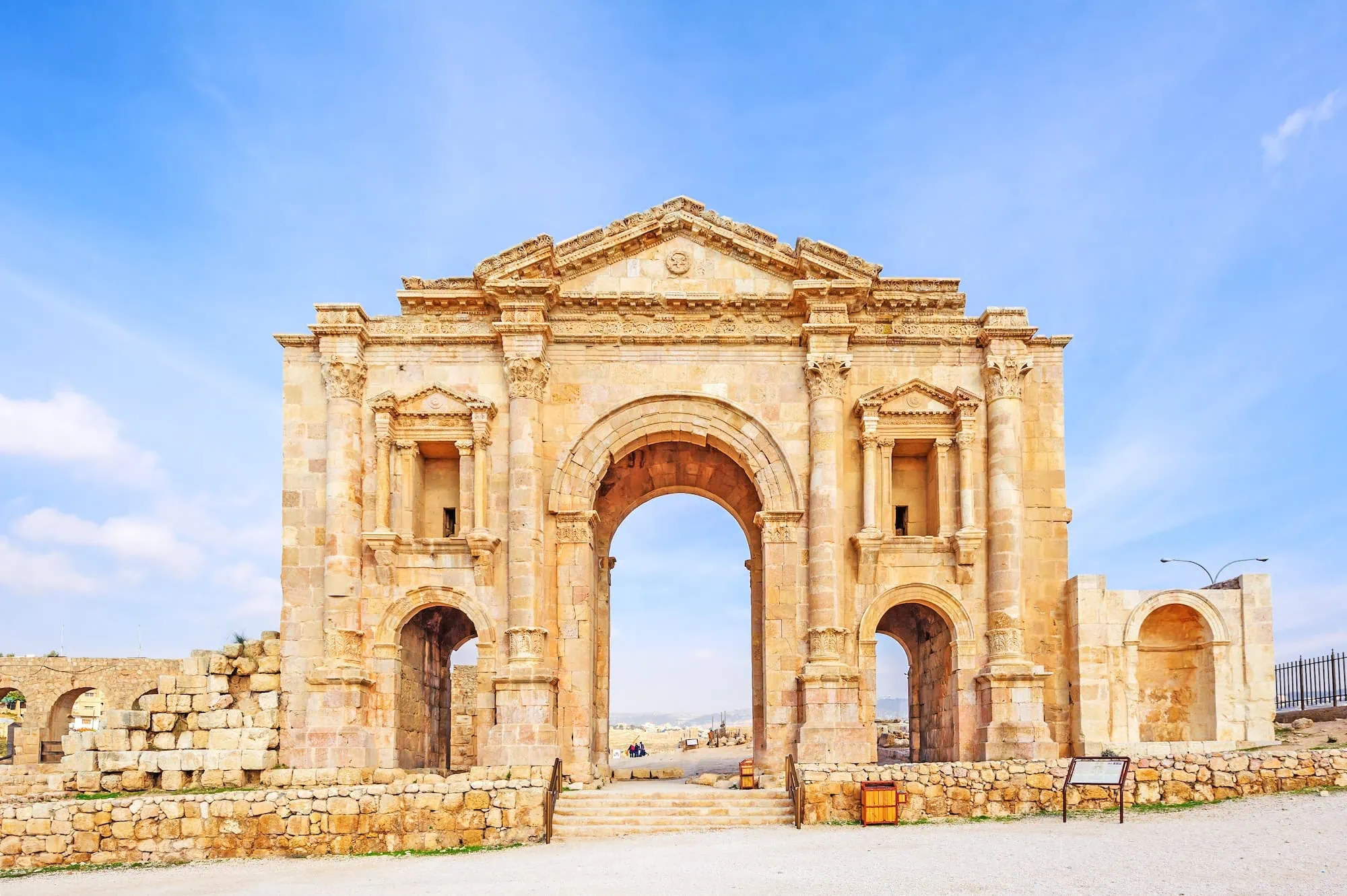
The moment you pass through Hadrian’s Arch, Jerash’s architectural sophistication becomes immediately apparent. This monumental gateway, built to honor Emperor Hadrian’s visit in 129 AD, showcases the perfect proportions and decorative richness that characterize the entire site.
Beyond the arch lies the Hippodrome, where 15,000 spectators once gathered for chariot races and gladiatorial contests. Though partially restored, enough remains to visualize the thunderous excitement that once filled this arena. The Roman Army and Chariot Experience, held here during peak season, brings these ancient competitions to life with authentic demonstrations.
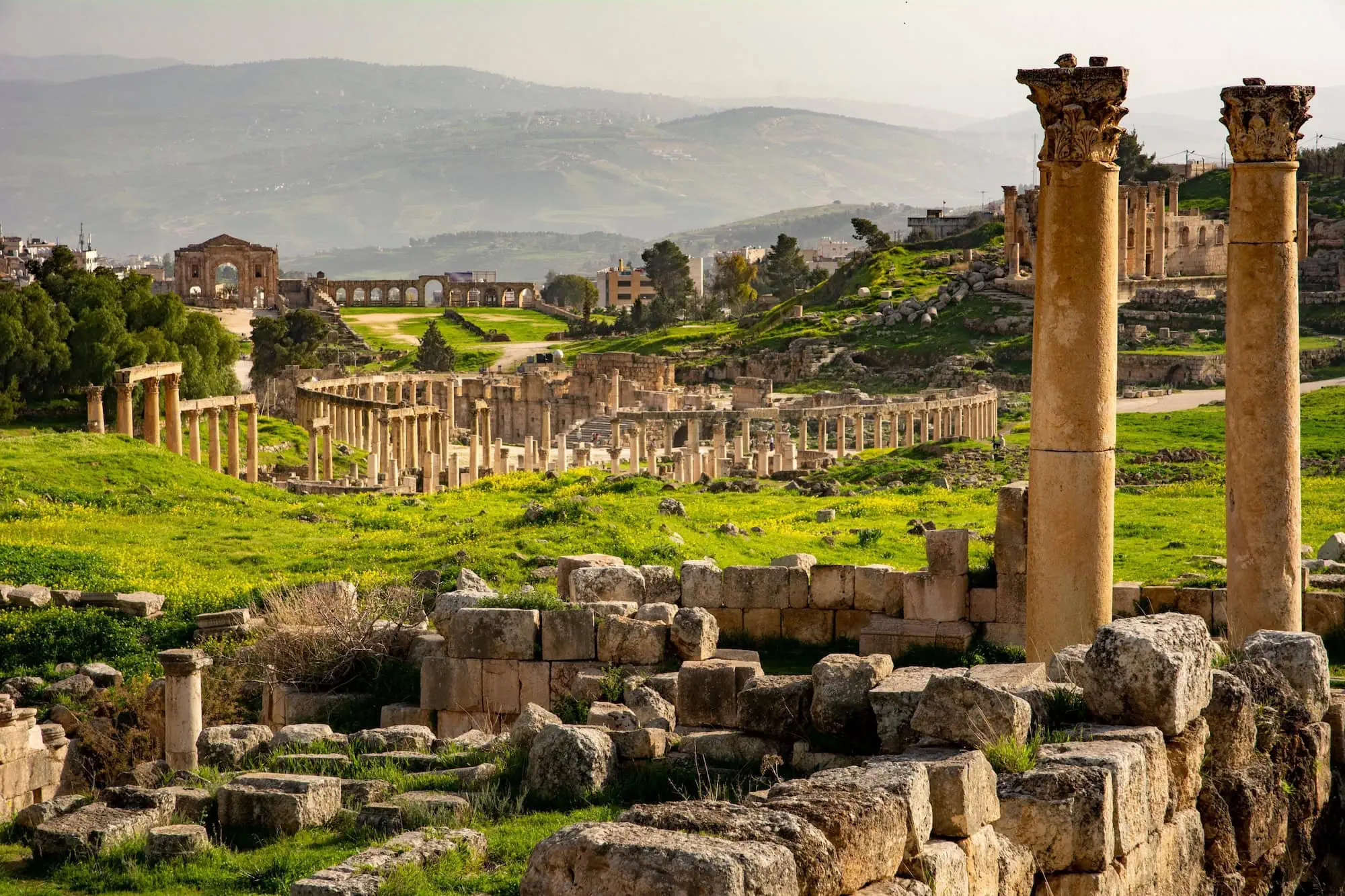
The Oval Plaza represents one of Roman urban planning’s most innovative features. Unlike typical rectangular forums, this unique elliptical space creates dynamic sight lines while accommodating the natural terrain. Surrounded by ionic columns, the plaza served as the city’s commercial and social heart where merchants, citizens, and visitors gathered daily.
The Magnificent Cardo Maximus
Stretching 800 meters (half a mile) from the Oval Plaza northward, the Cardo Maximus remains one of the world’s best-preserved Roman streets. Original limestone paving stones still bear chariot wheel ruts, while towering Corinthian columns originally supported a wooden roof protecting shoppers from Jordan’s intense sun.
Walking this ancient thoroughfare reveals the sophisticated infrastructure that supported daily life. Underground sewage systems, side streets leading to residential quarters, and carefully planned intersections demonstrate Roman engineering expertise. The columns, standing up to 17 meters (56 feet) tall, create dramatic perspective views that photographers find irresistible.
Temple of Artemis: Architectural Pinnacle
Commanding the hilltop overlooking the city, the Temple of Artemis represents Jerash’s architectural crowning achievement. Dedicated to the patron goddess of the hunt and the city itself, this massive complex took decades to complete during the 2nd century AD.
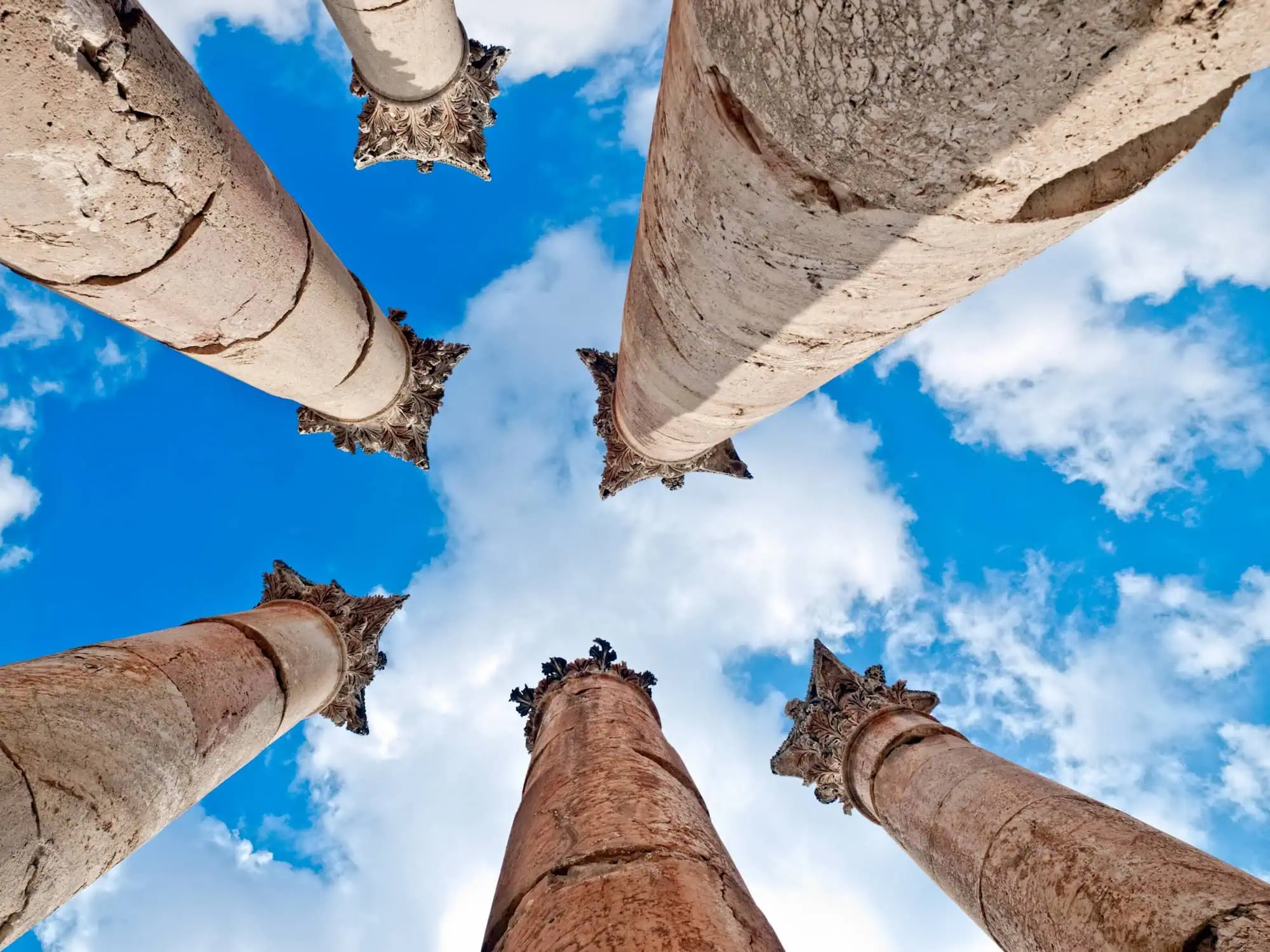
The temple’s Corinthian columns, some still standing at their full 13-meter (43-foot) height, demonstrate remarkable engineering. These columns are so precisely balanced that visitors can still cause them to vibrate slightly by applying pressure – a testament to ancient builders’ understanding of seismic engineering in an earthquake-prone region.
Experiencing Jerash’s Remarkable Preservation
Modern conservation efforts ensure that Jerash remains accessible while protecting its irreplaceable heritage for future generations. The site’s inclusion on UNESCO’s tentative World Heritage list recognizes its global significance as one of the best-preserved Greco-Roman cities outside Europe.
The dry climate has worked in Jerash’s favor, naturally preserving organic materials and architectural details that would have deteriorated in more humid environments. Stone inscriptions remain crisp and readable, while intricate carvings retain their original sharpness. This exceptional preservation allows visitors to appreciate craftsmanship details that disappeared centuries ago from sites in wetter climates.
Our expert guides understand how to navigate the site efficiently, ensuring you experience Jerash’s highlights while avoiding the crowds that can diminish the experience. Early morning visits, starting at 8:00 am (08:00), provide the best combination of comfortable temperatures and photographic lighting.
The South Theatre’s Acoustic Wonder
Among Jerash’s most impressive features, the South Theatre demonstrates Roman engineering genius through its perfect acoustics. This 3,000-seat venue, built into a natural hillside, amplifies voices so effectively that normal conversation from the stage reaches the highest seats clearly.
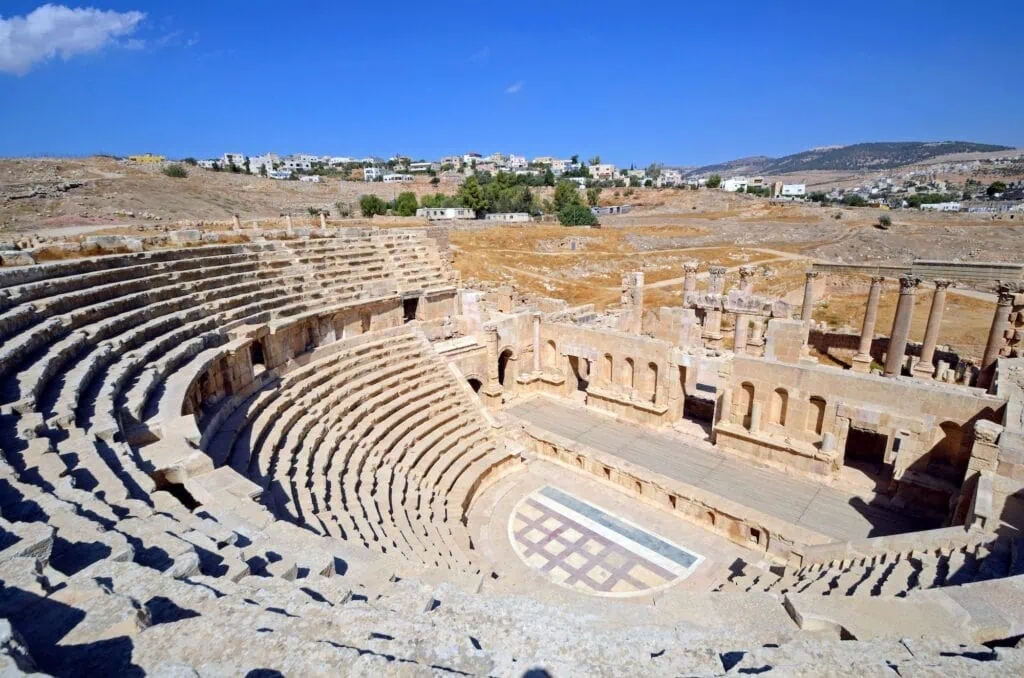
The theatre’s semicircular design follows classical Greek proportions while incorporating Roman innovations like underground passages and elaborate stage decorations. During the annual Jerash Festival of Culture and Arts, held each summer since 1981, this ancient venue once again hosts performances, connecting past and present in remarkable ways.
Churches and Mosaics of the Byzantine Era
Jerash’s Byzantine period churches contain some of Jordan’s finest mosaic art. The Church of Saints Cosmas and Damianus features intricate geometric patterns and animal motifs that rival those found in Madaba’s famous map church. These mosaics, dating from the 6th century, reveal the artistic sophistication that flourished even as the Roman Empire declined.
The Cathedral, built within the former Temple of Dionysus, demonstrates how early Christians adapted existing structures rather than demolishing them entirely. This practical approach preserved much of the original Roman architecture while adding distinctive Byzantine elements like the beautifully carved limestone screens that separated the nave from the sanctuary.
Planning Your Visit to Ancient Jerash
Jerash operates year-round, though timing significantly affects your experience. Spring (March-May) and autumn (September-November) offer ideal weather conditions with temperatures ranging from 20-25°C (68-77°F). Summer visits require early starts to avoid afternoon heat that can exceed 35°C (95°F).
The site requires 4-6 hours for a comprehensive visit, depending on your interest level and walking pace. We recommend arriving when gates open at 8:00 am (08:00) to experience the ruins in perfect morning light while avoiding tour bus crowds that typically arrive after 10:00 am (10:00).
Getting There and Entry Information
Located 48 kilometers (30 miles) north of Amman, Jerash is easily accessible by car or organized tour. The drive through Jordan’s northern hills provides scenic views of olive groves and small villages that have changed little over centuries.
U.S. visitors need a tourist visa, obtainable on arrival at Queen Alia International Airport for 40 JOD (approximately $56). The visa allows stays up to 30 days and covers all major tourist sites. European Union citizens receive similar visa-on-arrival privileges, while many other nationalities can check current requirements through Jordan’s Ministry of Tourism website.
Entry fees include access to the archaeological museum, which houses artifacts spanning from Neolithic tools to Islamic-period ceramics. The museum’s chronological displays provide excellent context for understanding Jerash’s long history before exploring the ruins themselves.
What to Bring and Wear
Comfortable walking shoes are essential, as the ancient streets feature uneven stone surfaces that can be slippery when wet. Sun protection becomes critical during warmer months – bring a wide-brimmed hat, high-SPF sunscreen, and plenty of water.
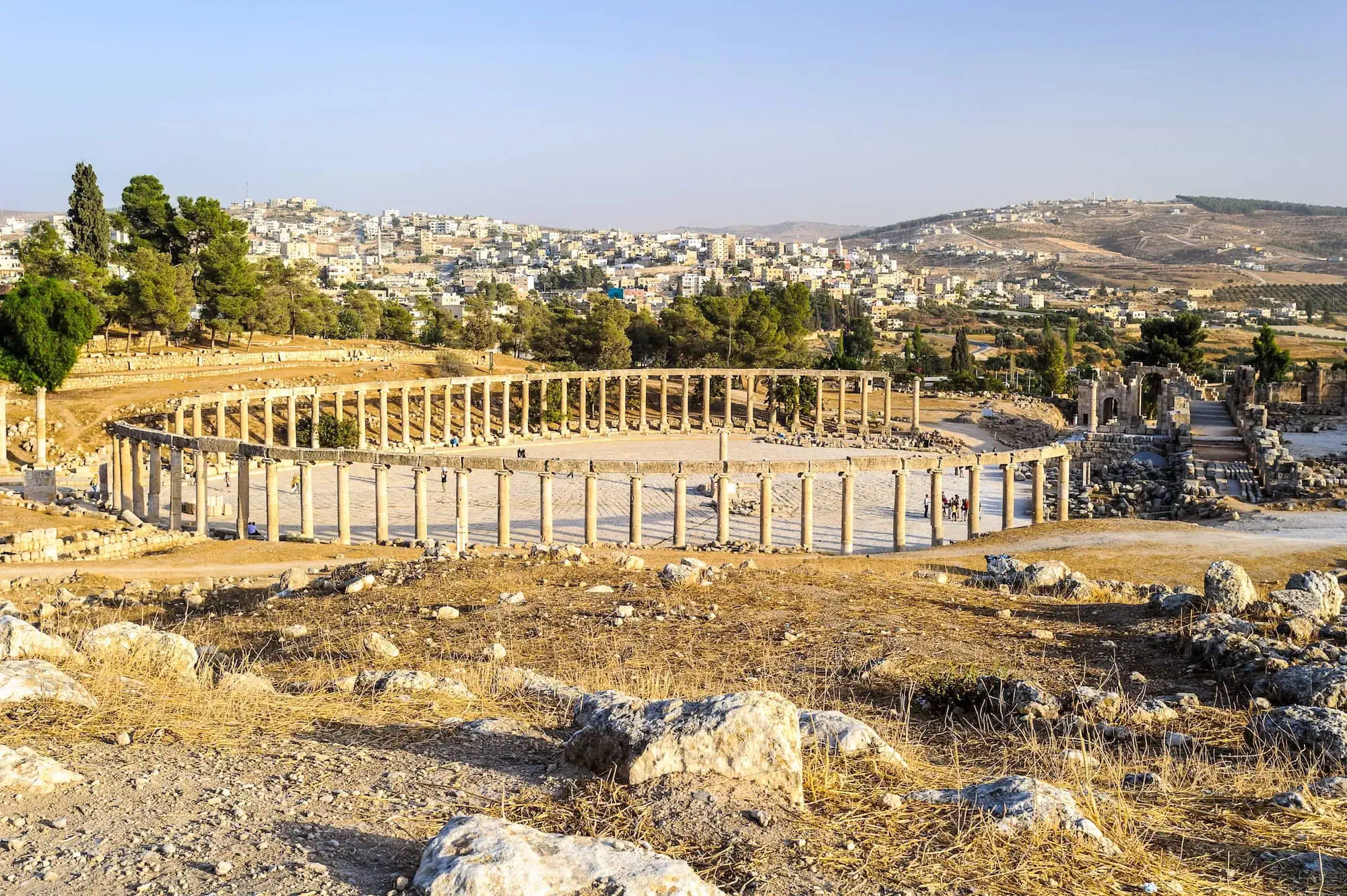
Photography enthusiasts should plan for diverse lighting conditions. The limestone ruins photograph beautifully in golden hour light, while the covered areas of temples and theatres require different exposure settings. Many visitors find a polarizing filter helpful for reducing glare from the pale stone surfaces.
Beyond the Ruins: Jerash’s Modern Cultural Heritage
While ancient stones tell Jerash’s historical story, the modern town surrounding the archaeological site continues vibrant cultural traditions that connect today’s Jordan with its Classical past. Local craftsmen still work in traditional mediums, creating pottery and textiles using techniques passed down through generations.
The Jerash Festival transforms the ancient theatre into a stage for contemporary Arabic music, dance, and poetry. International artists join Jordanian performers in this unique setting where Roman acoustics enhance modern artistic expression. This annual celebration, typically held in July and August, demonstrates how ancient spaces can serve contemporary cultural needs.
Archaeological Museum Treasures
The on-site museum deserves dedicated time, housing artifacts that bring Jerash’s daily life into focus. Household items, religious objects, and decorative arts reveal how ordinary citizens lived, worked, and worshipped in this cosmopolitan ancient city.
Particularly noteworthy are the museum’s coin collections, which trace changing political control through different imperial dynasties. Roman denarii give way to Byzantine solidi, then early Islamic dinars, each reflecting the broader historical forces that shaped this region over more than a millennium.
Stone inscriptions in Greek, Latin, and Aramaic demonstrate Jerash’s multicultural character. Unlike purely Roman cities, Gerasa retained strong local traditions while adopting imperial customs, creating the cultural synthesis that makes this site so historically significant.
Frequently Asked Questions
Plan 4-6 hours for a complete visit including the archaeological museum and all major monuments.
Spring (March-May) and autumn (September-November) offer the most comfortable weather conditions.
Most monuments allow access, but climbing on columns and fragile stonework is prohibited for preservation reasons.
The main colonnaded street is relatively flat, though accessing some temples and theatres requires climbing ancient steps.
While Petra is carved from rock, Jerash showcases constructed Roman architecture and offers a complete ancient cityscape.
Self-guided visits are possible, but expert guides provide historical context that significantly enriches the experience.
Comfortable walking shoes, sun protection, and modest clothing respecting local customs work best.
Photography is permitted in all outdoor areas, though flash photography inside the museum may be restricted.
It’s 48 km (30 miles) from Amman and can be combined with visits to Ajloun Castle or other northern sites.
The annual Jerash Festival of Culture and Arts brings international performers to the ancient theatre each summer.
Basic facilities exist at the visitor center, though we recommend bringing water and snacks for longer visits.
Its exceptional preservation and location demonstrate how Roman urban planning adapted to local Middle Eastern conditions and cultures.
Design Your Custom Tour
Explore Egypt and Jordan your way by selecting only the attractions you want to visit