

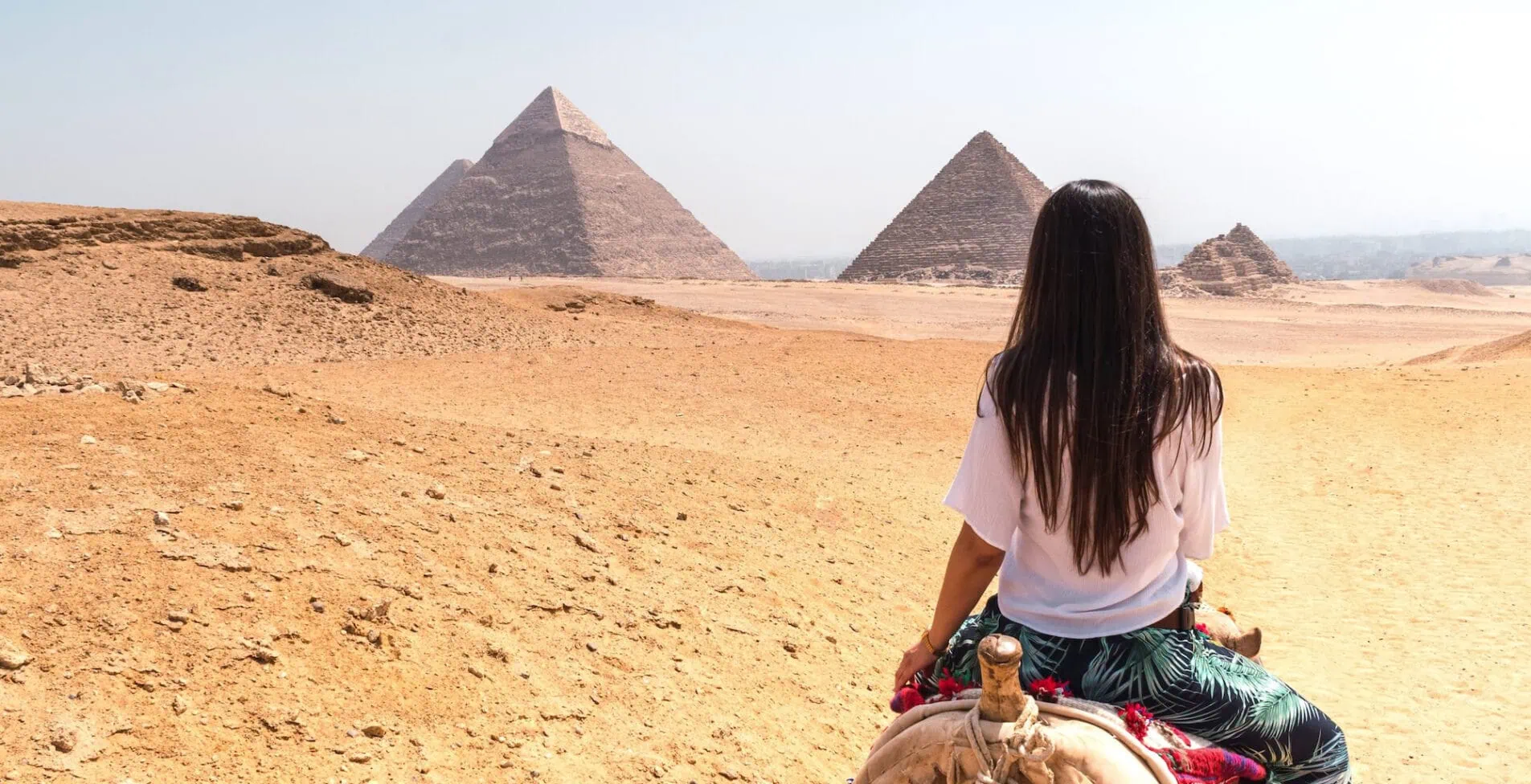
Cairo, the way 70 years of experience know it
Cairo Tours
Cairo tours come in two shapes: a half- or full-day excursion for travelers passing through, or a four- or five-day Cairo Break with hotels and all touring included. Both put the Pyramids, the Grand Egyptian Museum, Old and Islamic Cairo, and the surrounding ancient capitals within reach of a single base. Every tour is fully private, with your own Egyptologist guide and driver.
Half-day and full-day private tours of Cairo’s major sites
Cairo Excursions
Your Guide to Cairo Tours
What this page covers, and how to use it
Cairo holds more visited heritage in a single city than anywhere else in Egypt. The pyramids and the new Grand Egyptian Museum sit on the city’s Giza side. Coptic and Islamic Cairo, the Khan el-Khalili, and the ancient capitals of Saqqara, Memphis, and Dahshur sit on the other. A single hotel puts all of it within easy reach.
This page covers the two ways we tour from a Cairo base: short excursions for travelers who already have other plans, and four- or five-day breaks for a Cairo-focused trip. Read on for what each type delivers, what Cairo itself can show you, and how the planning side works.
Table of Contents
The Two Ways to Tour Cairo
The two grids above split our Cairo tours into the two categories that solve different traveler problems. Knowing which one fits your situation makes the choice easier and the quote process faster.
Cairo Excursions (Half-Day and Full-Day)
Cairo excursions are single-day tours, run privately with your own Egyptologist guide and personal driver. A half-day excursion typically covers one major site — the Pyramids and Sphinx, the Grand Egyptian Museum, or Old and Islamic Cairo — and runs around four hours. A full-day excursion combines two or three sites, includes lunch at a local restaurant, and runs around eight hours. Transport is always included: pickup from your hotel, all transfers between sites, and drop-off at the end.
These work best for travelers who already have other plans in Cairo — a stopover between flights, a few free days before joining a cruise, or a layover from a multi-country itinerary. They’re also the natural choice for travelers who want full control over which sites they visit and how long they spend at each.
Four- and Five-Day Cairo Breaks
A Cairo break is a complete short trip with Cairo as the only destination. Four nights and five days is the standard length, though four-day versions exist for tighter schedules. The itinerary covers the major sites in depth — the Pyramids and Sphinx, the Grand Egyptian Museum, the Egyptian Museum at Tahrir, Old Cairo and Islamic Cairo, the Khan el-Khalili — plus the surrounding ancient capitals of Saqqara, Memphis, and often Dahshur. Most include an Alexandria day trip on one of the days.
Hotels are part of the package. The break runs at a comfortable pace, and everything is fully private throughout, with the same Egyptologist guide and driver across all days.
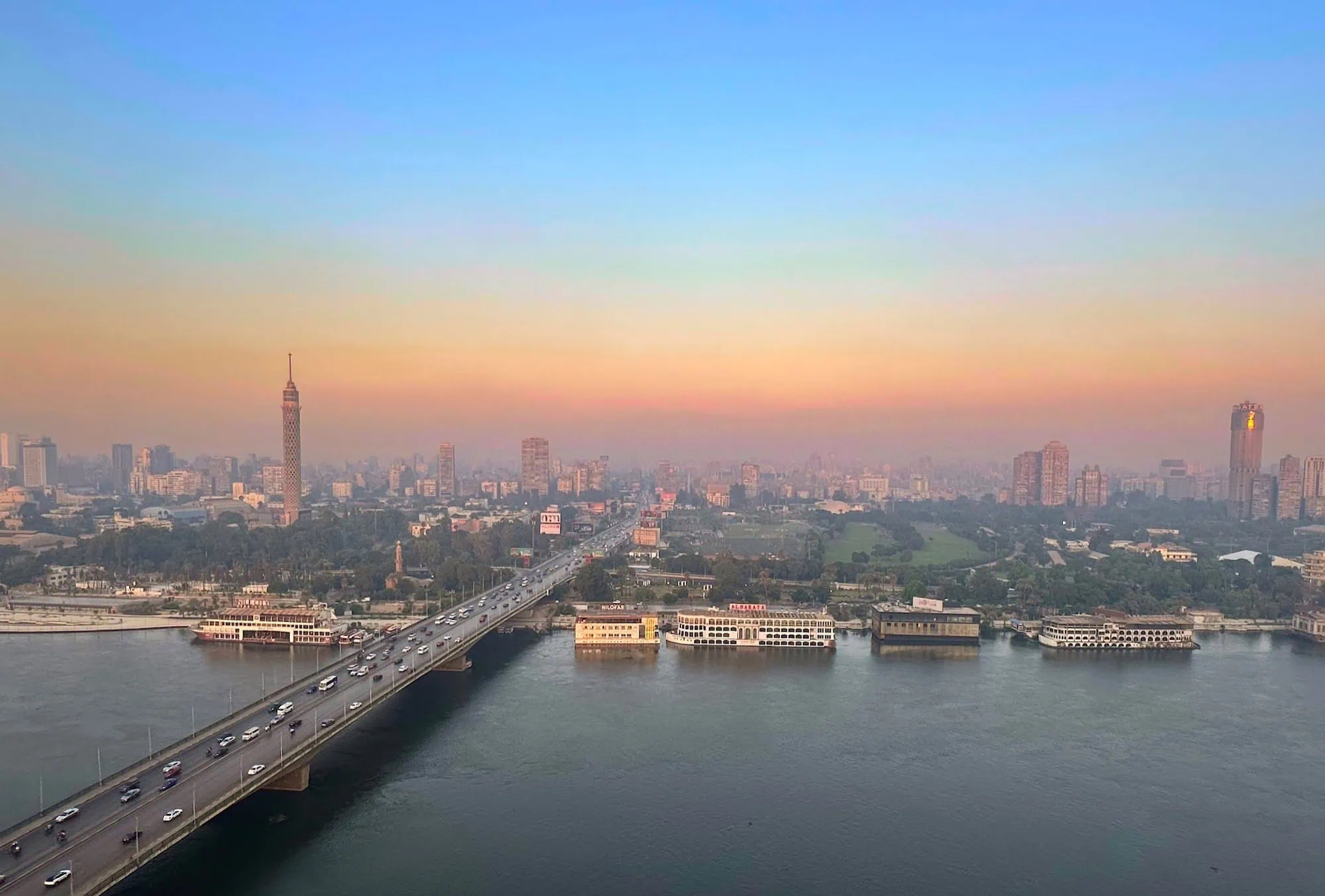
What You’ll See on a Cairo Tour
Cairo packs more visited heritage into a single city than any other place in Egypt. The pyramids alone would be enough to anchor most countries’ entire tourist industry — and Cairo has them, plus several thousand years of additional history layered on top. The sites below are the ones that appear on almost every Cairo tour, whether you’re here for a half day or a full five-day break.
The Pyramids and the Sphinx
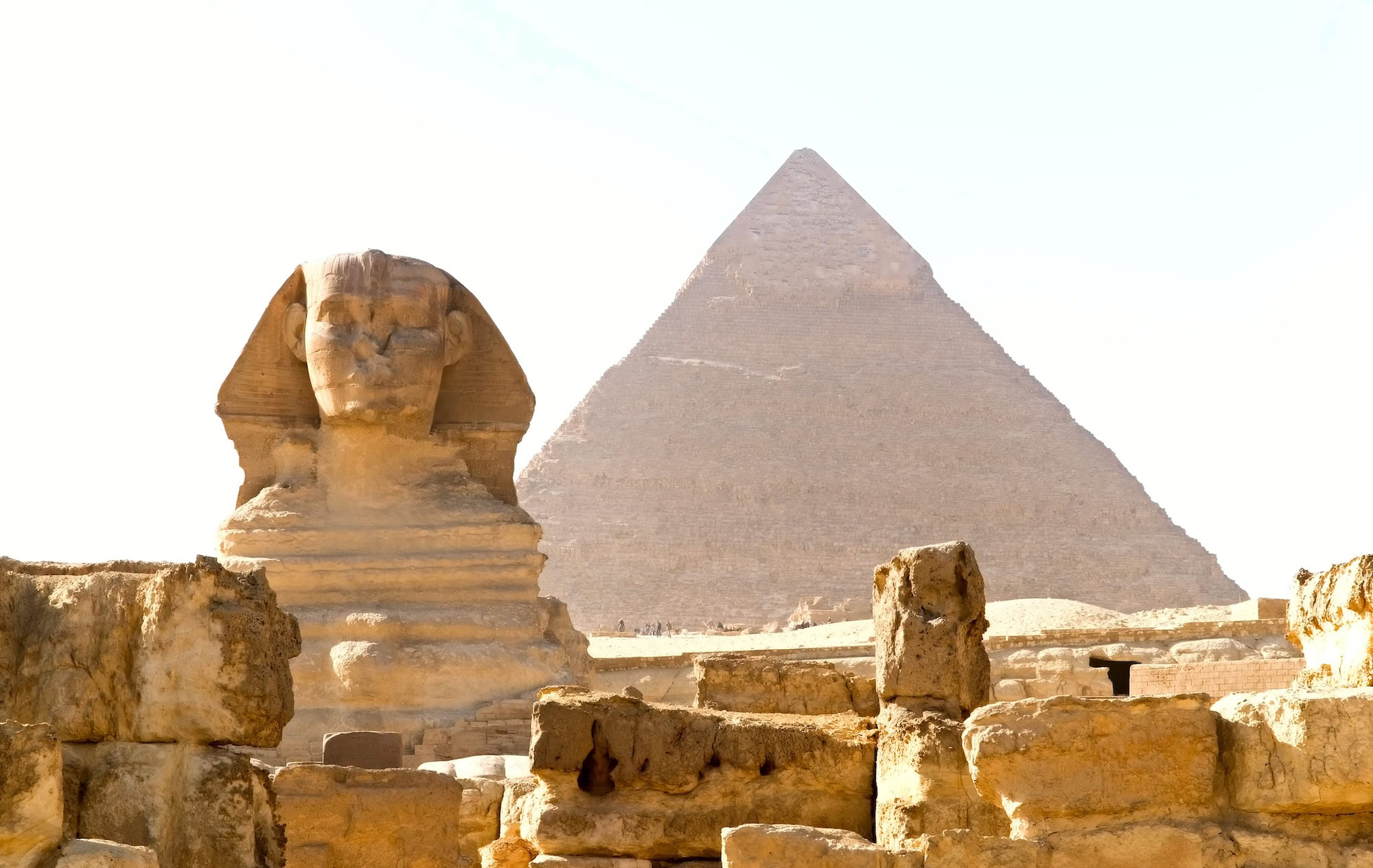
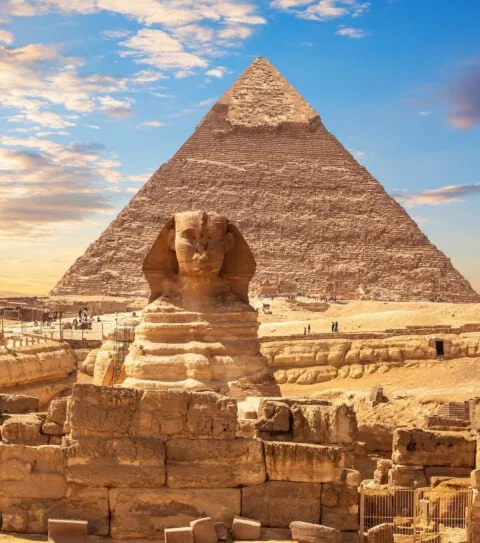
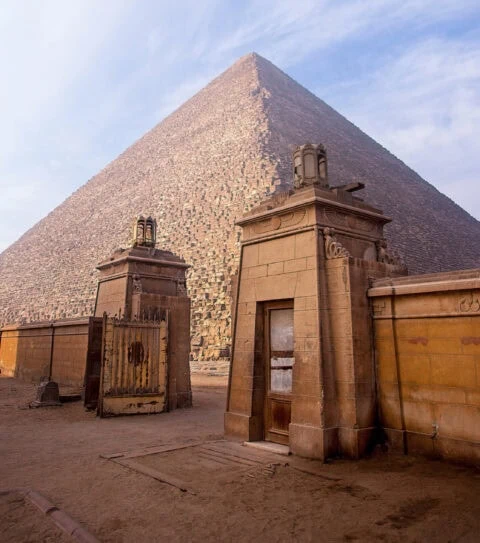
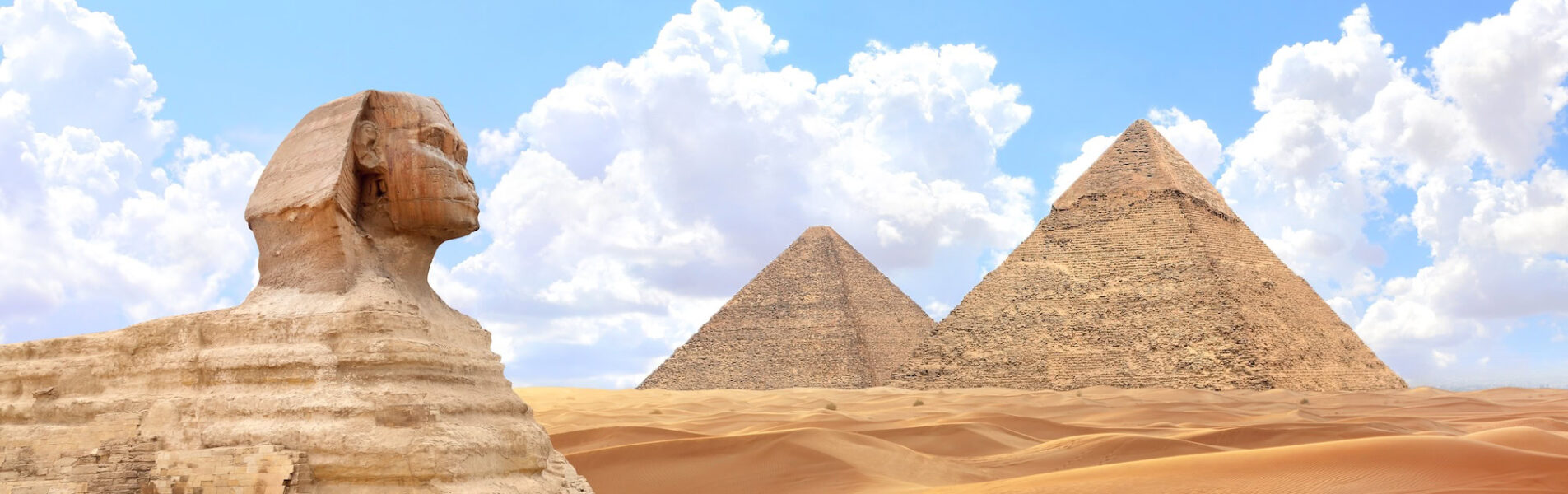
The Pyramids of Giza and the Great Sphinx are the reason most people come to Egypt at all. The three main pyramids — Khufu, Khafre, and Menkaure — were built within a single century, roughly 2580 to 2490 BCE, and they’re the only one of the original Seven Wonders of the Ancient World still standing. The Great Sphinx, carved from a single limestone outcrop, sits in front of Khafre’s pyramid and looks east, where the sun rises.
Most Cairo tours allocate a full morning here, sometimes longer. Entry to the Giza plateau is included on all our tours. Entry to the interior of the Great Pyramid is an optional add-on requiring an additional fee and advance notice — most travelers skip the climb, but those who want it can have it arranged. Pyramid climbing on the exterior, just to be clear, is illegal and tour guides won’t accommodate requests for it.
The Grand Egyptian Museum
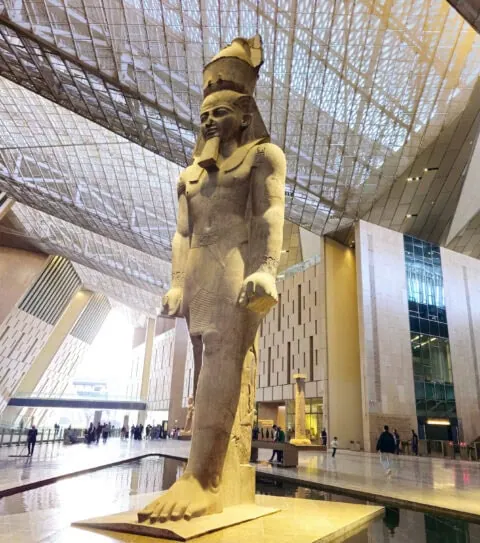
The Grand Egyptian Museum opened to full operation in 2025 after more than two decades of construction, and it is now the primary museum stop on every Cairo tour. The building sits about two kilometers from the Giza pyramids, on a site designed so that visitors emerging from the upper galleries see the pyramids directly through the main atrium’s window.
The museum holds over 100,000 artifacts, including the complete Tutankhamun collection — more than 5,000 objects, displayed together for the first time in history. Other highlights include the colossal statue of Ramses II at the entrance, the Khufu Solar Boat (relocated from the closed Solar Boat Museum at Giza), and dedicated halls for the Old, Middle, and New Kingdoms. Properly walking the collection takes a full half-day at minimum, with longer visits common.
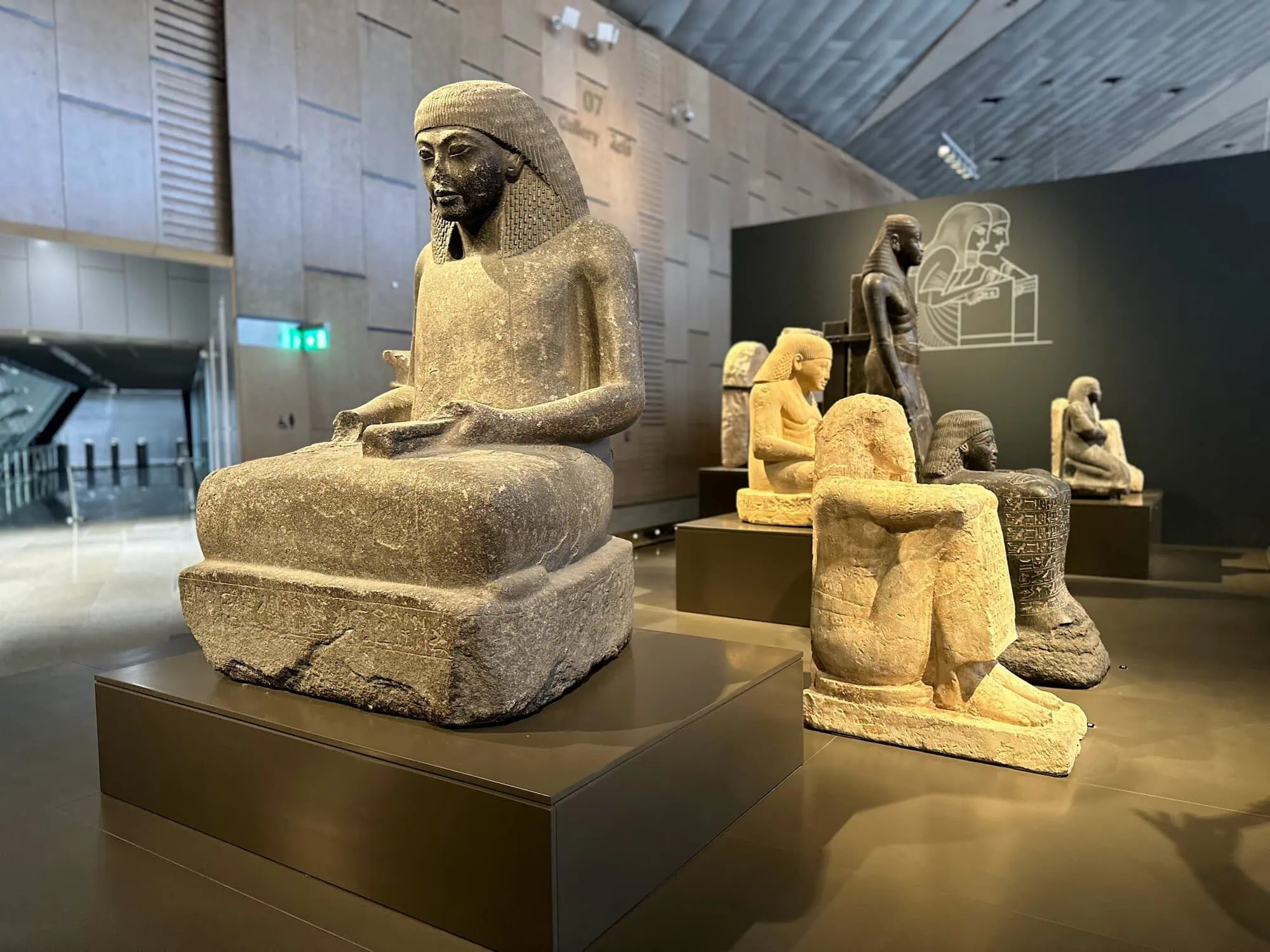
The older Egyptian Museum at Tahrir Square remains open and is still worth visiting. It now functions as a complement to the Grand Egyptian Museum rather than a substitute, with strong holdings in Predynastic and Old Kingdom material and a different atmospheric character than the modern building at Giza.
Old Cairo, Islamic Cairo, and the Khan el-Khalili
Beyond the pharaonic monuments, Cairo holds two more layers of history that most tours include. Old Cairo, also called Coptic Cairo, is the Christian quarter — the Hanging Church suspended over the gatehouse of a Roman fortress, the Coptic Museum, and the Ben Ezra Synagogue (a reminder that Coptic Cairo’s history isn’t only Christian) all sit within a few minutes of each other in this small dense neighborhood.
Islamic Cairo, by contrast, is large and spread across several quarters. The major stops are the Citadel of Saladin with its commanding Mohammed Ali Mosque, the Sultan Hassan Mosque, and the al-Azhar Mosque — Egypt’s most influential center of Islamic learning, founded in 970 CE. Most tours combine the Citadel with one or two of the nearby mosques.
The Khan el-Khalili is the historic bazaar adjacent to al-Azhar. It has been a working market since the fourteenth century. Tour guides take guests through the main lanes, point out the older caravanserai-style buildings, and leave time for shopping — copper, silver, leather, perfumes, and spices are the main local crafts. A traditional Egyptian coffeehouse stop is often built into a Khan el-Khalili visit.

Saqqara, Memphis, and Dahshur
Most Cairo Breaks include a day in the older pyramid complexes south of Giza, and some Excursions cover the same ground in a single day. Saqqara is where pyramid architecture actually begins: Djoser’s Step Pyramid, dating to around 2670 BCE, is the oldest large-scale stone structure ever built. The surrounding necropolis holds the tombs of Old Kingdom nobles, the Serapeum (the underground burial chambers of the Apis bulls), and several smaller pyramids in various states of preservation.
Memphis, the ancient capital that Saqqara served as a necropolis for, is now an open-air museum on the original city site. The main attraction is the colossal recumbent statue of Ramses II inside the main building. The site itself is modest compared to its historical importance — the city was abandoned after the Arab conquest in the seventh century, and most of its stone was carted away for medieval Cairo’s construction.
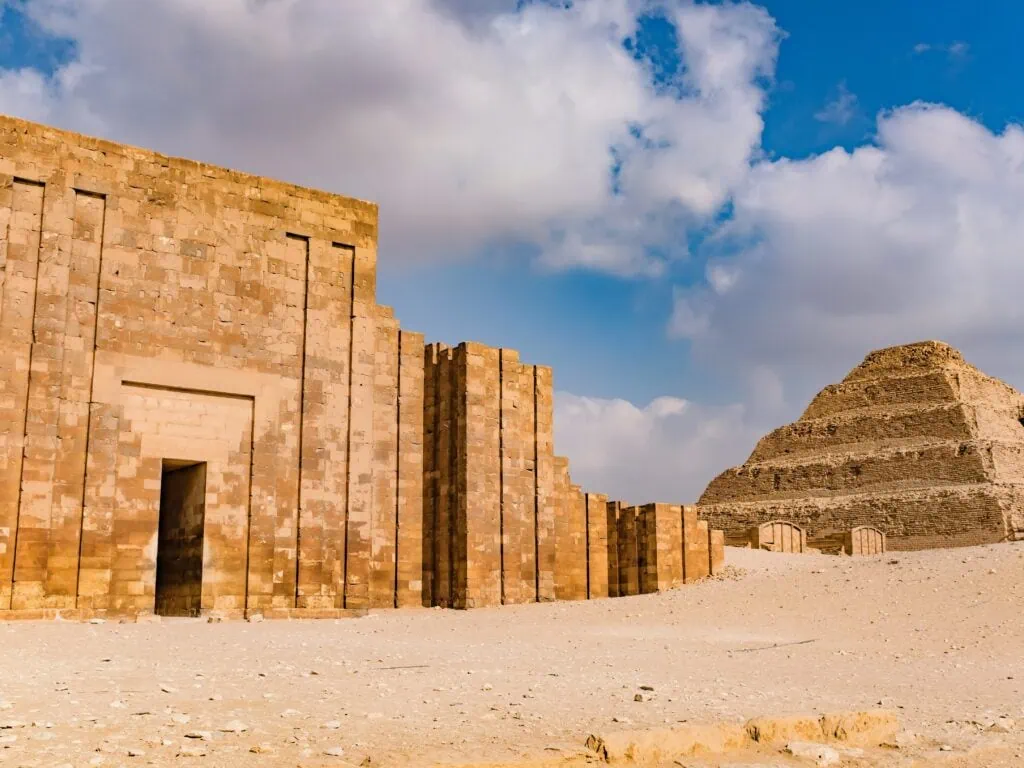
Dahshur, south of Saqqara, is where the pyramid form was solved in the lifetime of a single pharaoh. Sneferu built first the Bent Pyramid, then the Red Pyramid, working out the geometric problems that produced the smooth-sided form Khufu would perfect a generation later at Giza. Most visitors find Dahshur the quieter and more atmospheric of the three sites.
Alexandria as a Day Trip
Alexandria sits about 220 kilometers north of Cairo, on the Mediterranean coast, and is the most common addition to a Cairo Break. A day trip leaves Cairo in the morning, spends the day in Alexandria, and returns the same evening. The drive runs about three hours each way, mostly on the desert highway.
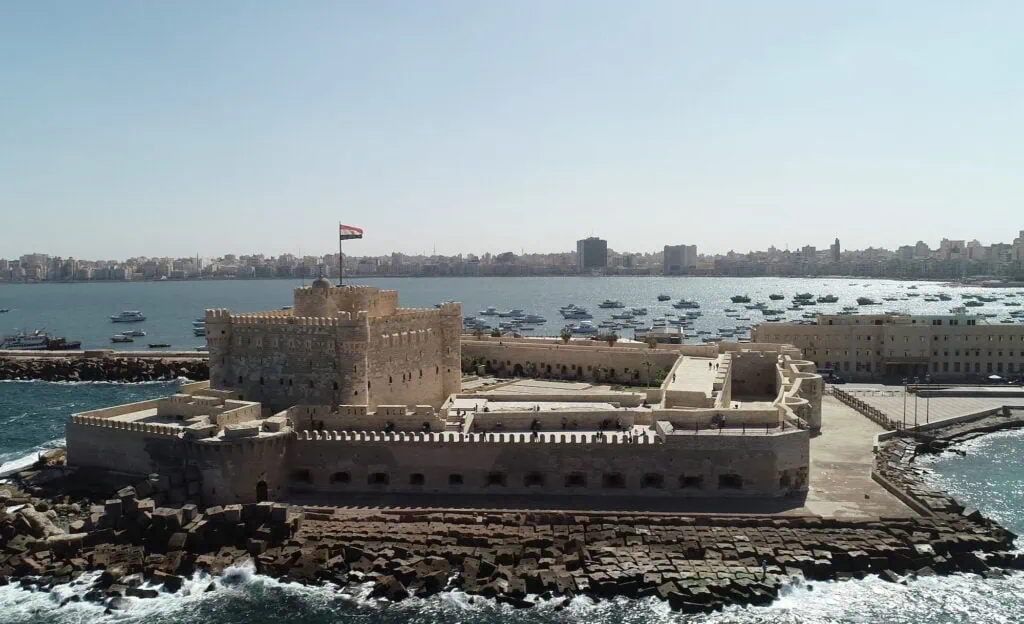
The major stops are the Catacombs of Kom el-Shoqafa (a Roman-era underground necropolis cut into the bedrock), Pompey’s Pillar and the Serapeum, the Roman Amphitheatre at Kom el-Dikka, the Qaitbay Citadel built on the site of the ancient Lighthouse of Alexandria, and the modern Bibliotheca Alexandrina (the new library inspired by the ancient one). Lunch at a seafood restaurant on the Corniche is standard. Travelers who want more time can extend the day trip to an overnight stay.
Want More than Cairo?
A Cairo tour is a complete trip in itself, but many travelers come to Egypt wanting more than the city alone. If that’s you, the destination decision usually comes down to one of three directions, each with its own dedicated page on this site.
Cairo Plus a Nile Cruise
The most-booked extension by a wide margin is Cairo plus a Nile cruise covering Luxor and Aswan. Two or three days in Cairo at the start, a short domestic flight south, and three or four nights on the river covering the New Kingdom temples and the Aswan-area sites. Most itineraries that combine the two run between eight and twelve days total. Our full guide is at Egypt Tours with Nile Cruise.

Cairo Plus the Red Sea
The Red Sea pairing works for travelers who want both pharaonic history and beach time. Cairo first for the cultural side of the trip, then a domestic flight to Hurghada or Sharm el-Sheikh for several nights of resort time, snorkeling, or diving. The same page also covers itineraries that add a Nile cruise into the middle of the trip — Cairo, then a cruise on the Nile, then the Red Sea to finish. Our full guide is at Cairo and Red Sea Holidays.

A Full Egypt Tour with Cairo as the First Stop
For travelers who want the broader Egypt itinerary — Cairo, Luxor, Aswan, possibly Abu Simbel, possibly Alexandria, on land or with a cruise — our complete catalog of multi-day Egypt tours is at Egypt Tour Packages.
How Private Touring Works
Every tour on this page is fully private. Your own Egyptologist guide, your own personal driver, your own vehicle. No shared groups, no merged tours, no extra travelers added to your party.
This applies to both categories on the page: half-day and full-day Cairo Excursions, and four- and five-day Cairo Breaks. The same pair of Egyptologist guide and driver stays with you across all days of a Cairo Break, not a different person each morning. By the second day this becomes a real working relationship.
Private touring is the default we work from, not a premium upgrade. The price you see is the private price.
A Practical Cairo Tour Day
A Cairo tour day, whether it’s a single excursion or one day of a longer trip, runs to a roughly predictable shape. Knowing what to expect makes the day easier to plan around.
Pickup and Timing
Pickup is usually from your hotel, with the exact time set by which sites are on the day’s itinerary. Visits to the Pyramids and the Grand Egyptian Museum tend to start early, both because morning light at Giza is better for photographs and because crowds build through the day. Old Cairo and Islamic Cairo are less time-sensitive and often slot into mid-morning or afternoon. Your Travel Concierge sets the schedule based on what you’re seeing and what kind of pace you want.
Your Guide and Driver
Your Egyptologist guide meets you at the hotel along with your driver, and the same pair stays with you for the full day. On a Cairo Break or a multi-day Egypt tour, the same guide and driver stay with you across all days — not a different person each morning. By the second or third day this becomes a real working relationship; questions get sharper, the explanations build on what came before, and the rhythm of the day flows more easily.
Lunch and Dietary Requirements
Lunch on a full-day excursion is included in the tour price and taken at a local restaurant near wherever the day’s itinerary leaves you around midday. The restaurants we use are tested for both food quality and food safety. Travelers with dietary requirements — vegetarian, vegan, halal, gluten-free, allergies — should mention them at booking so the choice of restaurant matches. Most kitchens we work with can handle most requirements without difficulty.
Transport, Tickets, and What’s Included
All transport between sites is in a private air-conditioned vehicle, dedicated to your party for the day. Egyptologist guides hold the relevant licenses for the sites they cover, and entrance fees to every site included in the day’s itinerary are pre-paid as part of the tour. The only things travelers typically spend cash on during a day’s touring are tips for the guide and driver, plus any personal purchases at the Khan el-Khalili or other shops.
End of the Day
Days end with drop-off back at your hotel, usually mid- to late-afternoon for half-day tours and early evening for full-day tours. Evenings are your own, though we can build a dinner cruise on the Nile, a sound-and-light show at the pyramids, or a similar evening activity into the day if you want.
When to Go to Cairo
The best months for a Cairo tour are October through April. Daytime temperatures sit comfortably between 20°C and 25°C (68–77°F), the evenings are cool, and walking around the open sites at Giza, Saqqara, and the Khan el-Khalili is genuinely pleasant. December and January carry the highest demand and the holiday-season pricing that goes with it.
Summer in Cairo is hot. Daytime temperatures from May through September regularly exceed 35°C (95°F), and time at the unshaded sites is best limited to early morning. Tours still run year-round, but most travelers prefer the cooler months, and most of our scheduling lands there. Whatever month you have in mind, your Travel Concierge will work the practical adjustments — early starts in summer, longer site visits in winter — into the itinerary.
Ready to Plan Your Cairo Tour?
Whether you’re looking at a four-day Cairo break, a five-day break with Alexandria, or something longer built around the same Cairo base, the next step is the same: tell us what you have in mind, and your Travel Concierge will draft an itinerary around it.
A first-draft itinerary lands in your inbox within 1 to 12 hours of your enquiry, with hotel options across price tiers, the Cairo sites that match your interests, and the practical timing of each day already mapped out. Your private Egyptologist guide and personal driver are part of the plan from day one. Revisions are part of the process. Nothing locks in until you’re satisfied.
Frequently Asked Questions
Two to three full days is enough for a focused visit covering the Pyramids and Sphinx, the Grand Egyptian Museum, and either Old or Islamic Cairo. Four to five days is the right length for a deeper visit — additional time at the museums, the surrounding ancient capitals of Saqqara, Memphis, and Dahshur, and a day trip to Alexandria. Most travelers find five days the comfortable maximum for Cairo before they’re ready to move on or fly home.
A Cairo Excursion is a single-day tour, either half-day or full-day, covering one to three sites with a private Egyptologist guide and driver. It doesn’t include accommodation, and it works best for travelers who already have lodging in Cairo or are passing through on a stopover. A Cairo Break is a complete short trip, four or five days long, with hotels included, all touring planned across the days, and the same guide and driver throughout. Excursions are about a single day; Breaks are about a complete short visit.
Yes. Every Cairo Excursion and every Cairo Break runs with your own Egyptologist guide, your own personal driver, and a vehicle dedicated only to your party. No shared groups, no merged tours, no extra travelers added to your booking. The same guide and driver stay with you across all days of a Cairo Break, not a different person each morning.
A licensed Egyptologist guide, a personal driver, a private air-conditioned vehicle, all transfers between sites, entrance fees to every site on the itinerary, lunch at a local restaurant on full-day excursions, and bottled water throughout the day. Excluded items are tips for the guide and driver, optional add-ons (the interior of the Great Pyramid, for example), and any personal purchases at the Khan el-Khalili or other shops.
Yes. Every Cairo Break starts from a base itinerary and gets shaped to your interests during the planning phase. Sites can be added (the Serapeum at Saqqara, the Coptic Museum, the Citadel’s Mosque of Mohammed Ali) or skipped, the pace can be tightened or loosened, hotel grade adjusted across price tiers, and the Alexandria day trip moved between days or extended to an overnight. Your Travel Concierge handles the back-and-forth revisions until the itinerary fits.
Yes. Layover-friendly half-day and full-day excursions run from the airport or your stopover hotel, with timing built around your onward flight. A six- to eight-hour layover is enough for a private Pyramids and Sphinx visit. A full overnight stopover gives time for either the Pyramids plus the Grand Egyptian Museum or the Pyramids plus Old and Islamic Cairo.
Cairo Excursions vary by duration and which sites are included, with half-day excursions at the lower end and full-day excursions with lunch in the middle range. Cairo Breaks (four or five days) vary primarily by hotel grade across three- to five-star tiers. All prices include private guiding, driver, transport, entrance fees, and (for Breaks) accommodation. Your Travel Concierge sends an exact quote within 1 to 12 hours of your enquiry based on the specific tour or break you’re interested in.
For Cairo Excursions, a few weeks of notice is usually enough, and shorter notice is often possible. For Cairo Breaks, three to six months ahead is the practical norm — enough lead time to secure your preferred hotels, the right departure date, and Egyptologist guide availability in your language. Peak periods (Christmas, New Year, Easter) book out earlier, often nine to twelve months ahead.
For most travelers, yes — the Grand Egyptian Museum is now the primary museum stop in Cairo, with the complete Tutankhamun collection on display together for the first time, more than 100,000 artifacts across the full sweep of Egyptian history, and a building designed so that the upper galleries look directly out at the pyramids. Properly walking the collection takes a half-day at minimum, longer for travelers with deeper interest.
The Grand Egyptian Museum (GEM) opened to full operation in 2025 near the Giza pyramids and is now the primary museum, holding the complete Tutankhamun collection and the largest share of Egypt’s most significant artifacts. The Egyptian Museum at Tahrir Square in downtown Cairo remains open and functions as a complement to GEM, with strong holdings in Predynastic and Old Kingdom material. Most Cairo Breaks include both; tighter itineraries focus on GEM.
Yes, with adjustments. Younger children typically enjoy the Pyramids, the camel rides at Giza, and the Egyptian Museum’s mummy room more than the longer mosque and church visits in Old and Islamic Cairo. We adjust the pace, the sites, and the day’s length to your children’s ages and interests. The same private guide and driver stay with your family throughout, which makes the trip easier to manage than a group tour.
Most travelers, including US, UK, EU, Canadian, Australian, and many Latin American nationalities, can obtain a 30-day visa on arrival at Cairo International Airport for 25 USD, or apply for an e-visa in advance through the official Egyptian government portal. Your Travel Concierge can confirm the current requirements for your specific nationality during the planning process.
Explore Egypt Your Way
Share your travel wishes — our experts will craft the perfect experience just for you.